Healthcare in Iceland
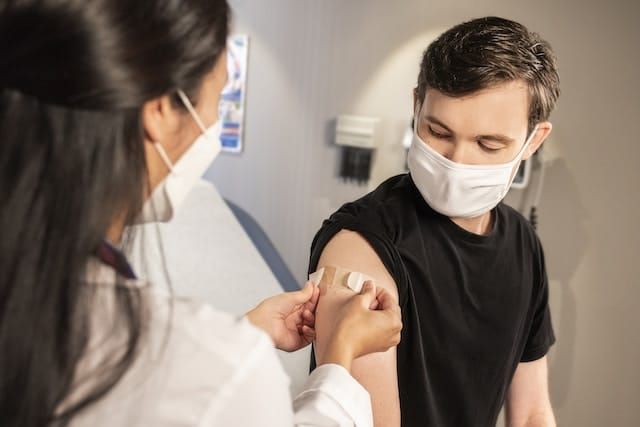
Iceland has a universal, publicly funded healthcare system. New residents face a six-month waiting period before public coverage begins. This guide covers costs, registration, the co-payment system, and what to expect as a foreigner.
How healthcare in Iceland works
Healthcare in Iceland is universal and publicly funded. The state covers roughly 84% of all healthcare spending through taxes. There are no private hospitals, and private health insurance is almost nonexistent.
That said, a growing number of self-employed specialist doctors and private clinics operate alongside the public system. Iceland Health subsidises some of their services through the co-payment system.
If you have legal residence in Iceland and a kennitala (national ID number), you are entitled to subsidised care. The system is straightforward once you are inside it, but there is a waiting period for new residents that catches many people off guard.
This article covers how the system is structured, what you will pay out of pocket, how to register, and what to do before your public coverage kicks in.
Table of contents
The six-month waiting period
New residents must have legal domicile in Iceland for six consecutive months before they qualify for public health insurance through Iceland Health (Sjúkratryggingar Íslands). This applies to everyone, including Icelanders returning from abroad.
During those six months, you are uninsured under the public system. If you need medical care, you pay the full price unless you have private coverage.
Non-EEA citizens are required to purchase medical cost insurance (sjúkrakostnaðartrygging) as a condition of their residence permit. This is a mandatory short-term policy valid for six months, offered by Icelandic insurers such as Sjóvá and VÍS. The deductible is typically 50,000 ISK (as of March 2026).
Citizens of EEA countries, the United Kingdom, Switzerland, Greenland, or the Faroe Islands who were covered by public health insurance in their previous country can transfer those rights to Iceland. Submit an application for health insurance through island.is along with your European Health Insurance Card (EHIC) or an S1 certificate. Once Iceland Health confirms your previous coverage, you can be insured from the date your legal domicile is registered, with no six-month wait.
Individuals moving to Iceland from Denmark, Norway, Sweden, or Finland who have been in that Nordic country for less than 12 months are automatically covered when their domicile is registered. No application is needed.
You should apply for health insurance through island.is one day after Registers Iceland records your new legal domicile. Even if you expect to be covered immediately, applying early starts the process and avoids gaps.
For a full walkthrough of the registration process and required documents, see our health insurance guide.
How to register at a healthcare centre
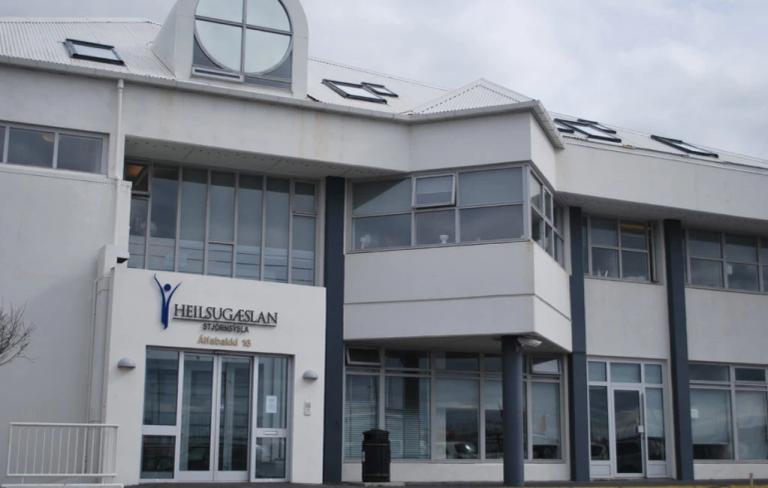 Primary care in Iceland runs through heilsugæslustöðvar (healthcare centres). These are your first point of contact for non-emergency medical needs: GP appointments, vaccinations, screenings, referrals to specialists, and general health advice.
Once you have your kennitala and legal domicile, register at a healthcare centre through island.is. You choose your preferred centre, and the change takes effect the next working day. If you do not register, you are automatically assigned to the centre nearest your legal address.
There are roughly 60 healthcare centres around the country. In the capital area, they are operated by Heilsugæsla höfuðborgarsvæðisins. Outside Reykjavík, healthcare centres are attached to regional hospitals and health institutions across Iceland's seven healthcare districts.
You can change your healthcare centre at any time through island.is. Your medical records transfer to the new centre automatically.
If you have not yet received your kennitala, see our kennitala guide for how to get one. Our first 30 days checklist walks through the full sequence, including healthcare registration.
What healthcare costs in Iceland
Healthcare in Iceland is subsidised but not free at the point of service. Insured residents pay a co-payment (kostaðarþátttaka) for most services, with the state covering the rest.
Here are the standard fees for insured adults (as of 2026):
Service | Approximate cost |
|---|---|
GP visit (daytime hours) | 500 ISK |
GP visit (after hours, via Læknavaktin) | 3,100 ISK |
Specialist visit (with referral) | Subsidised; varies by service |
Lab tests and imaging | Subsidised; varies |
Hospital inpatient stay | Daily fee applies |
Children under 2 receive all care free of charge. Children aged 2 to 18 pay reduced rates, and services with a doctor's referral are free for children under 18.
The elderly (67+) and people with disabilities also pay lower co-payments across all services.
Uninsured residents (those still in the six-month waiting period or without valid coverage) pay the full cost of treatment according to a separate fee schedule set by regulation. These costs are significantly higher.
The monthly cost cap
Iceland protects residents from high medical bills through a co-payment ceiling called greiðsluþátttökukerfi. Once your out-of-pocket costs reach the monthly maximum, further care that month costs very little or nothing.
The current monthly caps (as of 2026):
Category | Monthly maximum | Monthly fee after cap |
|---|---|---|
General (adults) | 37,794 ISK | 6,299 ISK |
Elderly, disabled, rehabilitation pensioners | 25,198 ISK | 4,331 ISK |
Children aged 2–18 | 25,198 ISK | 4,331 ISK |
Children under 2 | Free | Free |
Source: Iceland Health co-payment system
If you go several months without using healthcare, the monthly cap gradually resets upward. The system recalculates automatically, and any overpayments are refunded to your bank account.
Services covered by this cap include GP visits, hospital admissions, specialist appointments (with referral), lab work, imaging, physiotherapy, occupational therapy, and speech therapy.
Prescription medication costs
Prescription medications in Iceland are subsidised through a bracket system (greiðsluþátttökukerfi lyfja). You pay full price for your first medications in a 12-month cycle, then progressively less as your spending increases.
As of January 2026, a fifth tier was added. Once you reach the maximum, medications are fully covered for the rest of the period.
General adults:
Bracket | You pay | Up to cumulative total |
|---|---|---|
1st | 100% | 22,800 ISK |
2nd | 40% | 29,680 ISK |
3rd | 15% | 36,730 ISK |
4th | 7.5% | 62,000 ISK |
5th | 0% | No further cost |
Elderly (67+), disabled, and those under 22:
Bracket | You pay | Up to cumulative total |
|---|---|---|
1st | 100% | 11,400 ISK |
2nd | 40% | 16,840 ISK |
3rd | 15% | 21,640 ISK |
4th | 7.5% | 41,000 ISK |
5th | 0% | No further cost |
Source: Iceland Health medicines co-payment
The subsidy is based on the lowest-priced generic version of a medication. If you choose a brand-name drug when a generic equivalent exists, you pay the difference out of pocket.
A 12-month cycle starts with your first subsidised purchase and resets 12 months later.
Hospitals and emergency care
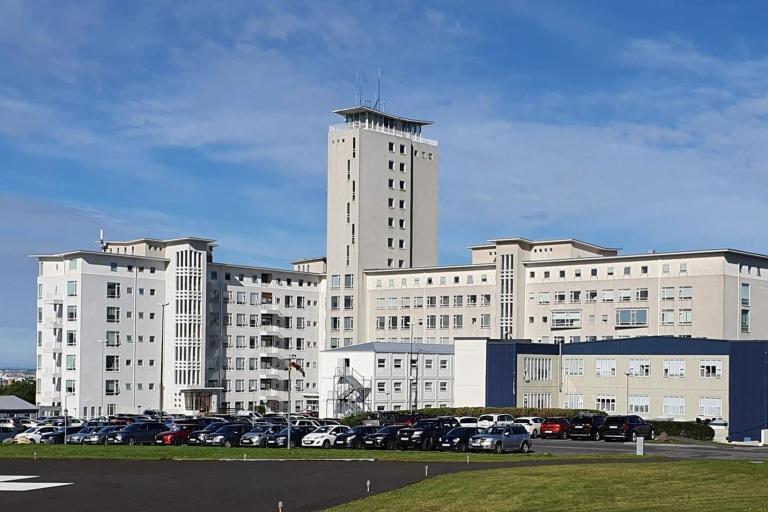 Landspítali (LSH / the National University Hospital) in Reykjavík is Iceland's primary hospital, serving as the main referral centre for specialised and emergency healthcare in Iceland. Sjúkrahúsið Akureyri (Akureyri Hospital) is the largest regional hospital and serves the north. Six regional hospitals and 16 health institutions are distributed across the country's seven healthcare districts.
Landspítali currently operates across 17 locations in roughly 100 buildings around Reykjavík, many of which are over 50 years old. Capacity is under strain, and overcrowding in the emergency department has been a persistent issue.
 A new national hospital (Nýr Landspítali) is under construction at Hringbraut, adjacent to the University of Iceland campus. The treatment centre alone will be roughly 70,000 m², making it the largest single building in Iceland. It was originally planned to open in 2024 but has been delayed, with current estimates at 2029 to 2030 for full operation.
In an emergency, call 112. This is Iceland's universal emergency number for police, fire, and ambulance. You can also reach emergency services via online chat at 112.is.
For non-emergency medical advice, call 1770. This is the health advice and triage hotline (Læknavaktin), available 24 hours a day, 7 days a week. Staff speak Icelandic and English and can direct you to the appropriate level of care. Outside daytime hours in the Reykjavík area, Læknavaktin also operates a walk-in clinic for GP-level concerns that cannot wait until the next working day.
Specialist care generally requires a referral from your GP at your healthcare centre. Your GP assesses whether you need a specialist and refers you to the appropriate department at Landspítali or another facility. Emergency and on-call services for paediatricians, gynaecologists, and ophthalmologists are available without a referral for children.
Dental care
Dental care for adults is not covered by the public healthcare system. You pay out of pocket for all routine dental work, including check-ups, fillings, and cleanings.
Children and adolescents under 18 receive dental care that is partially or fully subsidised through the public system. The elderly (67+) and disability pensioners also qualify for partial reimbursement on dental costs through Iceland Health.
For adults, dental expenses can add up quickly. Check whether your union's sickness fund (sjúkrasjóður) offers partial reimbursement for dental work (see the section on union sickness funds below). Many do.
For dental emergencies, the emergency dental number is 575-0505 (within Iceland).
Mental health services
Psychological services are available through the public system, but access can be slow. Wait times for therapy through the public health centres and Landspítali are long, often several months or more. This is a known pressure point in Icelandic healthcare.
Iceland Health subsidises psychological services for children through contracted psychologists (referral required from a diagnostic team or child psychiatrist). For adults, public psychological services are limited, and many people use private psychologists, which are not subsidised by the public system.
The adjustment to Iceland's dark winters is a real factor for mental health among immigrants. In December and January, Reykjavík gets only 4 to 5 hours of daylight. Seasonal affective disorder is common. Our mental health guide covers available resources, coping strategies, and how to find English-speaking therapists.
If you are experiencing a mental health crisis, call 112 for emergencies or 1770 for health advice and triage.
Pregnancy and maternity care
Prenatal care, delivery, and postnatal care are all covered by the public healthcare system. Midwife-led care is the standard model, and nearly all births take place at Landspítali's maternity ward in Reykjavík or at Akureyri Hospital.
Iceland's parental leave system is among the most generous in the world. Each parent is entitled to six months of paid leave, with six weeks transferable between parents.
Our guide to having a baby in Iceland covers the full picture: prenatal appointments, birth registration, parental leave entitlements, and what to expect as a foreign parent.
Children's healthcare
Children are well covered in the Icelandic system. All care for children under 2 is free. Children aged 2 to 18 pay reduced co-payments, and services with a doctor's referral (specialist visits, physiotherapy, speech therapy, occupational therapy) are free.
Infant and child health screenings (ungbarnaeftirlit) are provided at your local healthcare centre and follow a structured schedule from birth. Vaccinations are included.
Emergency and on-call services for paediatricians, gynaecologists, and ophthalmologists are free for children without needing a referral.
Children within the same family are counted as one child in the co-payment system, so costs do not multiply per child.
Union sickness funds
Most employees in Iceland gain access to a union sickness fund (sjúkrasjóður) through their workplace. These funds are separate from public healthcare in Iceland and provide additional benefits that the state does not cover or only partially covers.
Common benefits include partial reimbursement for dental care, physiotherapy, glasses and contact lenses, psychological services, and sometimes alternative therapies like acupuncture or chiropractic treatment. The specific benefits and reimbursement rates vary by union.
Union membership is near-universal in Iceland (roughly 90% of workers are covered by a collective agreement), so most employed residents have access to a sickness fund. Check with your union to understand what your fund covers. These benefits are often underused by foreign workers who are not aware they exist.
Pharmacies
Pharmacies (apótek) in Iceland are found in most towns and throughout the Reykjavík capital area. Standard opening hours are roughly 9 AM to 6 PM on weekdays, with shorter hours on Saturdays. A few pharmacies in Reykjavík keep extended evening hours.
You will need a prescription from a doctor for most medications beyond basic over-the-counter products. Prescriptions are handled electronically and linked to your kennitala, so any pharmacy in the country can fill your prescription.
Prices are regulated, and the co-payment system described above applies automatically at the point of sale. The pharmacist can tell you your current bracket status, or you can check it on island.is.
Frequently asked questions
Is healthcare free in Iceland?
Not entirely. Iceland has a universal public system funded through taxes, but insured residents pay co-payments for GP visits, specialist appointments, lab work, and prescriptions. A monthly cost cap limits what you spend out of pocket. Children under 2 receive all care free.
How long do I have to wait for public health insurance?
Six months of legal residence in Iceland. Citizens of EEA countries, the UK, Switzerland, Greenland, or the Faroe Islands who had public insurance in their previous country can often skip the wait by transferring their coverage. Individuals moving from a Nordic country who were there for less than 12 months are covered immediately. Everyone else must wait six months or carry private medical cost insurance.
Do I need private health insurance when I move to Iceland?
If you are a non-EEA citizen, yes. Medical cost insurance is mandatory for the first six months and is a condition of your residence permit. Citizens of EEA countries, the UK, or Switzerland who can transfer their coverage may not need it, but anyone who cannot transfer should buy private coverage to avoid paying full price for any medical care during the waiting period.
Can I see a doctor in English?
Most doctors and healthcare professionals in Iceland speak English, especially in the Reykjavík area. The 1770 health advice line also operates in English. In smaller towns and rural areas, English availability may be more limited but is still generally adequate.
What happens if I need care during the six-month waiting period?
If you have purchased medical cost insurance, it covers most costs (minus the deductible, typically 50,000 ISK). Without insurance, you pay the full unsubsidised fee. In genuine emergencies, you will receive treatment regardless of insurance status, but you will be billed afterward.
How do I find a dentist?
Dental care for adults is fully private. Search for tannlæknir (dentist) in your area or ask your healthcare centre for a recommendation. Costs are not covered by the public system for adults, but your union sickness fund may reimburse a portion.
Last updated: March 2026
Helping you navigate your move and settling in the land of fire and ice.