F-Roads in Iceland

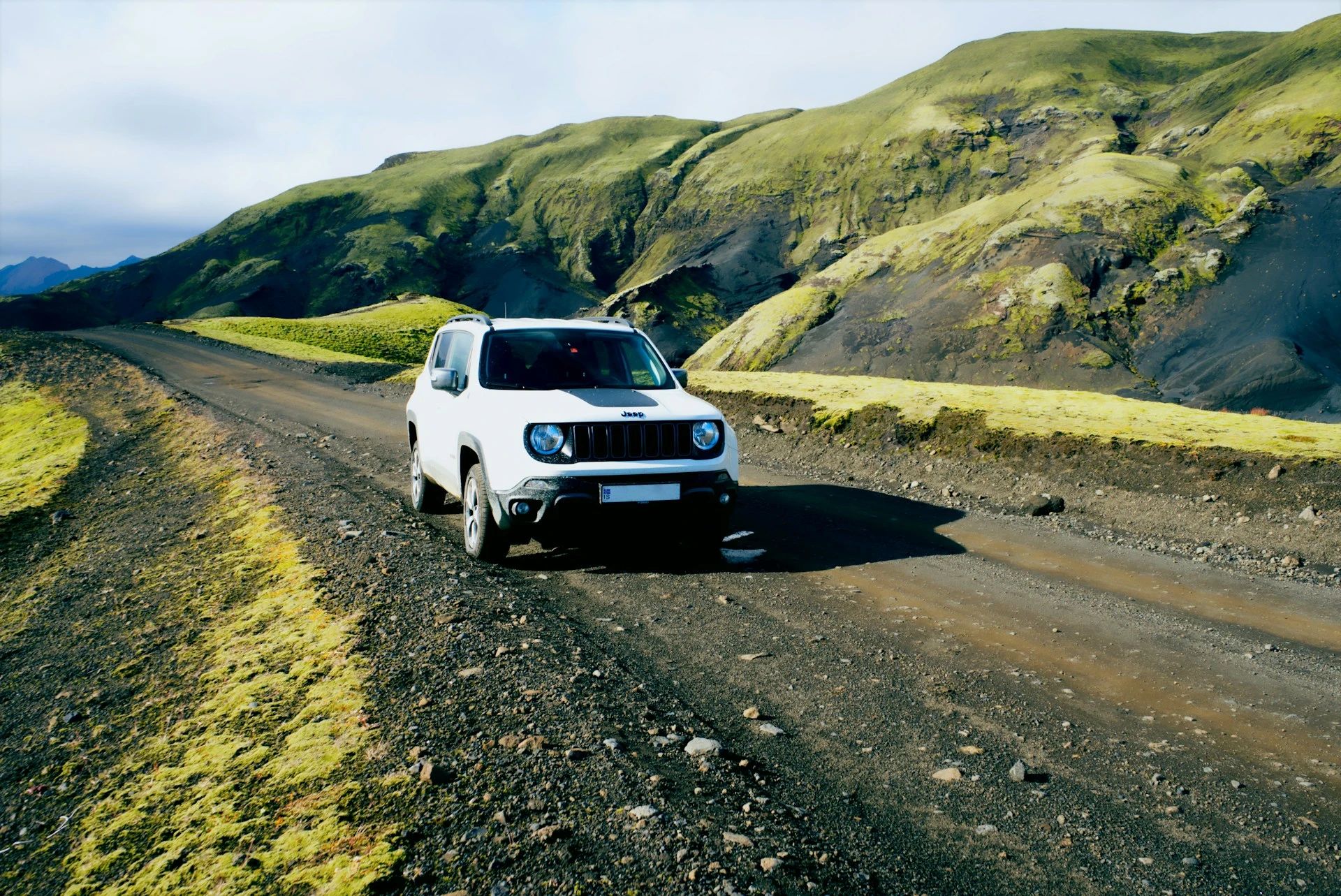
F-roads are Iceland's unpaved highland routes, open only in summer and restricted to 4x4 vehicles. Key routes, opening dates, river crossing safety, and the rules that apply.
What are F-roads?
F-roads (fjallvegir, meaning mountain roads) are Iceland's unpaved highland routes, marked with an "F" before the road number. They cross the interior highlands, a vast volcanic desert between glaciers and mountain ranges that remains largely uninhabited. For residents with a capable vehicle, these roads open up some of the most striking scenery the country has to offer.
If you are living in Iceland and own or rent a 4x4, you will eventually hear about F-roads. This article covers what they are, which vehicles are allowed, when they open, the key routes, and the rules you need to follow.
Table of Contents
Why F-roads matter if you live in Iceland
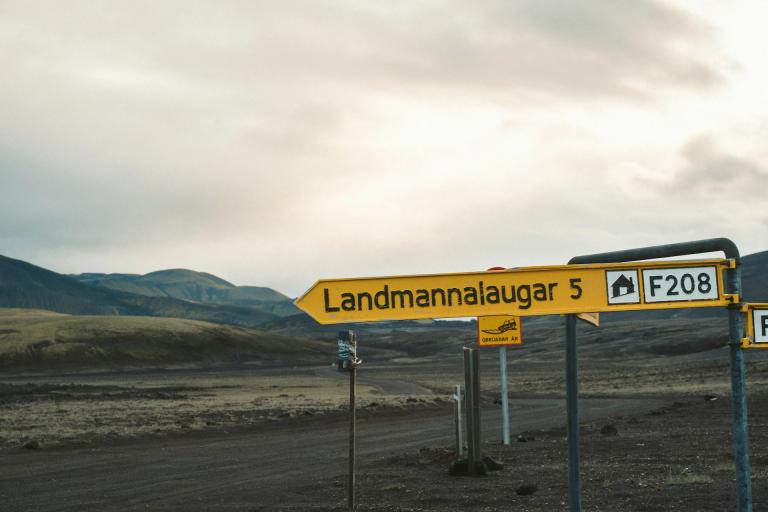 Tourists drive F-roads for a few hours. Residents return to them year after year. The highlands are where Icelanders go to disconnect, and living here means you can time trips for the best conditions rather than squeezing them into a short holiday.
Several of Iceland's most impressive natural areas are only reachable via F-roads: Landmannalaugar's hot springs, the Askja caldera, Þórsmörk valley, and the geothermal fields at Hveravellir. Once you understand how F-roads work, the interior of the country stops being a blank space on the map and becomes a regular weekend option (but only during the summer season).
Vehicle requirements
F-roads are designated for 4x4 vehicles only. Road signs at the entrance to every F-road indicate this requirement. Driving a 2WD vehicle on an F-road voids rental insurance and can result in fines under general traffic safety provisions.
The terrain explains why. F-roads include loose gravel, large rocks, steep inclines, soft sand, and river crossings. A standard passenger car lacks the ground clearance, traction, and weight to handle these conditions safely.
For most F-roads, a standard 4x4 SUV (such as a Dacia Duster, Toyota RAV4, or Suzuki Vitara) is sufficient. For routes with deep river crossings (F249 to Þórsmörk, the southern section of F208, F26 Sprengisandur), a larger vehicle with higher clearance is recommended. Modified super jeeps are common on the most extreme routes, though they are not required for the majority of F-roads.
If you are buying a car in Iceland and plan to explore the highlands, factor this into your choice. Many residents keep a capable 4x4 specifically for summer highland trips. If you are not ready to buy, renting a car with an F-road-rated category is the alternative.
When F-roads open and close
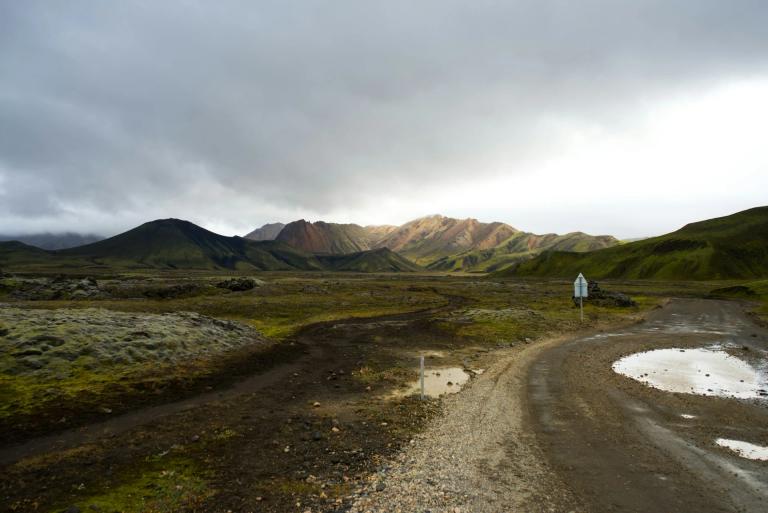 F-roads are seasonal. The highlands are closed through winter due to snow, ice, and the fragility of thawing ground. Opening dates vary by route and by year, depending on snowmelt and ground conditions.
Most F-roads open between mid-June and early July. Some easier routes (F35 Kjölur) may open in early June in good years. Remote or high-altitude routes may not open until late June or July.
Most routes close between late September and mid-October, though early snowfall can close routes sooner. Some years, roads remain passable into late October.
The Icelandic Road and Coastal Administration (Vegagerðin) publishes an annual mountain road map and updates road conditions throughout the summer. Check road.is before every highland trip. Road conditions can change within hours due to weather or river levels.
The best window for F-road driving is July through early September, when conditions are most stable, daylight is long, and all routes are typically open.
Key F-road routes
Iceland has roughly 30 designated F-roads. Here are the ones most relevant for residents.
F35 Kjölur (Kjalvegur)
The most accessible highland route, running approximately 200 km from Gullfoss in the south to Blönduós in the north. F35 has no river crossings, making it the easiest of the major highland routes. Any standard 4x4 can handle it.
Highlights include the Hveravellir geothermal area (roughly halfway along the route, with a staffed mountain hut and natural hot pool) and the Kerlingarfjöll mountain range, known for its colourful rhyolite peaks and steaming geothermal fields. F35 typically opens earlier than other highland routes and is the best first F-road for new highland drivers.
F26 Sprengisandur (Sprengisandsleið)
The longer and more remote of the two main north-south highland routes, running approximately 250 km between the south coast area and Akureyri region. F26 crosses a vast, barren volcanic desert between the Hofsjökull and Vatnajökull glaciers.
This route includes river crossings and has no services along its entire length. Carry extra fuel, food, water, and warm clothing. A larger 4x4 with good clearance is recommended. Driving F26 takes a full day and should not be started late in the day.
F208 Landmannalaugar
F208 connects the south coast (near Vík) with Landmannalaugar, one of Iceland's most popular highland destinations. The road has two sections with different characters.
The northern section (approaching Landmannalaugar from the highlands) has no river crossings and is straightforward. The southern section includes roughly 10 river crossings (most are shallow) and passes through exceptionally colourful volcanic terrain. Landmannalaugar itself offers natural hot springs for bathing, surrounded by rhyolite mountains.
F249 Þórsmörk
One of the few roads into the Þórsmörk valley, a sheltered area between three glaciers. F249 is known for its challenging final river crossing at Krossá, which is one of the largest marked river crossings on any Icelandic F-road. Water levels fluctuate significantly with temperature and rainfall.
A large, high-clearance 4x4 is strongly recommended. Many residents prefer to take the scheduled highland bus for this crossing rather than risk their own vehicle. Check conditions carefully and never cross alone.
F88 Askja (Öskjuvegur)
Starting near Mývatn in the northeast, F88 runs approximately 90 km through volcanic plains to the Askja caldera and its famous Víti crater lake. This is the shortest route to Askja. One significant river crossing (Lindaá) is required near the junction with F910.
A standard 4x4 can handle F88 in normal conditions, but the river crossing requires careful assessment. The route is remote, with no services or mobile signal for most of the drive.
Other notable F-roads
Route | Destination | Notes |
|---|---|---|
F225 | Landmannalaugar (alternate) | Eastern approach, can avoid some river crossings |
F550 | Kaldidalur | Short highland pass between Þingvellir and Húsafell, no river crossings, manageable in any 4x4 |
F578 | Arnarvatnsheiði | Remote fishing lakes in the western highlands |
F910 | Askja (from east) | Longer approach to Askja, connects to F88 |
River crossings
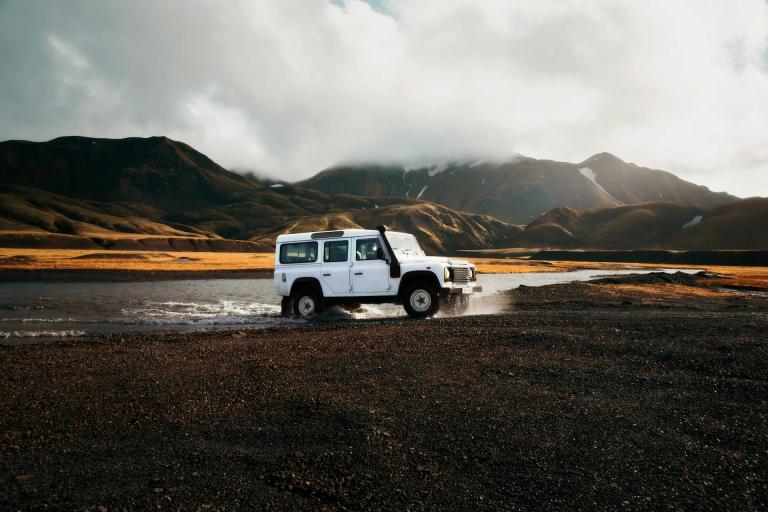 River crossings are the most dangerous part of driving F-roads. Glacial rivers change depth throughout the day (warmer temperatures increase meltwater flow, making afternoons riskier than mornings). Rain in the highlands can raise river levels rapidly.
Before crossing
Stop and assess. Walk the crossing if possible. Look for the widest, shallowest point (the strongest current is usually where the river is narrowest and deepest). Check for a firm bottom. If in doubt, wait for another vehicle or turn back.
During the crossing
Engage low-range 4WD. Enter at a steady, slow speed (walking pace). Drive slightly upstream to counteract the current. Do not stop in the river. If water reaches above the wheel centres, conditions are marginal.
If you cannot see the bottom or judge the depth, do not cross. Turning back is always an option. Glacial rivers have claimed vehicles every summer, and recovery from a remote highland river costs hundreds of thousands of ISK.
Morning crossings (before 10 AM) are generally safest because overnight temperatures reduce glacial melt.
Rules and fines
Iceland enforces strict rules around highland and off-road driving. The penalties are significant.
4x4 requirement. F-roads are designated for 4x4 vehicles only. Driving a 2WD vehicle on an F-road voids your insurance. You may also face fines under traffic safety rules. Recovery costs for a stranded vehicle in the highlands can reach 450,000 ISK or more (as of March 2026).
Closed roads. It is illegal to drive on any road marked as “Ófært” (impassable) or “Lokað” (closed) on road.is. Driving on roads before they are officially opened damages the thawing surface and can create ruts that take years to repair. Fines apply.
Off-road driving. Driving off marked roads or tracks is illegal everywhere in Iceland, not just in the highlands. Iceland’s volcanic soil and moss are extremely fragile. Moss can take decades to regrow after being driven over. Fines for off-road driving range from 100,000 ISK to over 500,000 ISK depending on the damage caused, and in severe cases penalties have exceeded 1,000,000 ISK.
Speed. The posted speed limit on gravel F-roads is 80 km/h. In practice, conditions rarely allow safe driving at that speed. Most F-road sections are better driven at 30 to 50 km/h. Adjust speed for terrain, visibility, and conditions.
For more on Iceland’s driving rules, penalties, and winter-specific regulations, see our winter driving guide and driving license conversion guide.
Safety and preparation
Highland driving is remote driving. Mobile phone coverage is limited or non-existent on most F-roads. If something goes wrong, help may be hours away.
Planning your trip
Tell someone your route and expected return time. Check conditions on road.is and weather on vedur.is. Make sure you have a full tank of fuel (and a spare fuel can for longer routes like F26). Carry food, water, warm clothing, and a first aid kit.
Vehicle checks
Confirm your spare tire is inflated and your jack works. Carry a tow rope. Check that your 4WD system (including low range, if equipped) is functioning. If renting, confirm with the rental company that the vehicle is F-road rated and understand what the insurance covers.
Emergency contacts
The Icelandic emergency number is 112. The Safetravel app allows you to log your travel plan and check in at waypoints, which helps search and rescue teams locate you if needed. ICE-SAR (the Icelandic Association for Search and Rescue) coordinates volunteer rescue teams across the country.
Weather awareness
Highland weather changes fast. Fog, rain, and wind can reduce visibility to near zero. Snow is possible at any time of year above 600 metres. If conditions deteriorate, stop and wait. Do not push through poor visibility on unfamiliar terrain.
The highlands are not something to fear. With a proper vehicle, reasonable preparation, and respect for conditions, F-roads are a regular part of life for many Icelandic residents. Start with an easier route like F35 or F550, build experience, and work up to the more challenging crossings.
For more on getting around Iceland, see our complete relocation guide and our guides to public transport and electric vehicles.
Frequently asked questions
Can I drive an F-road in a regular car?
No. Only 4x4 vehicles are legally allowed on F-roads. Driving a 2WD vehicle on an F-road voids your insurance, can result in fines, and the terrain will likely damage or strand your vehicle. Recovery costs from the highlands are substantial.
When is the best time to drive F-roads?
July through early September offers the most stable conditions, the longest daylight, and the highest chance that all routes are open. F35 (Kjölur) often opens first, sometimes in early June. Most F-roads close by late September or October.
Do I need a super jeep for F-roads?
Not for most routes. A standard 4x4 SUV handles F35, F550, F88, and the northern section of F208 without difficulty. Larger vehicles with higher clearance are recommended for routes with deep river crossings (F249, F26, southern F208). Super jeeps are only necessary for the most extreme conditions.
Is there fuel available on F-roads?
No. There are no fuel stations on F-roads. Fill up before entering the highlands and carry extra fuel on longer routes. F35 has a staffed hut at Hveravellir but no fuel. F26 has no services at all along its 250 km length.
What happens if I get stuck on an F-road?
Call 112 for emergencies. ICE-SAR volunteer teams handle highland rescues. Recovery of a stranded vehicle typically costs 450,000 ISK or more (as of March 2026), and the cost is borne by the driver. Log your travel plan at safetravel.is before entering the highlands.
Are F-roads safe for someone who just moved to Iceland?
Yes, with preparation. Start with easier routes (F35 Kjölur or F550 Kaldidalur), both of which have no river crossings. Build experience before attempting routes with river crossings. Check road.is, bring proper supplies, and do not drive alone on remote routes until you are comfortable with the conditions.
Last updated: March 2026
Helping you navigate your move and settling in the land of fire and ice.