Average salary in Iceland by industry
A breakdown of the average salary in Iceland by industry, occupation level, and region, with current figures on earnings, tax brackets, and what to expect in take-home pay.
The average salary in Iceland is higher than in most of Europe, but so is the cost of living. This guide breaks down what workers actually earn across industries, occupations, and regions, with current figures on tax, pensions, and take-home pay.
Table of contents
The big picture
Average total monthly earnings for full-time workers in Iceland were 984,000 ISK gross per month in 2024, according to Statistics Iceland. That is the headline figure, but it includes overtime and bonuses, which inflates it.
A more useful number is regular monthly earnings (base wages only): 845,000 ISK for full-time workers, with a median of 753,000 ISK (as of 2024). The median is lower because a concentration of high earners pulls the average upward. About 65% of full-time workers earn below the average.
For anyone planning a move to Iceland, the salary figures can look impressive on paper. The reality is more nuanced once you factor in Iceland's high cost of living, progressive income tax, and mandatory pension contributions.
Still, most full-time workers earn enough to live comfortably. Our complete relocation guide covers how salary, housing, and daily expenses fit together.
How wages are set in Iceland
 Iceland has no statutory minimum wage. Instead, wages are set through collective bargaining agreements (kjarasamningar) negotiated between trade unions and employer federations. Around 90% of workers are covered by a collective agreement, making union membership a defining feature of the Icelandic labour market.
The largest unions include VR (Store and Office Workers' Union) and Efling (which covers hospitality, cleaning, construction, and other service work). Each union negotiates its own wage tables, setting minimum pay rates by job category, experience, and age. These agreements are legally binding for all employers within their scope, even for employees who are not union members.
The effective minimum for full-time unskilled work is approximately 513,000–515,000 ISK gross per month (as of January 2026), based on the multi-year collective agreements signed in early 2024. These agreements run through January 2028 and include scheduled annual wage increases of 3.25% in the first year and 3.5% in each subsequent year. You can find current VR wage rates on their website.
Your union is not just a wage floor. Membership typically costs 0.7–1% of salary and gives you access to subsidised holiday cottages, gym reimbursements, continuing education funds, sick pay, and rehabilitation support. The Icelandic Confederation of Labour (ASÍ) is the umbrella organisation for most unions.
Salaries by industry
The average salary in Iceland varies significantly by sector. The following ranges represent typical gross monthly earnings for full-time employees, based on 2024 data from Statistics Iceland and sector-specific sources. All figures are gross (before tax and pension deductions).
Technology and software development. This is the highest-paying sector for employees outside of senior management and the professions. Software developers typically earn 800,000–1,200,000 ISK per month, rising to 1,400,000 ISK or more for senior engineers with 10+ years of experience. IT department heads average above 1,700,000 ISK. Iceland's tech sector employs over 12,000 people and is growing, with particular demand for AI, cloud computing, and fintech roles. The 2024 Icelandic Developer Survey provides a detailed breakdown of developer compensation.
Finance and banking. Financial services roles pay well, particularly in specialised areas. Securities and finance dealers, brokers, and financial advisors averaged above 1,700,000 ISK per month in 2024. Mid-level bank employees and accountants typically earn 800,000–1,100,000 ISK. Iceland's three major banks (Landsbankinn, Íslandsbanki, and Arion) are among the largest private-sector employers.
Healthcare. Medical specialists (doctors with a specialty) are among the highest earners in Iceland, averaging above 1,700,000 ISK per month. General practitioners earn less, typically 1,100,000–1,500,000 ISK. Nurses earn 650,000–900,000 ISK depending on experience and shift premiums. Healthcare workers are in consistent demand, particularly nurses. For more on how the Icelandic health system works, see our healthcare guide.
Construction and skilled trades. Electricians, plumbers, and carpenters are in steady demand. Skilled tradespeople typically earn 700,000–1,000,000 ISK per month, with overtime pushing total earnings higher. The construction sector has seen sustained activity driven by housing demand and infrastructure projects.
Fishing and marine industries. Fishing remains central to the Icelandic economy, though it employs fewer people than it once did. Salaries in fishing and fish processing range from 600,000–900,000 ISK per month. Earnings vary considerably by role: skippers and engineers on trawlers earn significantly more than processing plant workers. Pay is sometimes tied to catch volumes, which creates seasonal variation.
Tourism and hospitality. This sector spans hotels, restaurants, car rentals, tour operators, and activity companies. Pay ranges from 550,000–800,000 ISK per month for most roles. The lower end of this range covers housekeeping, kitchen work, and front-desk staff, while tour guides and hotel managers earn more. Tourism is seasonal, with significantly more work available from May through September.
Renewable energy and aluminium. Iceland's geothermal and hydropower industries employ engineers, technicians, and project managers at salaries of 700,000–1,100,000 ISK per month. The aluminium smelting industry (including Norðurál, Alcoa, and Rio Tinto operations) offers similar ranges for operational roles. These positions tend to be outside Reykjavik, often in eastern or western Iceland.
Education. Primary and secondary school teachers earn 650,000–850,000 ISK per month. University lecturers and professors earn 800,000–1,200,000 ISK depending on rank. Childcare workers (leikskólakennari) earn at the lower end, with average total earnings around 605,000 ISK.
Public administration. Government employees earn a wide range depending on seniority. Senior civil servants average above 1,700,000 ISK per month, while administrative and clerical roles typically fall in the 600,000–850,000 ISK range. About 38% of employed women in Iceland work in the public sector, compared to 14% of men.
For help identifying which sectors are actively hiring, see our guide to finding a job in Iceland and the in-demand jobs list. If you are a non-EEA citizen, your employer will need to sponsor a work permit before you can start.
Salaries by occupation level
 Statistics Iceland groups workers by broad occupational categories. The average salary in Iceland looks very different depending on where you fall in this hierarchy. Here is how average total monthly earnings (including overtime and bonuses) broke down for full-time workers in 2024:
Occupation group | Average total monthly earnings (ISK) |
|---|---|
Managers | 1,534,000 |
Professionals (specialists) | 1,100,000–1,300,000 |
Technicians and associate professionals | 900,000–1,050,000 |
Clerical support workers | 700,000–850,000 |
Service and sales workers | 650,000–750,000 |
Skilled agricultural and trades workers | 800,000–950,000 |
Plant/machine operators and assemblers | 750,000–900,000 |
Elementary occupations (unskilled) | 706,000 |
The highest-earning individual occupations included chief executives and directors (averaging around 2,400,000 ISK per month), judges, medical specialists, air traffic controllers, senior operations managers, and IT department heads (all above 1,700,000 ISK). The lowest-paid occupations included library and mail clerks (573,000 ISK), laundry workers (578,000 ISK), and childcare workers (605,000 ISK).
Understanding your take-home pay
Gross salary in Iceland can look generous. What lands in your bank account is a different story. Three deductions reduce your payslip before you see a króna.
Income tax. Iceland uses a progressive tax system with three brackets (as of 2026, per the Directorate of Internal Revenue):
Monthly income | Rate |
|---|---|
0–498,122 ISK | 31.49% |
498,123–1,398,450 ISK | 37.99% |
Over 1,398,450 ISK | 46.29% |
These rates include both the national income tax and the average municipal tax (14.94% in 2026). A personal tax credit of 72,492 ISK per month (869,898 ISK per year) effectively makes the first portion of your income tax-free.
Pension contributions. Every employee must contribute at least 4% of gross wages to a pension fund. Your employer adds a minimum of 11.5%, bringing the total mandatory contribution to 15.5%. You can choose to contribute an additional 2% or 4% to a voluntary supplementary pension fund, which triggers an extra 2% employer match. Many workers take this option as it is effectively a pay raise. For more on how the tax system works, see our tax guide.
Union dues. Typically 0.7–1% of salary.
A worked example. A full-time worker earning the median of 753,000 ISK gross per month would take home roughly 540,000–560,000 ISK after income tax, pension (4%), and union fees. That is a useful reality check against the average salary in Iceland headlines.
For context, a single person in Reykjavik needs roughly 375,000–560,000 ISK per month to cover rent, groceries, transport, and basic expenses. Use our cost of living calculator to build a personalised budget.
Regional salary differences
 Most jobs in Iceland are concentrated in the greater Reykjavik area, and the average salary in Iceland is highest there. The capital region average sits around 850,000 ISK per month for full-time workers.
Outside Reykjavik, pay is lower but so is the cost of living, especially rent. Southern Iceland (towns like Selfoss and Höfn) averages around 700,000 ISK per month. Western Iceland, including the Westfjords, averages around 675,000 ISK, with most employment in fishing.
Eastern Iceland is similar, around 675,000 ISK, though the aluminium industry provides some higher-paying roles in the region.
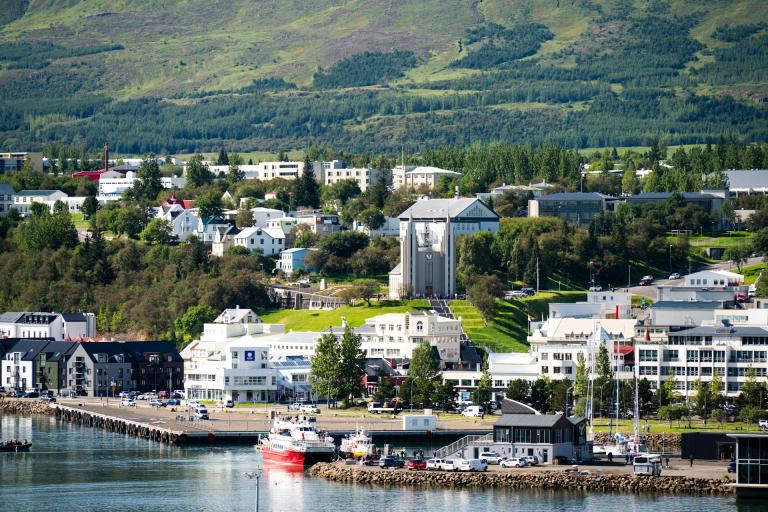
Akureyri, Iceland's second-largest town, falls between Reykjavik and rural areas. It has a university, a regional hospital, and a growing service economy. If you are considering life outside the capital, our guide on living outside Reykjavik covers what to expect.
What affects your salary
Education. Workers with a university degree earn roughly 30–40% more than those with only secondary education. In some fields (medicine, law, engineering), formal qualifications are a prerequisite for the role itself, not just a salary bump.
Icelandic language skills. Learning Icelandic is not strictly required for many jobs, especially in IT and tourism. But it opens doors in the public sector, healthcare, education, and smaller companies. Workers who speak functional Icelandic tend to earn more and advance faster. Our guide to learning Icelandic covers your options.
Experience. Iceland rewards tenure. Collective agreements build in automatic salary step increases based on years of service, not just individual negotiation. A developer earning under 800,000 ISK at entry level can expect to be in the 1,000,000–1,400,000 ISK range within a decade.
Sector and employer size. Large employers (banks, municipalities, the university, Landspítali hospital) tend to pay higher base salaries than small businesses. The public sector and private sector pay roughly comparable base wages on average, but total compensation (including overtime) can differ.
Gender pay gap. Iceland leads the world on gender equality and has required employers with 25+ employees to obtain an Equal Pay Certification (jafnlaunavottun) since 2018. The unadjusted gender pay gap was 10.4% in 2024, according to Statistics Iceland. Part of this gap is explained by differences in paid hours (men average 177.9 hours per month versus 172 for women) and the concentration of women in lower-paying public sector roles.
Bonuses and extra compensation
Icelandic workers receive two guaranteed annual bonuses, established through collective agreements and backed by law.
The desemberuppbót (December bonus) is paid in the last month of the year and amounts to at least 114,000 ISK for full-time workers (as of 2026, per the VR/SA collective agreement). The orlofsuppbót (holiday bonus) is paid in May or June, currently at least 62,000 ISK (as of 2026, per the VR holiday bonus schedule). Both are pro-rated for part-time employees.
Overtime pay is common, especially in sectors like fishing, construction, and healthcare. Each collective agreement defines its own hourly rate coefficients and overtime premiums.
Under the VR/SA agreement, for example, after-hours work is paid at roughly 0.875% of monthly base wages per hour, while overtime carries a higher premium. The exact rates depend on your union and role. VR publishes its current wage calculation formulas online.
Many employers also offer non-cash benefits: gym subsidies, continuing education allowances, meal contributions, and company car agreements. These vary widely by employer and are often negotiated individually.
Frequently asked questions
What is the average salary in Iceland?
Average total monthly earnings for full-time workers were 984,000 ISK gross in 2024, according to Statistics Iceland. The median (a better indicator for most people) was 753,000 ISK in regular earnings. After tax and pension deductions, a median earner takes home roughly 540,000–560,000 ISK per month.
Does Iceland have a minimum wage?
No statutory minimum wage exists. Wages are set through collective bargaining agreements between trade unions and employers.
The effective minimum for full-time unskilled work is approximately 513,000–515,000 ISK gross per month (as of January 2026). Since around 90% of workers are covered by a collective agreement, this floor applies broadly.
How much do software developers earn in Iceland?
Entry-level developers typically earn under 800,000 ISK per month. With a few years of experience, most move into the 800,000–1,000,000 ISK range.
Senior developers with 10+ years earn 1,000,000–1,400,000 ISK, and the most experienced can exceed 1,600,000 ISK. These figures are gross and come from the 2024 Icelandic Developer Survey.
How much tax will I pay on my salary?
Iceland's 2026 income tax rates (including municipal tax) are: 31.49% on the first 498,122 ISK per month, 37.99% on income between 498,123 and 1,398,450 ISK, and 46.29% on income above that. A personal tax credit of 72,492 ISK per month reduces your effective rate.
You also pay 4% in mandatory pension contributions. For a detailed breakdown, see our tax system guide.
Do I need to speak Icelandic to earn a good salary?
Not necessarily. English-speaking roles exist in IT, tourism, and some multinational companies. That said, Icelandic language skills give you access to more positions (especially in government, healthcare, and education) and tend to improve your earning potential over time.
Are salaries higher in Reykjavik than the rest of Iceland?
Yes. Full-time workers in the capital region earn around 850,000 ISK per month on average, compared to 675,000–700,000 ISK in most other regions. The difference partly reflects the types of jobs available: most finance, tech, and government positions are based in or near Reykjavik.
Last updated: March 2026