Best neighborhoods in Reykjavík for new residents

A profile of every neighborhood and municipality in the Reykjavík capital area, covering rent, transit access, character, and who each area suits.
The capital area, explained
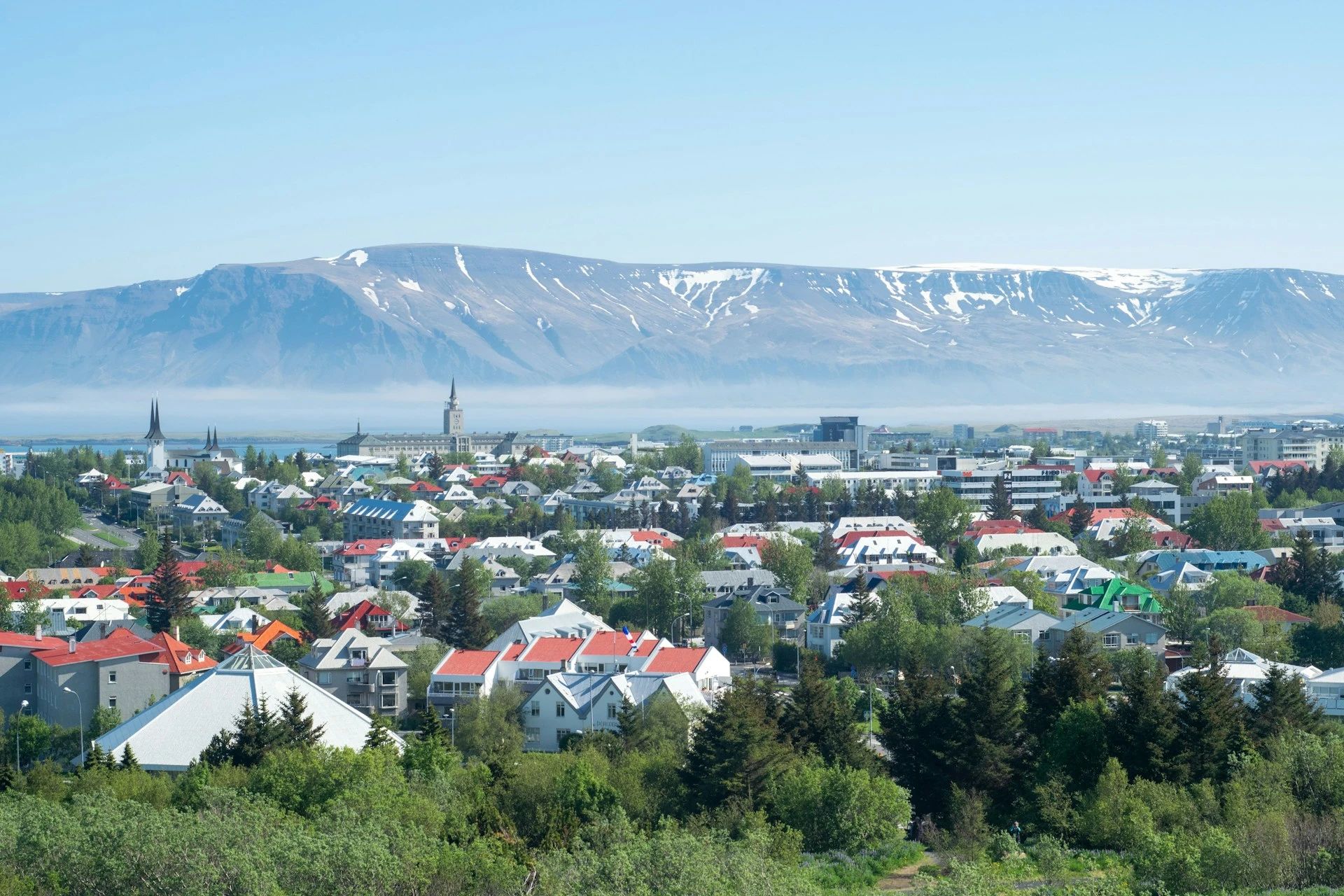
When most people say "Reykjavík," they mean the entire höfuðborgarsvæðið (capital region). This is the urban area where roughly 249,000 of Iceland's 390,000 people live (as of January 2025), and where the vast majority of immigrants settle. About 65% of first and second-generation immigrants in Iceland live here.
The capital region is not one city. It is seven municipalities: Reykjavík itself, plus Kópavogur, Hafnarfjörður, Garðabær, Mosfellsbær, Seltjarnarnes, and Kjósarhreppur. The first six are urban and share a bus system (Strætó). Kjósarhreppur is a small rural municipality (~250 people). The six urban municipalities function as a single urban area.
There is no single "best" neighborhood. The right area depends on your budget, whether you have children, how you get to work, and what kind of daily life you want. This article profiles each area on its own terms so you can make that call yourself.
For a full walkthrough of the apartment search process, see our guide to finding a rental in Iceland. For current pricing data, see our rent cost guide. For a broader look at what relocation involves, start with our complete moving to Iceland guide.
Table of contents
How to read this guide
Each neighborhood profile below covers the same basics: location, character, typical rent, transit access, and who tends to live there. Rent figures are approximate ranges for the area as of early 2026 and reflect what you can realistically expect on the open market (Facebook groups, Myigloo.is, and similar platforms). Registered contract averages from HMS tend to run lower.
Postal codes are included because rental listings in Iceland almost always reference them. For a full map of which codes correspond to which areas, see our postal codes guide.
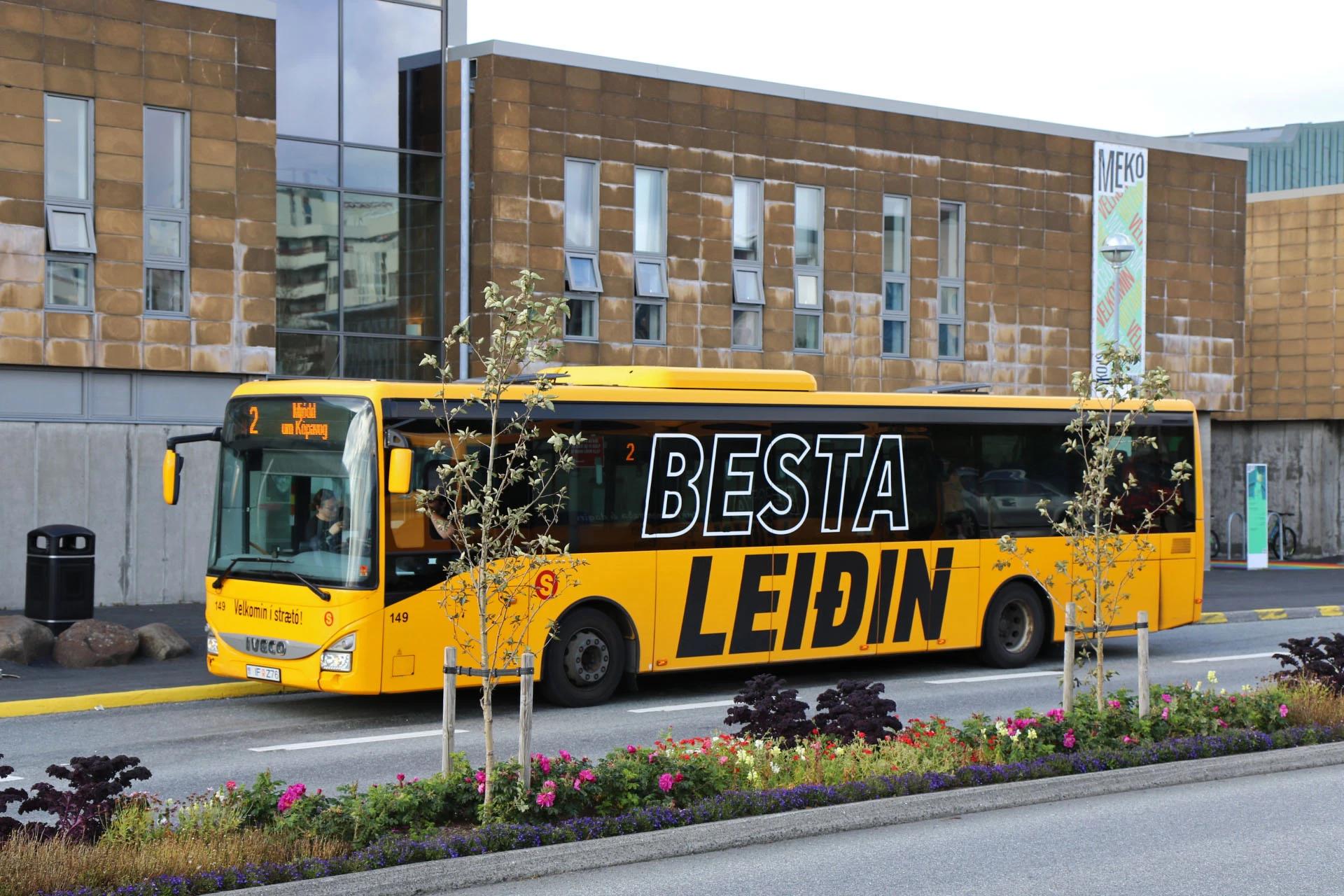
All neighborhoods in the capital region are served by Strætó buses, though frequency and coverage vary. Downtown Reykjavík and the Strætó app are the hubs. The further out you go, the more a car matters.
101 / Downtown (Miðborg)
Postal code: 101 Municipality: Reykjavík
Downtown Reykjavík is the cultural and commercial center of Iceland. Laugavegur (the main shopping street), Hallgrímskirkja, Harpa concert hall, most of the country's restaurants and bars, and the parliament building are all here. It is compact and walkable.
For newcomers, 101 offers the easiest adjustment. Nearly everything is within walking distance: grocery stores (Bónus on Laugavegur, Krónan, Hagkaup), cafes, the city library, and nightlife. English works everywhere. The international community is most visible here.
The trade-off is cost. Rent in 101 is among the highest in Iceland. Expect to pay 280,000–380,000 ISK per month for a one-bedroom apartment (as of early 2026). Studios are sometimes available for less, but competition is fierce. Apartments tend to be small and old, often in converted buildings without elevators or in-unit laundry.
Parking is limited and metered during the day. Street noise from weekend nightlife is a real factor if your apartment faces Laugavegur or the surrounding bar district.
Suits: Single professionals, remote workers, people who want walkability and social access above all else. Less practical for families or anyone who needs a car daily.
Vesturbær
Postal code: 107 Municipality: Reykjavík
Vesturbær sits west of downtown, stretching from the Old Harbor and Grandi area down through quiet residential streets. It is one of the most established neighborhoods in Reykjavík, with housing stock dating to the early 1900s. The streets are tree-lined by Icelandic standards, and the houses tend to be larger than in 101.
The Grandi district along the harbor has become a cultural draw in recent years, with the Grandi Mathöll food hall, FlyOver Iceland, and several museums. The University of Iceland campus borders the neighborhood to the south.
Vesturbær has a family-friendly reputation. Vesturbæjarlaug (one of Reykjavík's best-loved swimming pools) is here, and the area has good schools. It feels residential and quiet while still being a 10–15 minute walk from downtown.
Rent is comparable to 101, sometimes slightly lower for equivalent space. Expect 260,000–360,000 ISK for a one-bedroom (as of early 2026). Availability is limited because residents tend to stay.
Suits: Families, academics, anyone who wants proximity to downtown without living in the middle of it.
Hlíðar and Laugardalur
Postal codes: 105 (Hlíðar), 104 (Laugardalur) Municipality: Reykjavík
These two neighborhoods sit just east of downtown, separated from it by Miklabraut, the main highway that cuts through Reykjavík. They are often grouped together because they share a similar residential character and are both well connected to the center.
Hlíðar (105) is primarily family housing with a mix of apartment blocks and older detached homes. Hlemmur Mathöll, the food hall that replaced the old bus terminal, sits at its western edge. The area has a central feel without the tourist foot traffic of 101.
Laugardalur (104) is Reykjavík's recreation hub. Laugardalslaug, the city's largest swimming pool, is here, along with a botanical garden, sports facilities, an ice rink, and the Laugardalur park. It is one of the fastest-growing districts in Reykjavík by population (614 new residents in 2024 alone, according to Statistics Iceland).
Rent in both areas tends to be slightly more affordable than 101 or Vesturbær. A one-bedroom typically runs 240,000–330,000 ISK (as of early 2026). Bus connections along Miklabraut are frequent.
Suits: Families, sports enthusiasts, anyone who wants a quieter residential area within easy reach of downtown.
Breiðholt
Postal codes: 109, 110, 111 Municipality: Reykjavík
Breiðholt is one of the largest districts in Reykjavík, with about 22,178 residents (as of January 2025). It was built rapidly in the 1960s and 1970s to address a housing shortage, and the architecture reflects that era with rows of concrete apartment blocks.
It is the most internationally diverse neighborhood in Reykjavík. The proportion of foreign-born residents in some parts of Breiðholt reached 48% in the 2021 census, according to Statistics Iceland. Polish, Lithuanian, and other Eastern European communities are well established. You will find international grocery stores here that stock products unavailable elsewhere in the capital.
Rent in Breiðholt is among the lowest in Reykjavík proper. A one-bedroom apartment typically costs 200,000–280,000 ISK (as of early 2026). For newcomers on a tight budget, this is one of the most affordable options within the city.
The Mjódd bus terminal serves as a secondary transit hub for the eastern side of the capital area, with multiple Strætó routes converging here. The main shopping center is also at Mjódd. The bus ride to downtown takes about 20 minutes.
Breiðholt has its own swimming pool (Breiðholtslaug), schools, and services. It is a functional neighborhood. It does not have the charm of Vesturbær or the walkability of 101, but it offers space and affordability that other parts of Reykjavík cannot match.
Suits: Budget-conscious newcomers, families who need space, anyone who values an established immigrant community nearby.
Grafarvogur
Postal code: 112 Municipality: Reykjavík
Grafarvogur is a suburban district in the northeast of Reykjavík, built mostly from the 1980s onward. It was designed for families: detached houses with gardens, wide streets, playgrounds, and good schools. The neighborhood has a quiet, residential character.
It sits along the coast of Grafarvogur bay, and several walking paths run along the waterfront. The area is less dense than older parts of Reykjavík and feels distinctly suburban. The proportion of immigrants here is among the lowest in the city (around 4% in some sections, per the 2021 census).
Rent is moderate by capital area standards. Expect 230,000–310,000 ISK for a one-bedroom or small two-bedroom apartment (as of early 2026). Houses for rent occasionally appear but are rare.
The main downside is distance. Grafarvogur is about a 15–20 minute drive from downtown, and bus service, while available, is less frequent than in more central areas. A car is close to essential here.
Suits: Families with children, people who prefer suburban quiet and have a car.
Árbær
Postal codes: 110 (partial) Municipality: Reykjavík
Árbær sits in eastern Reykjavík, between Breiðholt and Grafarvogur. It developed primarily in the 1960s and 1970s but has a greener, more spread-out feel than Breiðholt. The Elliðaárdalur valley runs through the area, a surprisingly lush green corridor with walking trails, a salmon river, and a waterfall.
The Árbær Open Air Museum, which reconstructs historic Icelandic buildings in a village setting, is a local landmark. The district has its own swimming pool (Árbæjarlaug), schools, and a commercial area.
Rent is similar to Breiðholt or slightly higher. A one-bedroom apartment typically costs 210,000–290,000 ISK (as of early 2026). The area attracts a mix of families and working professionals.
Bus connections to downtown run along the main corridors, with a ride time of roughly 20–25 minutes. Like Grafarvogur, a car makes daily life easier.
Suits: Families, people who value green space and a slightly quieter residential pace, anyone looking for affordability within Reykjavík city limits.
Kópavogur
Postal codes: 200, 201, 203 Municipality: Kópavogur (population ~35,000)
Kópavogur is Iceland's second-largest municipality, directly south of Reykjavík. The boundary between the two is invisible at street level. To a newcomer, much of Kópavogur feels like a continuation of Reykjavík's southern suburbs.
The town has its own commercial center around the Smáratorg area, anchored by the Smáratorg Tower (Iceland's tallest building) and a large shopping mall. Two swimming pools, multiple schools, and the Gerðarsafn art museum round out the local amenities. Kópavogur is self-sufficient for daily needs.
Rent varies across the municipality. Eastern Kópavogur (203) has some of the highest average rents per square meter in the capital area outside central Reykjavík, partly because apartments there tend to be newer and larger. Western Kópavogur is generally more affordable. Across the town, expect 230,000–320,000 ISK for a one-bedroom (as of early 2026).
Strætó bus routes connect Kópavogur to downtown Reykjavík in about 15–20 minutes, depending on the route. Bus 1, one of the most frequent routes in the system, runs directly between Kópavogur and the city center.
Suits: Families, working professionals who want suburban convenience with good transit connections, anyone looking for a self-contained town that is still effectively part of the capital.
Garðabær
Postal codes: 210, 225 (Álftanes) Municipality: Garðabær (population 20,116 as of January 2025)
Garðabær sits between Kópavogur and Hafnarfjörður along the coast. It is one of the more affluent municipalities in the capital area. The housing stock is newer on average than in Reykjavík, with a mix of single-family homes and apartment buildings.
The municipality includes the Álftanes peninsula (postal code 225), which is home to Bessastaðir, the official residence of the president of Iceland. The area is quiet, residential, and scenic.
Garðabær is also where you will find the only IKEA and Costco stores in Iceland. For practical daily life, this matters more than it might sound.
Rent in Garðabær tends to sit at the higher end of the capital area range. Expect 260,000–350,000 ISK for a one-bedroom (as of early 2026), with larger family homes commanding significantly more. The proportion of immigrants is among the lowest of any capital area municipality.
Bus service connects to both Reykjavík and Hafnarfjörður, though frequency is lower than in Kópavogur. Having a car is the norm here.
Suits: Families with higher budgets, people who want newer housing and a quieter suburban setting, anyone who values proximity to big-box retail (IKEA, Costco).
Hafnarfjörður
Postal codes: 220, 221 Municipality: Hafnarfjörður (population ~31,500)
Hafnarfjörður is Iceland's third-largest municipality, located about 10 km south of Reykjavík. It has a distinct identity as a port town with a long history. The town center, concentrated around the old harbor, has a small-town feel with independent shops, cafes, and a few good restaurants.
The town is known for its connection to huldufólk (hidden people) folklore and hosts an annual Viking festival in June. These are tourist draws, but they also reflect a genuine local culture that sets Hafnarfjörður apart from the more generic suburbs.
For residents, the key advantage is relative affordability. Rent in Hafnarfjörður is generally lower than in Reykjavík or Garðabær. A one-bedroom apartment typically runs 210,000–290,000 ISK (as of early 2026).
Hafnarfjörður has its own schools, swimming pool, shopping, and medical services. It functions as a self-contained town. The Strætó bus 1 route connects it to downtown Reykjavík in about 25–30 minutes. An aluminum smelter operates on the outskirts, which is worth knowing if you are considering housing on the southern edge of town.
Suits: People who want a town with its own character and community, budget-conscious families, anyone who does not need to be in central Reykjavík daily.
Mosfellsbær
Postal codes: 270, 271 Municipality: Mosfellsbær (population nearly 14,000)
Mosfellsbær lies about 12 km northeast of Reykjavík, on the way toward the interior. It is the most nature-adjacent municipality in the capital area. Mt. Esja, one of Iceland's most popular hiking mountains, rises directly behind the town.
The town has a literary connection: Nobel Prize-winning author Halldór Laxness lived and worked at Gljúfrasteinn, his home just outside town, which is now a museum.
Mosfellsbær feels semi-rural in parts, with horse farms and open land mixing with newer residential developments. The town center is small but functional, with a school, a swimming pool, and basic shops.
Rent is generally lower than in Reykjavík proper, reflecting the distance from the center. Expect 200,000–270,000 ISK for a one-bedroom (as of early 2026). The drive to downtown Reykjavík takes about 15 minutes by car. Bus service exists but runs less frequently than in the core capital area.
Suits: Nature lovers, horse enthusiasts, remote workers who value quiet surroundings, anyone who wants a small-town feel within commuting distance of the capital.
Seltjarnarnes
Postal code: 170 Municipality: Seltjarnarnes (population ~4,700)
Seltjarnarnes is a small peninsula municipality at the westernmost tip of the capital area, bordered by the ocean on three sides. It is the smallest municipality in Iceland by land area (about 2.1 km²) and the most densely populated.
The area is almost entirely residential. There is no commercial center to speak of, no nightlife, and very few services beyond schools and a medical center. The Grótta lighthouse, accessible on foot at low tide, is a local landmark and a popular spot for sunset walks and northern lights viewing.
Despite its size, Seltjarnarnes has a loyal following among residents. It is exceptionally quiet, the ocean views are constant, and it sits only about 5–7 minutes by car from downtown Reykjavík. Walking and cycling paths along the coast are excellent.
Rent availability is very limited because the housing stock is small and turnover is low. When apartments do come up, expect 250,000–330,000 ISK for a one-bedroom (as of early 2026). Bus service connects to downtown, though frequency is modest.
Suits: People who prioritize quiet, coastal living, and do not mind limited local amenities. Best for those with a car.
Which area suits you?
Rather than ranking neighborhoods, here is a practical framework.
If your budget is tight: Look first at Breiðholt, Árbær, Hafnarfjörður, and Mosfellsbær. These offer the lowest rents in the capital area while still providing access to jobs and services.
If you have children: Grafarvogur, Garðabær, and Kópavogur are popular family choices with strong schools and safe, quiet streets. Vesturbær and Laugardalur also work well for families who want to stay closer to the city center.
If you do not have a car: Stick to 101, Vesturbær, Hlíðar, or Laugardalur. These areas are walkable and have the best bus connections. Kópavogur also works if you live near a Bus 1 route.
If you work remotely: The whole capital area is viable. Consider Mosfellsbær or Seltjarnarnes for quiet and nature, or Hafnarfjörður for character and lower costs.
If you want community as a newcomer: Breiðholt has the largest established immigrant community. Downtown Reykjavík (101) and Vesturbær have the most internationally oriented social scenes.
For a full breakdown of monthly costs across the capital area, see our cost of living guide. If you are still planning your first weeks, our first 30 days checklist walks through the practical steps of getting set up.
Frequently asked questions
Is the capital area safe? Yes. Iceland consistently ranks as one of the safest countries in the world, and that applies across the entire capital area. There are no neighborhoods that a newcomer should avoid for safety reasons. Crime rates are low everywhere.
Can I live in the capital area without a car? In the most central parts of Reykjavík (101, 107, 105, 104), yes. Strætó buses cover the capital area, but service frequency drops the further out you go. If you live in Grafarvogur, Mosfellsbær, or Garðabær, a car makes daily life significantly easier. See our public transport guide for routes and schedules.
Which neighborhoods have the lowest rent? Breiðholt, Árbær, and Hafnarfjörður consistently offer the most affordable rents in the capital area. Mosfellsbær is also relatively affordable. Central areas (101, Vesturbær) are the most expensive.
Where do most immigrants live? Immigrants are spread across the capital area, but Breiðholt has the highest concentration of foreign-born residents. Kópavogur and Hafnarfjörður also have sizeable immigrant populations. Garðabær, Grafarvogur, and Seltjarnarnes have the lowest proportions.
Are there international schools in the capital area? A small number of international schools in Reykjavík offer English-medium instruction, primarily serving the diplomatic and expat community. Tuition is significant. Most children of immigrants attend Icelandic-language public schools, where support programs help with the language transition.
How different are the municipalities from each other? Each municipality sets its own local policies on things like daycare fees, services, and property taxes. In practice, the differences are modest. Daycare (leikskóli) waitlists and fees can vary between municipalities, which is worth checking if you have young children. See our daycare guide for details.
Last updated: March 2026
Helping you navigate your move and settling in the land of fire and ice.