A practical guide to public transport in Iceland, covering the Strætó bus network, fares, intercity routes, airport transfers, domestic flights, cycling, and what it takes to live in Iceland without a car.
The short version
Public transport in Iceland exists, but it is not comparable to what you may be used to in mainland Europe. The capital area has a functional bus network. Outside Reykjavík, service drops off sharply.
If you are moving to Iceland and plan to rely on public transport, you can make it work in the greater Reykjavík area. You will need patience, planning, and a willingness to adapt your schedule around bus timetables. For a full picture of what daily life costs look like (transport included), see our cost of living guide.
Table of contents
The Strætó bus network in the capital area
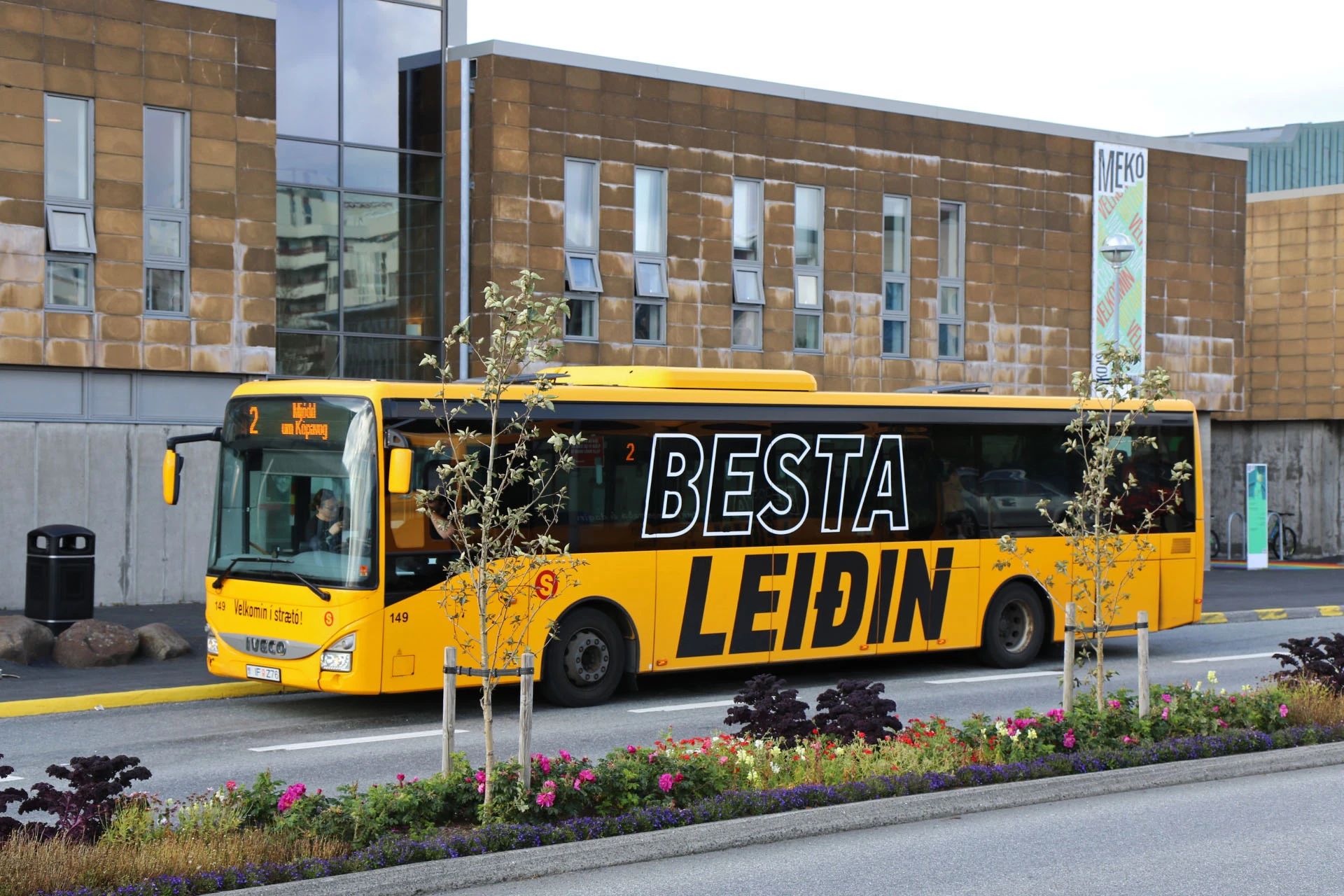
Strætó (Iceland's public bus company) is the backbone of public transport in Iceland. It operates 29 routes in the capital area, connecting Reykjavík with Kópavogur, Hafnarfjörður, Garðabær, Mosfellsbær, and Seltjarnarnes. The company is owned by the six municipalities in the capital region.
The five busiest routes (1, 3, 5, 6, and 12) run every 10 minutes during peak hours and every 15 minutes between peaks on weekdays. Most other routes run every 15 minutes at peak and every 30 minutes off-peak. On weekends, frequency drops to 30 minutes on most routes.
Buses start running around 06:30 on weekdays, 07:30 on Saturdays, and 09:30 on Sundays and public holidays. Most routes finish between 23:30 and 01:00. On public holidays, buses generally follow a Sunday schedule.
Night buses operate on Friday and Saturday nights, running from the city centre out to the suburbs on an approximately hourly basis. Five night bus routes (101, 103, 104, 105, and 106) serve the capital area. The night bus fare is the same as a standard adult fare.
Mjódd is the main transfer hub for connecting between city routes and regional/long-distance services.
How to pay for the bus
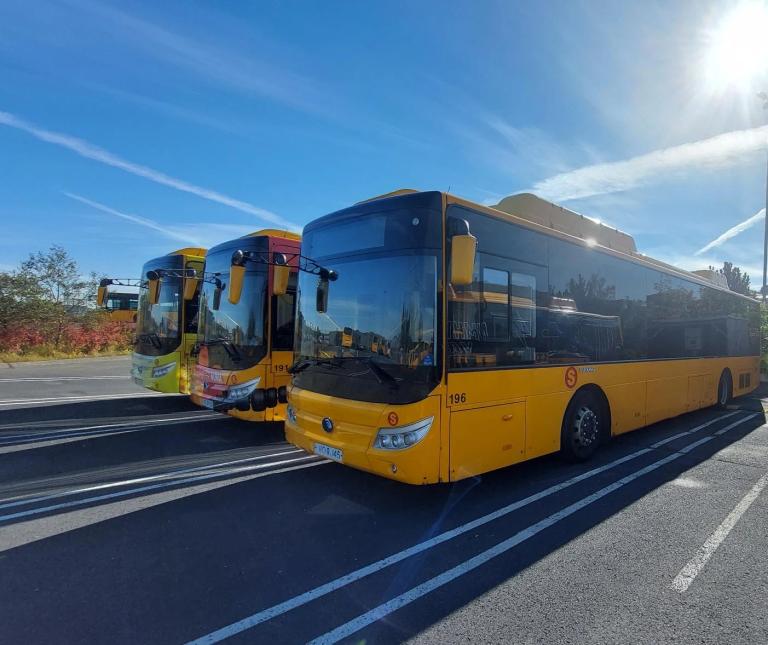 Cash is no longer accepted on Strætó buses in the capital area (as of June 2025). You have three payment options.
Contactless payment card. Tap your Visa or Mastercard on the reader when you board. Strætó's fare capping system (called Kapp) ensures you never pay more than three rides per day or nine per week, as long as you use the same card every time.
The Klapp app. Download the Klapp app, buy single tickets or load a pass, and scan the QR code on the reader when you board. The app also lets you plan routes and track buses in real time.
Klapp card or keychain. A reusable contactless card or keychain (1,000 ISK to purchase) that you top up online at klappid.is. Scan it on the reader when boarding. Klapp ten cards (disposable cards with 10 preloaded tickets) are also available.
A single ticket is valid for 75 minutes from activation, allowing unlimited transfers during that window.
Fares and passes
All fares below are as of March 2026, sourced from straeto.is.
Single fare (capital area)
Category | Price | Discount |
|---|---|---|
Adult | 690 ISK | 0% |
Young person (12–17) | 345 ISK | 50% |
Elderly (67+) | 345 ISK | 50% |
Disabled | 207 ISK | 70% |
Children (11 and under) | Free | 100% |
30-day pass
Category | Price |
|---|---|
Adult | 11,600 ISK |
Student (18+), young person, or elderly | 5,800 ISK |
Disabled | 3,480 ISK |
Annual pass
Category | Price |
|---|---|
Adult | 116,000 ISK |
Student (18+), young person, or elderly | 58,000 ISK |
Disabled | 34,800 ISK |
For daily commuters, the 30-day pass is the clear winner. At 11,600 ISK per month (roughly $83 USD as of March 2026), it is one of the cheapest monthly transport costs in the Nordic region. Even without a pass, the fare capping system limits your daily spend to three rides and your weekly spend to nine.
Strætó is phasing out 1-day and 3-day passes, though unused passes remain valid until used.
Long-distance and countryside buses
Strætó also operates around 30 routes outside the capital area, funded and planned by Vegagerðin (the Icelandic Road and Coastal Administration). For anyone relying on public transport in Iceland beyond Reykjavík, these are the main options. The countryside bus network underwent a major overhaul in January 2026, splitting long-distance routes from commuter services to improve reliability.
Key long-distance routes after the January 2026 reform:
Route 50 (new) runs between Reykjavík, Akranes, and Borgarnes. This was split off from Route 57 so that the western commuter service operates independently.
Route 51 now runs only between Selfoss and Reykjavík, with increased weekday frequency. It no longer continues south along the coast.
Route 52 now runs the full south coast from Reykjavík to Höfn in Hornafjörður, passing through Vík, Skaftafell, and Jökulsárlón. It operates four days per week (Tuesdays, Thursdays, Fridays, and Sundays).
Route 53 (new) connects Selfoss to Landeyjahöfn and Hvolsvöllur, linking to the Herjólfur ferry for the Westman Islands. If you are traveling from Reykjavík to Landeyjahöfn, you now need to transfer at Selfoss (Route 51 to Selfoss, then Route 53 to Landeyjahöfn).
Route 55 runs daily between the capital area and Keflavík Airport (see airport section below).
Route 57 connects Reykjavík to Akureyri. It now runs one trip per day, every day, and no longer stops in Akranes (use Route 50 instead). The journey takes 8–10 hours, far longer than driving (roughly 5 hours). Passengers from Akranes can take Route 50 to Borgarnes and transfer to Route 57 there.
Long-distance fares are zone-based and significantly higher than capital area fares. Check specific fares using the route planner at straeto.is. Season tickets for specific regions are available for 1, 3, or 12 months.
Countryside routes are limited. Some are seasonal, and a few are request-only (you must call ahead). Weather disruptions are common in winter.
Nearly all provincial buses in South Iceland now run on electric power, with the exception of the Höfn–Vík–Höfn service. This is part of a broader push toward clean energy in Iceland's transport network.
Getting to and from Keflavík Airport
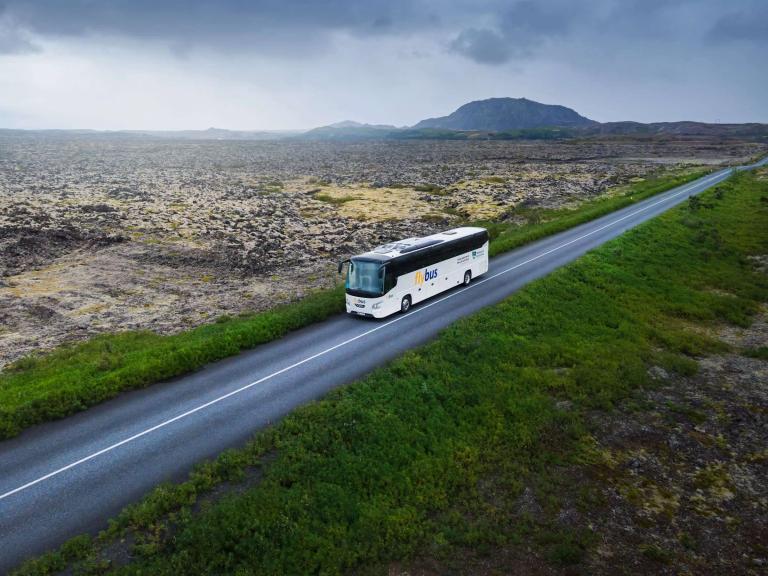 Keflavík International Airport sits about 50 km southwest of Reykjavík. There is no rail link. Your main options:
Flybus is the most popular airport transfer. Operated by Reykjavík Excursions, it departs 35–45 minutes after every arriving flight and runs to the BSÍ Bus Terminal in central Reykjavík. The journey takes about 45 minutes.
A one-way ticket costs 3,999 ISK to BSÍ, or 4,999 ISK with a hotel drop-off connection (as of 2026). Book at flybus.is or buy at the airport. Tickets from the airport are flexible (valid on any departure), while return tickets from BSÍ are booked for a fixed time.
Strætó Route 55 is the public bus between the capital area and Keflavík Airport. It runs daily but less frequently than Flybus, and the fare is lower. Check straeto.is for the current schedule and fares.
Airport Direct (Gray Line) offers a similar shuttle service to Flybus, with prices starting around $30 USD one way.
Taxis from Keflavík to Reykjavík cost 20,000–40,000 ISK depending on time of day and destination. Uber and Lyft do not operate in Iceland.
For your first arrival in Iceland, the Flybus is the most practical option. Once you are settled, the Strætó Route 55 is cheaper for routine trips. For a broader overview of settling in after you land, see our first 30 days checklist.
Public transport in Akureyri
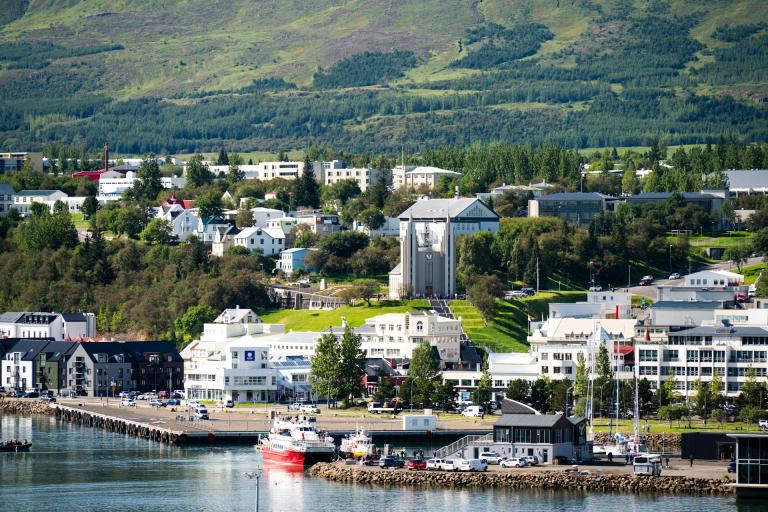 Akureyri, Iceland's second-largest urban area with around 20,000 residents, has its own local bus system. The standout detail: it is completely free.
The city operates three routes (R1, R3, and R4), all running in loops that start and end at Miðbær (the town centre stop near the main square). Each loop takes 30–50 minutes.
Buses run from approximately 06:30 to 23:00 on weekdays, and from around 12:00 to 19:00 on weekends and holidays. Schedules are available on the Akureyri municipality website and through the Strætó app.
The free bus system is a genuine perk, but the network is small. If you live and work within Akureyri proper, it can cover your basic commuting needs. For anything beyond town limits, you will need a car.
Strætó long-distance routes also serve Akureyri, and from January 2026, countryside bus services connect to Akureyri Airport, coordinated with Icelandair flight schedules.
Domestic flights
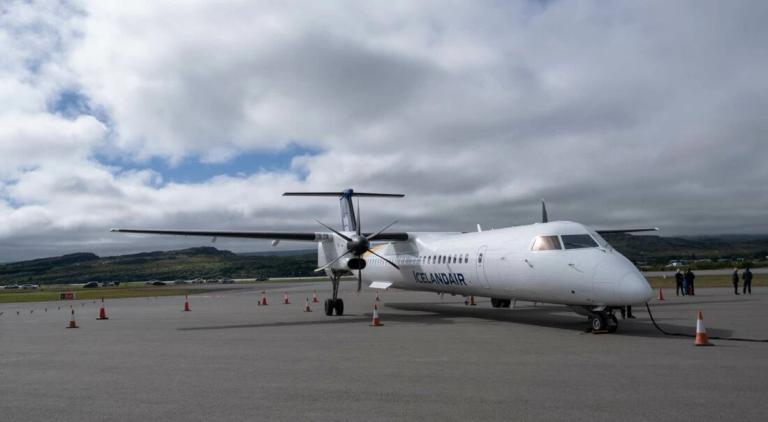 For reaching parts of Iceland that buses take a full day to serve, domestic flights are the practical alternative. Flights depart from Reykjavíkurflugvöllur (Reykjavík Domestic Airport, code RKV), located about 1.5 km from the city centre. This is a different airport from Keflavík International Airport (KEF), which handles international flights.
Icelandair operates domestic flights from Reykjavík Domestic Airport to Akureyri, Egilsstaðir, Ísafjörður, and Höfn (added September 2025). The Reykjavík-to-Akureyri flight takes about 40 minutes, compared to roughly 5 hours by car or 8–10 hours by bus. Icelandair has announced it will discontinue its Ísafjörður route after summer 2026, due to the retirement of the Dash-8 200 aircraft (the only plane in its fleet small enough to land there).
Norlandair operates smaller routes from Akureyri to Þórshöfn, Vopnafjörður, and Grímsey, as well as scheduled flights from Reykjavík Domestic Airport to Bíldudalur and Gjögur in the Westfjords. Norlandair has also operated short-term winter routes to Vestmannaeyjar under government contract (most recently December 2025 through February 2026), though this is not a permanent scheduled service. Icelandair adds flights to Vestmannaeyjar during the annual Þjóðhátíð festival in early August, but neither airline provides year-round scheduled air access to the islands.
Domestic flights are not cheap, but for residents of remote areas, they are sometimes the only realistic year-round connection. If you settle outside the capital region, keeping an eye on Icelandair's domestic schedules will become second nature.
Allow extra time if you need to transfer between Reykjavík Domestic Airport and Keflavík International Airport. The two airports are about 50 km apart, and the transfer takes 45–90 minutes depending on your transport method.
Ferries
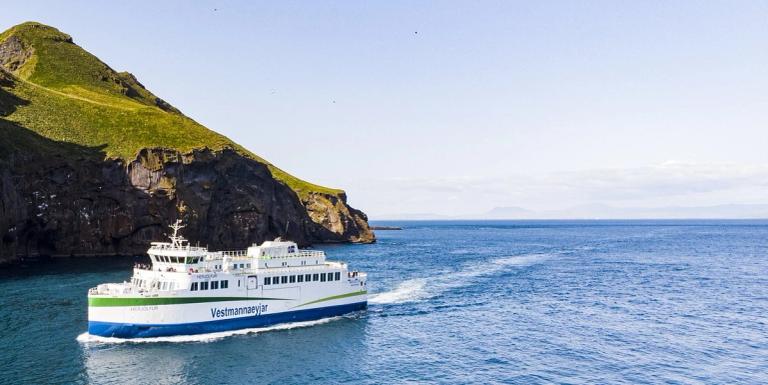 Two ferry services are relevant for residents.
Herjólfur, operated by Herjólfur ohf., connects Landeyjahöfn on the south coast to Vestmannaeyjar (the Westman Islands) with seven daily sailings. The crossing takes about 35 minutes. In winter, when weather closes Landeyjahöfn, the ferry operates from Þorlákshöfn instead, extending the crossing to roughly 3 hours. This ferry is a lifeline for the roughly 4,400 residents of the Westman Islands.
The Viðey ferry runs between Reykjavík harbour and Viðey island, primarily for day visitors. It is not a commuter route.
Cycling
Cycling is a growing part of Reykjavík's transport mix, though it is still a small share of total trips.
Reykjavík has approximately 45 km of dedicated cycling paths, with more under construction. The city's Biking Plan aims to increase the share of trips made by bicycle to 10%, up from about 7% currently and just 1% in 2002. All city-run primary schools now provide bike parking.
E-bikes are classified as regular bicycles under Icelandic law as long as the motor cuts out above 25 km/h and does not exceed 250 watts. Beyond those limits, the vehicle is classified as a moped and requires a licence and insurance.
Winter cycling is possible and increasingly common. In early 2025, cycling traffic in the capital area rose 6.2% in January and 21.7% in February compared to the same months in 2024. That said, wind, ice, and darkness are real challenges from November through February.
If you live and work within central Reykjavík or a nearby suburb, cycling can replace bus trips entirely during the warmer months. Combined with a bus pass for winter, it is one of the cheapest transport setups available. For more on driving and car ownership as an alternative, see our buying a car guide.
E-scooters and car-sharing
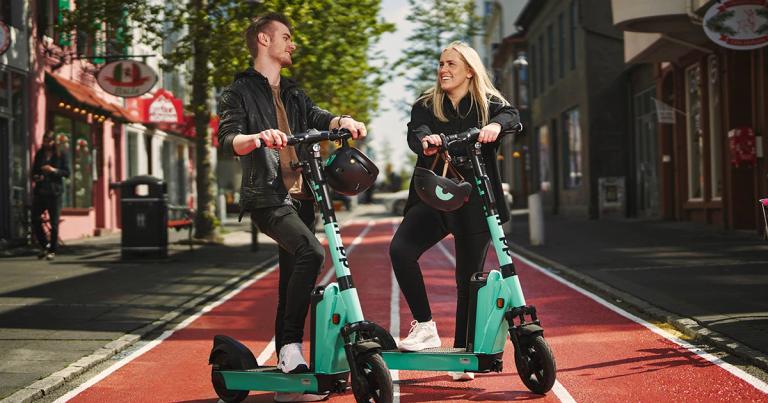 Hopp is Iceland's main shared mobility platform, offering e-scooters, shared electric cars (deilibílar), and taxi booking through a single app.
E-scooters are available around Reykjavík and several other towns across Iceland. You pay per minute through the app, and the scooters run on bike paths and pavements (not roads). No driving licence is required.
Scooters are seasonal and typically unavailable during winter months. Bolt also operates e-scooters in Reykjavík.
Hopp's car-sharing service is more useful for residents. Over 70 electric cars (including vans) are available for short-term rental across Reykjavík, starting from 65 ISK per minute (as of 2024). Hopp also sells passes that bring the per-minute cost down for regular users.
You unlock and return the car through the app, parking anywhere within the operating zone. Cars cannot be left at Keflavík Airport, but you can drive outside the zone and return within it. For someone without a car, this fills the gap for errands, furniture shopping, or a day trip that buses cannot easily cover.
Taxis
Taxis exist in Reykjavík but are expensive. A typical starting fare is around 730 ISK, with roughly 350 ISK per additional kilometre (as of early 2026). A short cross-town trip can easily run 3,000–6,000 ISK, and airport transfers cost 20,000–40,000 ISK.
There is no Uber or Lyft in Iceland. Hopp offers taxi booking through its app, or you can call one of the main operators (Hreyfill at 588 5522 or BSR at 561 0000) or hail one at a stand.
Borgarlína and what is coming next
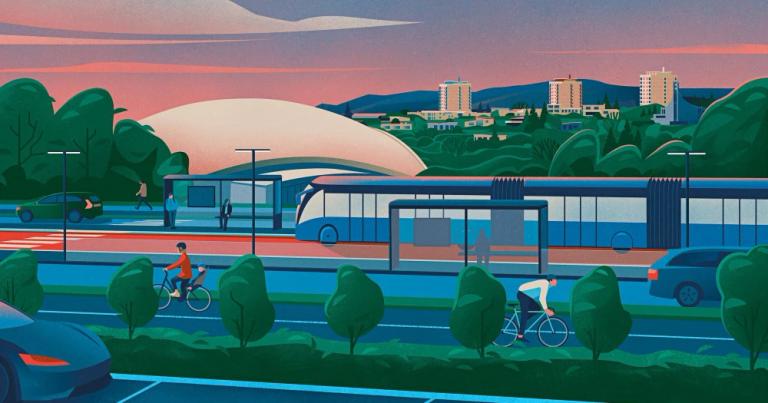 The biggest change on the horizon for public transport in Iceland is Borgarlína (City Line), a proposed bus rapid transit (BRT) system for the capital area.
The plan calls for 18–24 metre articulated buses running every 7.5 minutes in dedicated lanes, with platform-level boarding and off-board fare collection. The first phase covers a 14.5 km route connecting Hamraborg in Kópavogur to downtown Reykjavík, including a new bridge across Fossvogur Bay reserved for buses, cyclists, and pedestrians.
The project is managed by Betri samgöngur (Transport for the Capital Area) and estimated to cost around 70 billion ISK. The first route was originally planned for 2025, then pushed to 2026. Current estimates suggest late 2026 or early 2027 for the opening of the first section.
The practical takeaway is that public transport in the capital area should improve meaningfully over the next few years. Additional phases extending the network are planned for 2029 and 2034.
Living on public transport in Iceland
Most Icelanders own a car. That is not stubbornness or habit. It reflects the reality that public transport coverage drops off fast once you leave the capital area.
That said, it is possible to live without a car in Iceland if:
You live and work within the greater Reykjavík area. The Strætó bus network, combined with cycling and the occasional taxi, can cover most daily needs. A 30-day bus pass costs 11,600 ISK, and the fare capping system protects you even without a pass.
You are willing to plan around schedules. Buses run less frequently in evenings, on weekends, and especially on holidays. Grocery runs, social plans, and errands may need to align with timetables.
You accept limitations outside the city. Day trips to the countryside, visits to friends in other towns, and weekend getaways will require rental cars, group rides, or long-distance buses with limited schedules.
If you live in Akureyri, the free bus system helps within town, but you will almost certainly need a car for anything beyond the immediate area.
For more on what life in Iceland actually looks like in the first weeks, see our complete relocation guide.
Frequently asked questions
How much does a monthly bus pass cost in Reykjavík?
A standard adult 30-day pass costs 11,600 ISK (as of March 2026). Students (18+), young people (12–17), and seniors (67+) pay 5,800 ISK. Children 11 and under ride free. Buy passes through the Klapp app or at Klapp vendors around the city.
Can I use a credit card to pay for the bus?
Yes. Strætó accepts contactless Visa and Mastercard payments on all capital area buses. Cash has not been accepted since June 2025. The fare capping system automatically limits your spend to three rides per day or nine per week when using the same card.
Is public transport in Akureyri really free?
Yes. Akureyri's city buses are free for all passengers, residents and visitors alike. The system runs three routes on weekdays (roughly 06:30–23:00) and reduced hours on weekends (roughly 12:00–19:00).
How do I get from Keflavík Airport to Reykjavík?
The Flybus shuttle is the most common option, departing 35–45 minutes after every arriving flight and reaching BSÍ Bus Terminal in about 45 minutes. One-way tickets cost 3,999 ISK (as of 2026). The public bus (Strætó Route 55) is cheaper but runs less frequently. Taxis cost 20,000–40,000 ISK.
Is it possible to live in Iceland without a car?
In the greater Reykjavík area, yes, with some flexibility. Public transport in Iceland covers the main residential and commercial areas of the capital region, and cycling infrastructure is improving. Outside the capital, it is very difficult. Countryside bus service is limited, seasonal in some areas, and does not reach many smaller communities.
What is Borgarlína?
Borgarlína is a planned bus rapid transit system for the capital area, with dedicated bus lanes, high-frequency service, and modern stations. The first 14.5 km section is expected to open in late 2026 or early 2027, connecting Kópavogur to downtown Reykjavík.
Last updated: March 2026