Learning Icelandic

A practical guide to learning Icelandic as an immigrant, covering free online courses, in-person schools, union reimbursement, the citizenship language test, and study tips.
Why learning Icelandic matters
Learning Icelandic is the difference between getting by and building a real life in Iceland. Icelandic proficiency affects your career options, your social life, and eventually your path to citizenship.
English will get you through daily life. Most Icelanders speak it well, and many workplaces in tourism, tech, and international companies operate partly or entirely in English. You can rent an apartment, open a bank account, and buy groceries without a word of Icelandic.
Government jobs, healthcare positions, teaching roles, and most public-sector work require functional Icelandic. Even in private-sector roles where English is the working language, Icelandic speakers are promoted more often and integrate faster into workplace culture.
Learning Icelandic also matters for social integration. Icelanders have tight, long-established social circles, and switching to English for your benefit requires effort they may not always sustain.
Speaking even basic Icelandic changes the dynamic. It signals commitment, and Icelanders respond to that. For more on building a social life here, see our guide to making friends in Iceland.
Contents
What makes Icelandic hard (and what helps)
Icelandic is a North Germanic language, closely related to Faroese and descended from Old Norse. Unlike Danish, Norwegian, and Swedish, Icelandic has preserved much of its medieval grammar. Modern Icelanders can still read the 13th-century sagas in the original text, which gives you a sense of how little the written language has changed.
For learners, the main challenges are grammatical. Icelandic has four cases (nominative, accusative, dative, genitive), three grammatical genders (masculine, feminine, neuter), and an extensive conjugation system for verbs.
Nouns, adjectives, and even numbers change form depending on their role in the sentence. This is the feature that trips up most English speakers, because English dropped its case system centuries ago.
The good news: Icelandic pronunciation is regular and predictable once you learn the rules. Words are stressed on the first syllable, almost always.
If you speak English, German, or Dutch, you will recognise many Icelandic words. The vocabulary shares deep Germanic roots: the word for "water" is vatn, "house" is hús, "book" is bók. These connections add up.
Icelandic also has a small set of unique letters you will need to learn: þ (thorn, pronounced like the "th" in "think"), ð (eth, pronounced like the "th" in "this"), and accented vowels (á, é, í, ó, ú, ý, ö, æ) that each have a distinct sound.
How long it takes
There is no honest shortcut here. Learning Icelandic to conversational fluency takes most people 1–2 years of consistent study. Our complete relocation guide covers the basics, but this article goes deeper.
The government's basic Icelandic curriculum for immigrants is built around 240 hours of instruction, which brings students to roughly the A2 level on the Common European Framework of Reference for Languages (CEFR). That is enough to handle everyday situations, follow simple conversations, and read short texts. Most in-person course providers structure their programmes to deliver those 240 hours across five to six levels.
Getting beyond A2 to genuine conversational fluency (B1–B2) typically requires additional study, immersion, and daily practice. Your speed depends on your first language (speakers of other Germanic languages have an advantage), how much time you dedicate, and how much you use Icelandic outside the classroom.
The single most common mistake: relying on classes alone and defaulting to English everywhere else. People who progress fastest are the ones who force themselves to use Icelandic at the grocery store, with colleagues, and in social settings, even when it feels clumsy.
Free online courses
The best free resource is Icelandic Online, developed and maintained by the University of Iceland. It offers six self-directed courses:
Course | Level (CEFR) | Focus |
|---|---|---|
Survival Course (Bjargir) | Pre-A1 | Everyday phrases for people living and working in Iceland |
Icelandic Online 1 | A1 | Beginner grammar and vocabulary, two themes (Nature and Culture) |
Icelandic Online 2 | A1/A2 | Lower intermediate, builds on IOL 1 |
Icelandic Online 3 | A2/B1 | Intermediate |
Icelandic Online 4 | B1/B2 | Upper intermediate |
Icelandic Online 5 | B2/C1 | Advanced |
Each course corresponds to roughly 45–90 hours of study. The courses are entirely free, self-paced, and available to anyone with an internet connection.
They include interactive exercises, listening practice, grammar explanations, and glossaries. The language of instruction is English.
For learners who want tutor feedback, the University also offers Icelandic Online PLUS, a paid distance-learning version of the first two levels that includes written assignments reviewed by a tutor.
Another free resource is Tungumálatorg (Language Square), maintained by Miðstöð menntunar og skólaþjónustu (the Directorate of Education and School Services). It hosts textbooks, audio files, video lessons, and self-assessment tools at tungumálatorg.is. The materials are designed to accompany classroom instruction but are freely accessible for self-study.
In-person courses in Iceland
Most immigrants in Iceland learn Icelandic through in-person courses offered by lifelong learning centres and private language schools. Courses typically run in the evenings (two to three sessions per week) to accommodate working adults, and each level lasts one to two months.
The major providers in the Reykjavik capital area include:
Mímir Símenntun is the largest provider and the one most closely tied to the union system. Owned by the Icelandic Confederation of Labour (ASÍ), Mímir offers Icelandic courses at six levels, plus specialised courses (workplace Icelandic, citizenship test preparation). A standard 40-hour course costs approximately 59,500 ISK (as of March 2026).
Mímir also runs the Landnemaskólinn (School of Settlers), a joint programme with the Efling union that combines spoken Icelandic with an introduction to Icelandic society. Courses are available in Icelandic taught through multiple languages, including Polish, Vietnamese, Lithuanian, and Arabic. More at mimir.is.
Múltikúlti offers courses on six levels, work-related seminars, and cultural integration sessions. Located centrally in Reykjavik.
The Tin Can Factory takes a more conversational, immersive approach. Known for innovative teaching methods and smaller class sizes.
Lóa Language School offers both in-person and online courses with a structured textbook-based approach. Placement tests available for students unsure of their level. More at loalanguageschool.is.
Retor specialises in Icelandic courses for Polish and English speakers.
Typical costs for in-person courses range from 50,000–70,000 ISK per level (as of March 2026), though many students pay far less after union reimbursement (see below).
Courses outside the capital area
Learning Icelandic is not limited to Reykjavik. Lifelong learning centres across Iceland offer courses for immigrants, usually at similar price points and with similar structures to capital-area providers.
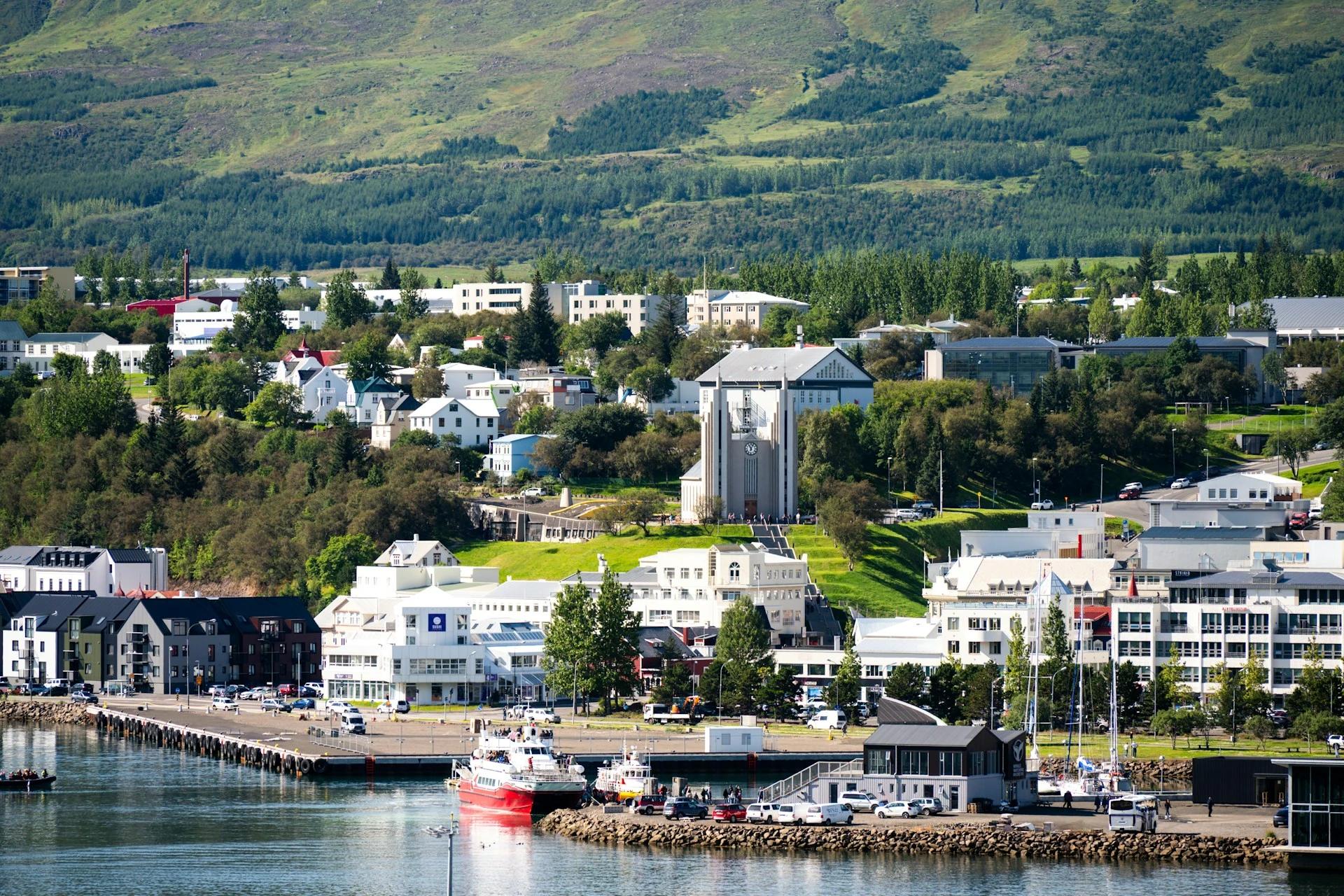
SÍMEY in Akureyri (North Iceland) offers Icelandic as a second language at multiple levels. Fræðslunetið covers South Iceland. Miðstöð símenntunar á Suðurnesjum (MSS) serves the Reykjanes Peninsula, including Keflavik.
Westfjords Educational Center offers courses in Ísafjörður. Austurbrú provides courses in East Iceland.
The Multicultural and Information Centre (Fjölmenningarsetur) maintains a directory of all registered course providers nationwide, organised by region. If you live outside the capital area, start there.
University programmes
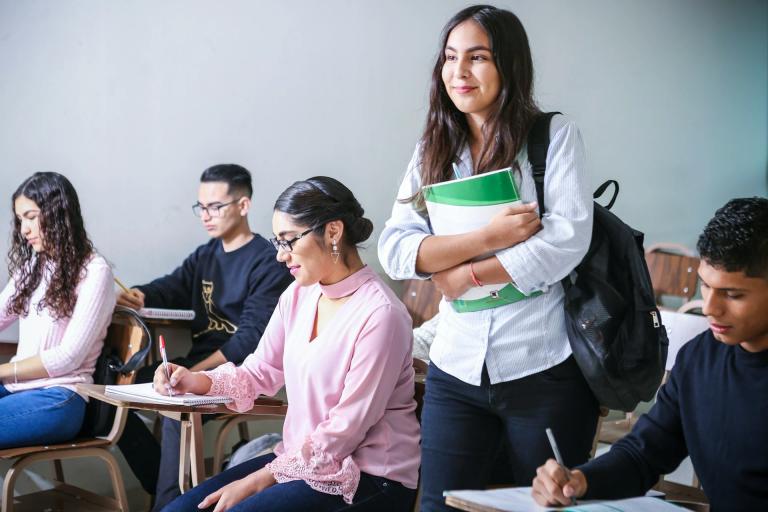 For learners who want formal academic credentials or deep fluency, the University of Iceland offers three programmes through its Faculty of Humanities:
Practical diploma in Icelandic (one year, full-time). Six hours of classroom instruction per week plus independent work. Designed for residents who need functional Icelandic for daily life and employment.
Starting in the 2026–2027 academic year, the University has capped enrollment at 50 non-EEA students per year for this programme. Citizens of Switzerland, Greenland, and the Faroe Islands are exempt, as are holders of permanent or qualifying residence permits. This was a University Council decision from December 2025.
Academic Icelandic, Diploma (two years, part-time). Aimed at immigrants who want to pursue further university study in Icelandic. Includes specialisations in educational studies and health sciences alongside language instruction.
BA in Icelandic as a Second Language (three years, full-time). A full undergraduate degree combining language instruction with Icelandic literature, history, and culture. Nine hours of classroom time per week.
The University of Iceland is tuition-free for all students. The annual registration fee is 100,000 ISK (as of January 2025). Non-EEA/EFTA applicants pay an additional one-time processing fee of 20,000 ISK.
Note: the Icelandic government is considering introducing tuition fees for non-EEA/EFTA students beginning studies in 2026 or later. Check the University's fees page for the latest information.
The Icelandic government also awards approximately 12 scholarships per year for international students to pursue the BA programme, administered by the Árni Magnússon Institute for Icelandic Studies. These cover registration fees and a monthly living stipend.
Applications are due by December 1 each year, and applicants must have completed at least one year of university-level humanities study. Details at arnastofnun.is.
The University of Akureyri offers a 6-ECTS Icelandic course each semester for degree-seeking and exchange students. The University Centre of the Westfjords in Ísafjörður runs summer intensive courses at multiple levels, from one-week crash courses to three-week programmes.
The Árni Magnússon Institute also organises an international summer school in modern Icelandic language and culture each July, in cooperation with the University of Iceland's Faculty of Humanities. It is open to anyone but primarily intended for university students of languages and literature.
Private tutors
If classroom schedules do not fit your work hours, private tutoring is a common alternative. Several independent teachers offer one-on-one or small-group lessons online and in person, often at rates of 10,000–15,000 ISK per 45-minute session.
Union education funds typically reimburse private tutor fees at the same rates as classroom courses, provided the tutor is with an accredited provider. Ask your union for eligible options.
How to pay for Icelandic courses
This is where Iceland's union system becomes extremely relevant. If you are employed in Iceland, your labour union almost certainly has a fræðslusjóður (education fund) that reimburses language course fees.
The typical reimbursement rate is 75–90% of course costs. Some unions cover up to 100%. Major unions like Efling, VR, and BHM all provide this benefit.
A 59,500 ISK course at Mímir could cost you as little as 6,000–15,000 ISK out of pocket after reimbursement.
To access reimbursement, contact your union (ask your employer which stéttarfélag (labour union) you belong to) and ask about the process. You will typically need to submit a receipt and proof of course completion. Each union has its own rules on maximum annual amounts and eligible providers.
If you are unemployed and registered with the Directorate of Labour (Vinnumálastofnun), you may be eligible for fully funded Icelandic courses at accredited providers. Recipients of social assistance benefits and people with refugee status are also entitled to reimbursement for at least two Icelandic courses, according to the Multicultural Information Centre.
The Icelandic government subsidises course fees broadly through grants to course providers, which is why prices are lower than you might expect for classroom instruction. A 2023 government initiative allocated at least 1.4 billion ISK to strengthen Icelandic language programmes, with several measures specifically targeting immigrant access to language training.
The citizenship language test
If you plan to apply for Icelandic citizenship, you will need to pass the ríkisborgarapróf (citizenship language test). This is a legal requirement for all adult applicants.
The test assesses Icelandic at the A1–A2 level on the CEFR scale, which corresponds to the completion of the standard 240-hour immigrant curriculum. It covers four skills equally weighted: speaking, listening, reading, and writing. In practical terms, you need to handle everyday conversations, follow simple news coverage, and write short texts in plain Icelandic.
The test is held twice a year, in spring (typically May) and autumn (typically November). Spring sessions are available in Reykjavik, Akureyri, Egilsstaðir, and Ísafjörður. Autumn sessions are usually limited to Reykjavik and Akureyri.
Registration is handled through Mímir, and closes several weeks before the exam dates.
The test fee is 40,000 ISK (as of November 2025). Results are delivered electronically.
The pass rate is high. In recent testing rounds, 84–90% of test-takers met the minimum requirements, according to the Directorate of Education and School Services. If you have completed the standard course sequence and practised regularly, you are likely to pass.
Exemptions exist for applicants aged 65 or older (with seven years of domicile), those with documented medical or learning conditions, and children attending or younger than primary school. You must provide supporting documentation to qualify for an exemption.
Apps, tools, and practice resources
Beyond formal courses, several tools can supplement your learning:
TVÍK is an award-winning digital Icelandic course (winner of Gulleggið 2022) built around conversation simulations. It costs 48,500 ISK, though union reimbursement often applies, and the developers offer discounts for learners who cannot afford the full price.
The first week is free to try. Available at tvik.is.
Icelandic Online (covered above) remains the best free structured resource for grammar and reading practice.
Tungumálatorg hosts free textbooks (Íslenska fyrir alla (Icelandic for Everyone), Books 1–4), audio files, video lessons (Viltu læra íslensku?, meaning "Do you want to learn Icelandic?"), and self-assessment tools.
RÚV (Icelandic public broadcasting) is free and available online at ruv.is. Watching Icelandic television with Icelandic subtitles is one of the most effective passive learning methods once you reach the A2 level.
Ylhýra is a free reading comprehension tool.
Bara Tala is a digital Icelandic learning tool designed for use in the workplace. It is currently available only through employers, not directly to individuals. If your employer offers it, take advantage.
Pimsleur and LingQ both offer Icelandic courses through their paid platforms, and can be useful supplements for listening and vocabulary building.
Language cafés and practice events. The City Library of Reykjavik at Grófin runs a regular series called Ertu að læra íslensku? ("Are you learning Icelandic?") with conversational practice events, museum tours, and games. These are free and open to all levels.
Mímir hosts Saturday morning practice sessions (free, at Höfðabakki 9) for learners with at least some basic skills.
You can also practise Icelandic through the language learning games on MovingToIceland.com, which include flashcards, sentence-building exercises, and multiple-choice vocabulary games in several languages.
Tips that actually help
Start before you arrive. Work through the Icelandic Online Survival Course and Level 1 before you move. Even basic familiarity with pronunciation and common phrases will give you a significant head start.
Use Icelandic at every opportunity. Order food in Icelandic. Read signs. Listen to RÚV. The temptation to fall back on English is strong because Icelanders will happily switch, but resisting that switch is how you improve.
If an Icelander responds to your Icelandic in English, politely ask to continue in Icelandic. Most people are supportive once they understand you are learning.
Focus on patterns, not memorisation. Icelandic grammar has many rules, but the rules are consistent. Once you internalise the case system and verb conjugation patterns, new words slot into place more easily. A good teacher will help you see the patterns rather than memorise individual forms.
Do not skip levels. The temptation to rush through beginner material is strong, especially for speakers of other Germanic languages who recognise vocabulary. But Icelandic grammar builds on itself. Shaky foundations in the case system at A1 will haunt you at B1.
Accept imperfection. You will make grammatical errors for years. Icelanders understand learners well, even when forms are simplified. Communicating imperfectly in Icelandic is more valuable for your progress than communicating perfectly in English.
Read for pleasure. Children's books, news sites for learners, and the Icelandic sagas in simplified editions are all good starting points. Reading builds vocabulary and reinforces grammar in context.
If you have children, they will likely learn Icelandic faster than you. Most children of immigrants adapt to Icelandic-language instruction within one to two years, with support programmes available during the transition. For details on how the school system handles this, see our Icelandic school system guide.
For a broader look at cultural integration, including social norms, directness, and how to build relationships, see our guide to Icelandic culture for foreigners.
Icelandic course directory
The table below lists verified course providers across Iceland, organised by region. Most accept union reimbursement. Contact providers directly for current schedules and pricing.
Online and nationwide
Provider | Notes |
|---|---|
Free, six self-paced levels (A1–C1), University of Iceland | |
Paid tutor-supported version of levels 1–2 | |
Paid digital course, conversation simulations, first week free | |
Free textbooks, audio, video lessons, self-assessment tools |
Reykjavik capital area
Provider | Notes |
|---|---|
Largest provider, six levels, multilingual classes, citizenship test prep | |
Six levels, courses taught in multiple languages including Ukrainian and Polish | |
Conversational approach, levels A–E, day and evening classes | |
Structured textbook-based, online and in-person, free placement test | |
Icelandic for Polish and English speakers | |
Small groups, private lessons, citizenship test prep, online available | |
Very small classes (1–4 students), courses for specific language groups | |
BA, practical diploma, academic diploma (see University programmes above) |
South Iceland
Provider | Notes |
|---|---|
Lifelong learning centre, levels 1–5 | |
Icelandic courses in the southern region |
Reykjanes Peninsula (Suðurnes)
Provider | Notes |
|---|---|
Keflavik area, levels 1–5 |
North Iceland
Provider | Notes |
|---|---|
Akureyri, multiple levels | |
6-ECTS course each semester for degree and exchange students | |
Various educational programmes including Icelandic |
Westfjords
Provider | Notes |
|---|---|
Ísafjörður, summer intensives (1–3 weeks), A1 to B2 | |
Lifelong learning in the Westfjords |
East Iceland
Provider | Notes |
|---|---|
Icelandic as a second language in East Iceland |
The Multicultural and Information Centre (Fjölmenningarsetur) maintains the most complete and regularly updated directory of course providers. If a provider is not listed here, check there.
Frequently asked questions
Can I live in Iceland without speaking Icelandic?
Yes, particularly in Reykjavik and the capital area. English is widely spoken, and many immigrants live and work entirely in English.
That said, Icelandic opens doors that English does not, especially in government, healthcare, education, and smaller communities outside the capital. For long-term residents, learning at least basic Icelandic is strongly recommended.
Is Icelandic the hardest language to learn?
It is often listed among the more difficult languages for English speakers because of the case system and complex grammar. But "difficult" is relative. Speakers of German, Russian, or other inflected languages will find the grammar concepts familiar.
The pronunciation is regular, the vocabulary has Germanic roots, and the language community is welcoming to learners. It requires patience and consistent practice, not brilliance.
Do I need to speak Icelandic to get a job?
It depends on the sector. Tourism, tech, and international companies often operate in English. Government, healthcare, education, and most public-sector roles require Icelandic.
Even in English-friendly workplaces, Icelandic proficiency helps with career advancement and workplace integration. See our guide to finding a job in Iceland for more on language requirements by sector.
How much do Icelandic courses cost?
In-person courses typically run 50,000–70,000 ISK per level (as of March 2026). Union reimbursement covers 75–100% of course fees for employed residents.
Icelandic Online is entirely free. The University of Iceland charges only the annual registration fee (100,000 ISK) for its diploma and degree programmes.
What level of Icelandic do I need for citizenship?
You must pass the ríkisborgarapróf, which tests at the A1–A2 level (CEFR). This corresponds to the standard 240-hour immigrant curriculum. The pass rate in recent rounds has been 84–90%.
Are there Icelandic courses taught in languages other than English?
Yes. Mímir offers courses taught in Polish, Vietnamese, Lithuanian, and Arabic, among others. Retor specialises in courses for Polish speakers. The Icelandic Online courses are taught in English, but the in-person course market is increasingly multilingual.
Last updated: March 2026
Helping you navigate your move and settling in the land of fire and ice.