Updated Sep 13, 2026 · Published Mar 21, 2026 · 11 min read
Share this guide
Most people who move to Iceland settle in the capital region, but Akureyri, Selfoss, and smaller towns offer lower rent and a different pace of life. A region-by-region breakdown of costs, services, and what daily life looks like.
Founding Editor
Helping you navigate your move and settling in the land of fire and ice.
A step-by-step explanation of buying property in Iceland, from eligibility rules and the purchase process to mortgage types, stamp duty, and property taxes.
Iceland offers low corporate tax rates and a straightforward registration process for foreign entrepreneurs. This article covers business structures, registration steps, costs, and tax obligations for starting a business in Iceland.
Deciding where to live in Iceland is one of the first practical choices in a move. The capital area brings together many jobs, services and rental options, but your own work, housing and family needs should guide the choice.
Compare a potential salary in the salary calculator with your own monthly living costs. Use that budget alongside actual housing listings and the journey to work when comparing locations.
The capital area is not your only option. Towns elsewhere may offer a quieter setting or a suitable job, but you need to check housing availability, transport and access to services at the same time.
This article covers the main areas where people actually settle, what each one costs, and the practical factors that should shape your decision. If you are still in the early stages of planning, start with the complete relocation guide.
The capital region
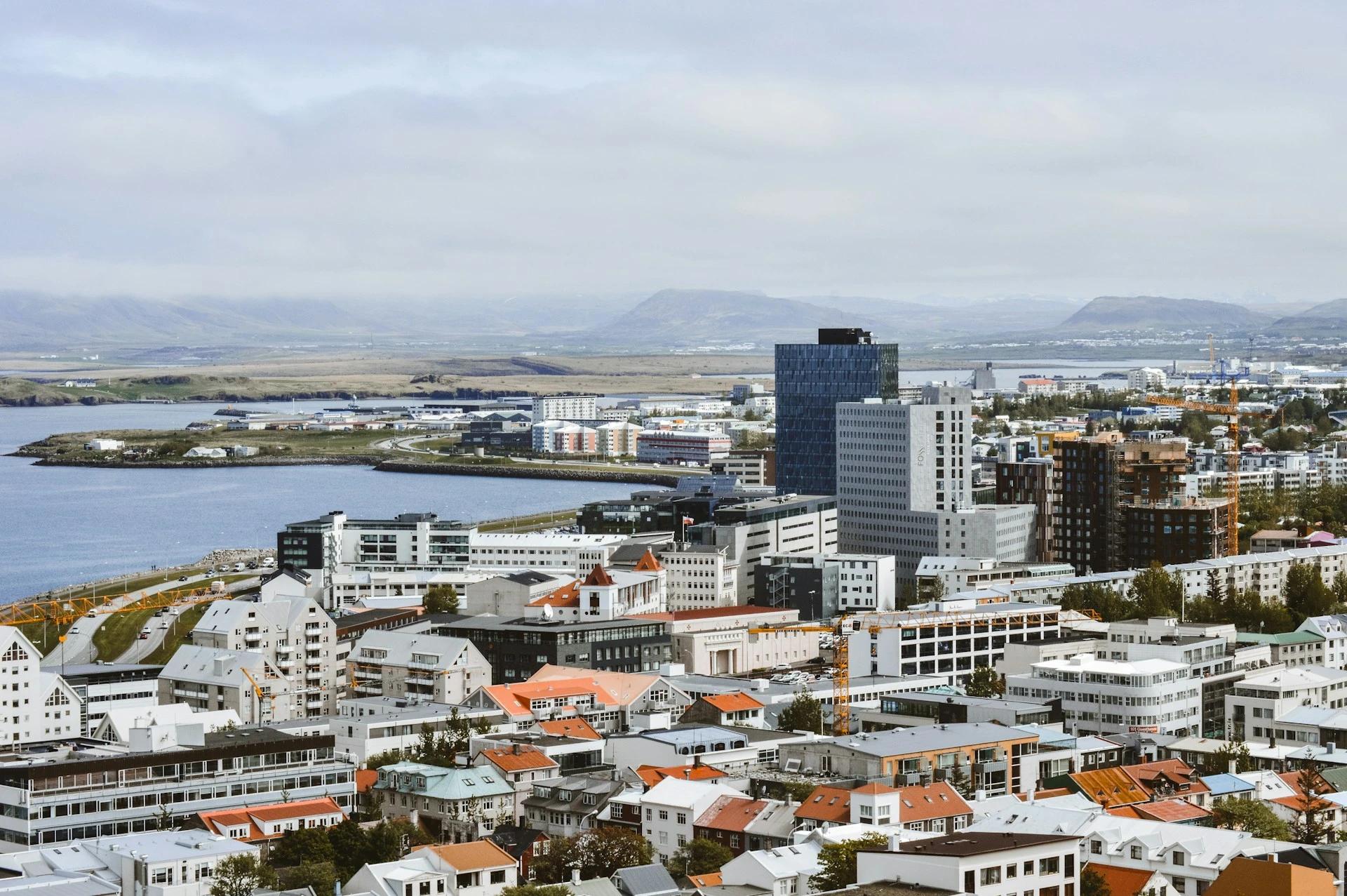
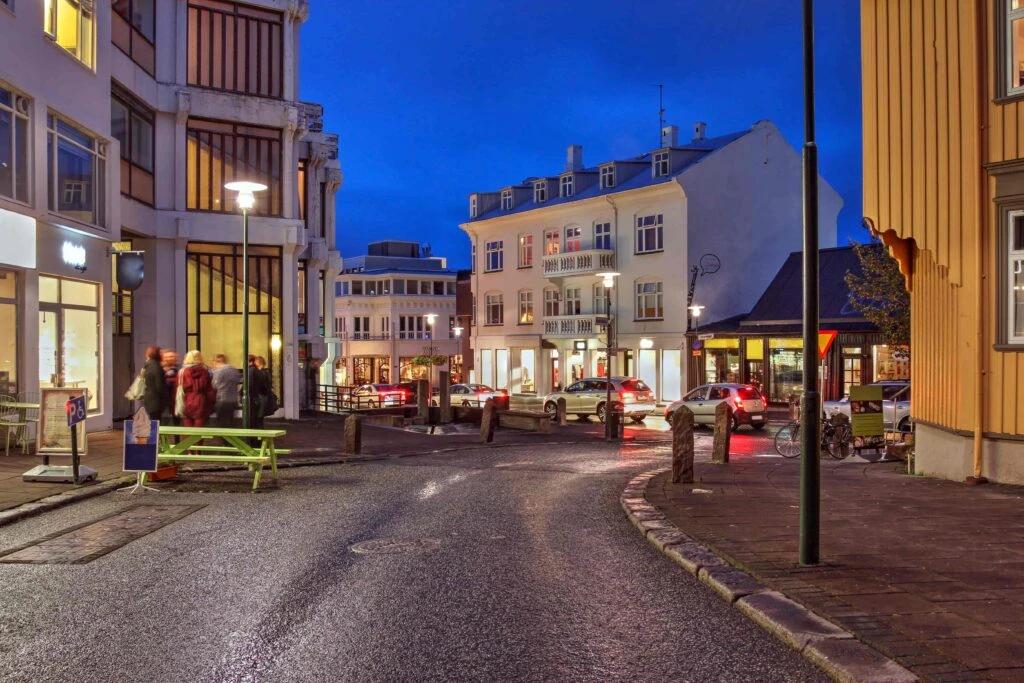
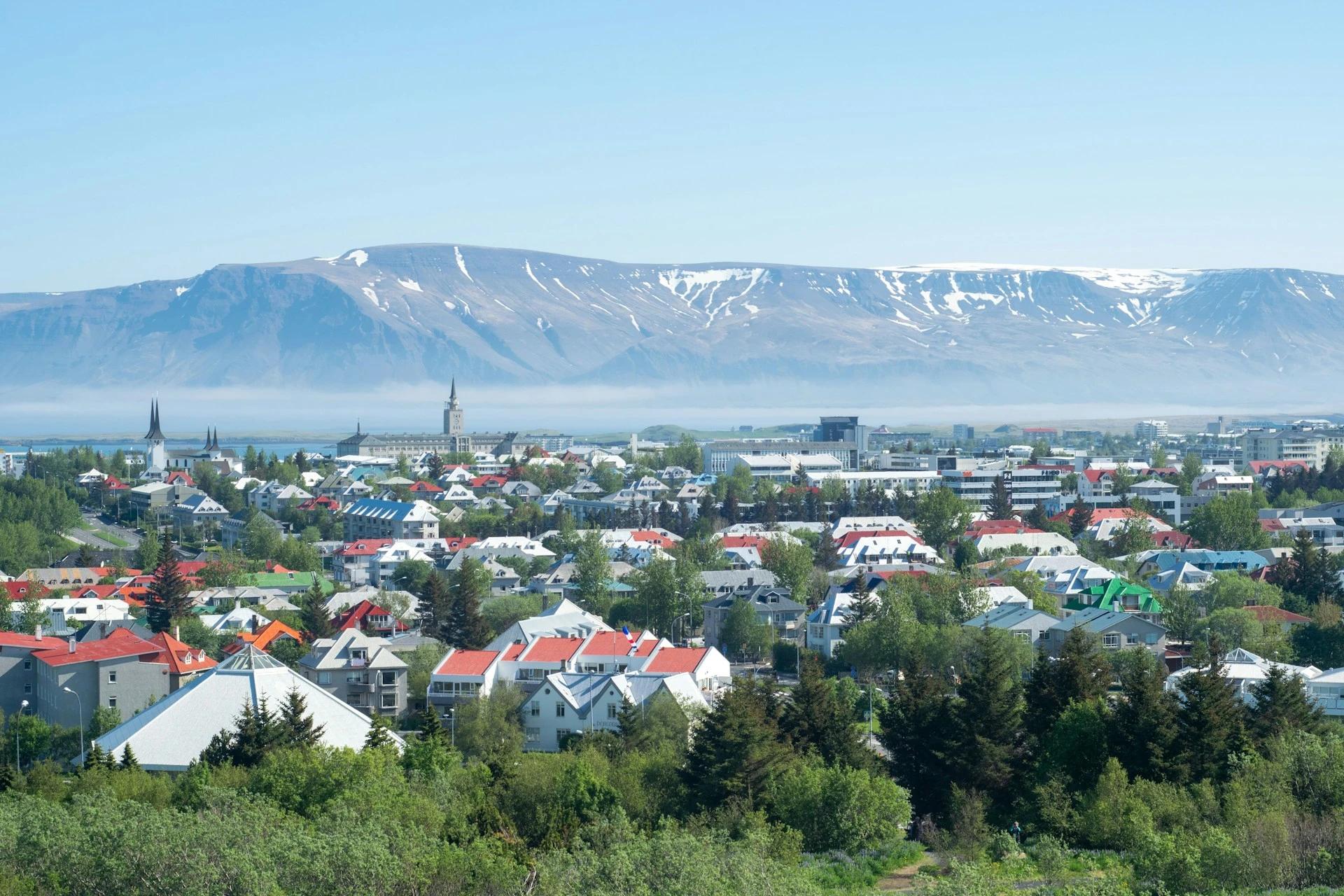
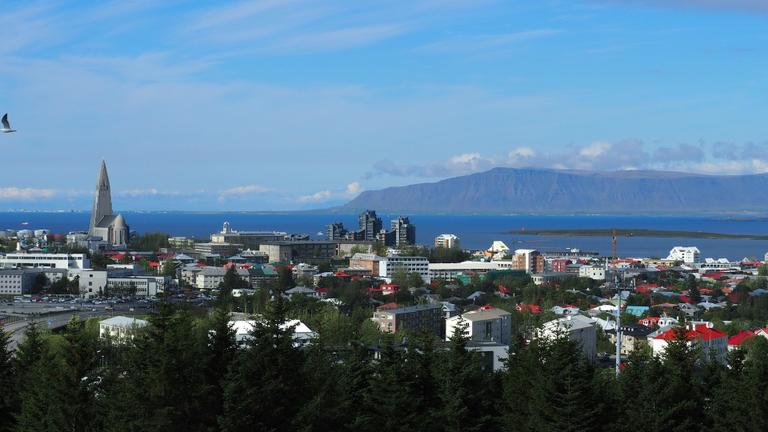
A view towards downtown Reykjavik and Hallgrímskirkja churchReykjavík and the neighbouring urban municipalities function as a connected labour and housing market. The six places discussed below have different neighbourhoods, services and transport options.
Reykjavík
Reykjavík is Iceland’s capital and a centre for government, culture, education and employment. The University of Iceland and Landspítali are based here.
Compare current Reykjavík rentals by size, neighbourhood, lease term and included bills. Availability changes, and finding a suitable place can take time. See the rental apartment guide for the search process.
Reykjavík’s neighbourhoods have different settings and transport options. Miðborg is central and walkable, while areas such as Grafarvogur and Breiðholt are farther from the centre. Compare actual homes and journeys rather than assuming a fixed rent difference. See Reykjavík neighbourhoods.
Kópavogur
Kópavogur lies immediately south of Reykjavík and has its own shopping centres, swimming pools and schools. Compare the particular neighbourhood and commute rather than assuming that every home costs less than one in Reykjavík.
Hafnarfjörður
Hafnarfjörður has a compact old town, schools, a primary healthcare centre and bus connections within the capital area. Heilsugæslan Fjörður is a health centre, not a hospital. Compare current rental listings and your actual journey to work.
Garðabær, Mosfellsbær, and Seltjarnarnes
Garðabær, Mosfellsbær and Seltjarnarnes offer further options around Reykjavík. Garðabær is home to the International School of Iceland; Mosfellsbær lies at the edge of the urban area, and Seltjarnarnes occupies the peninsula west of central Reykjavík. Check each municipality’s schools, housing and transport for your needs.
Strætó connects the capital area, but routes, frequency and journey times vary. Test the particular commute at the times you expect to travel.
Akureyri and the north
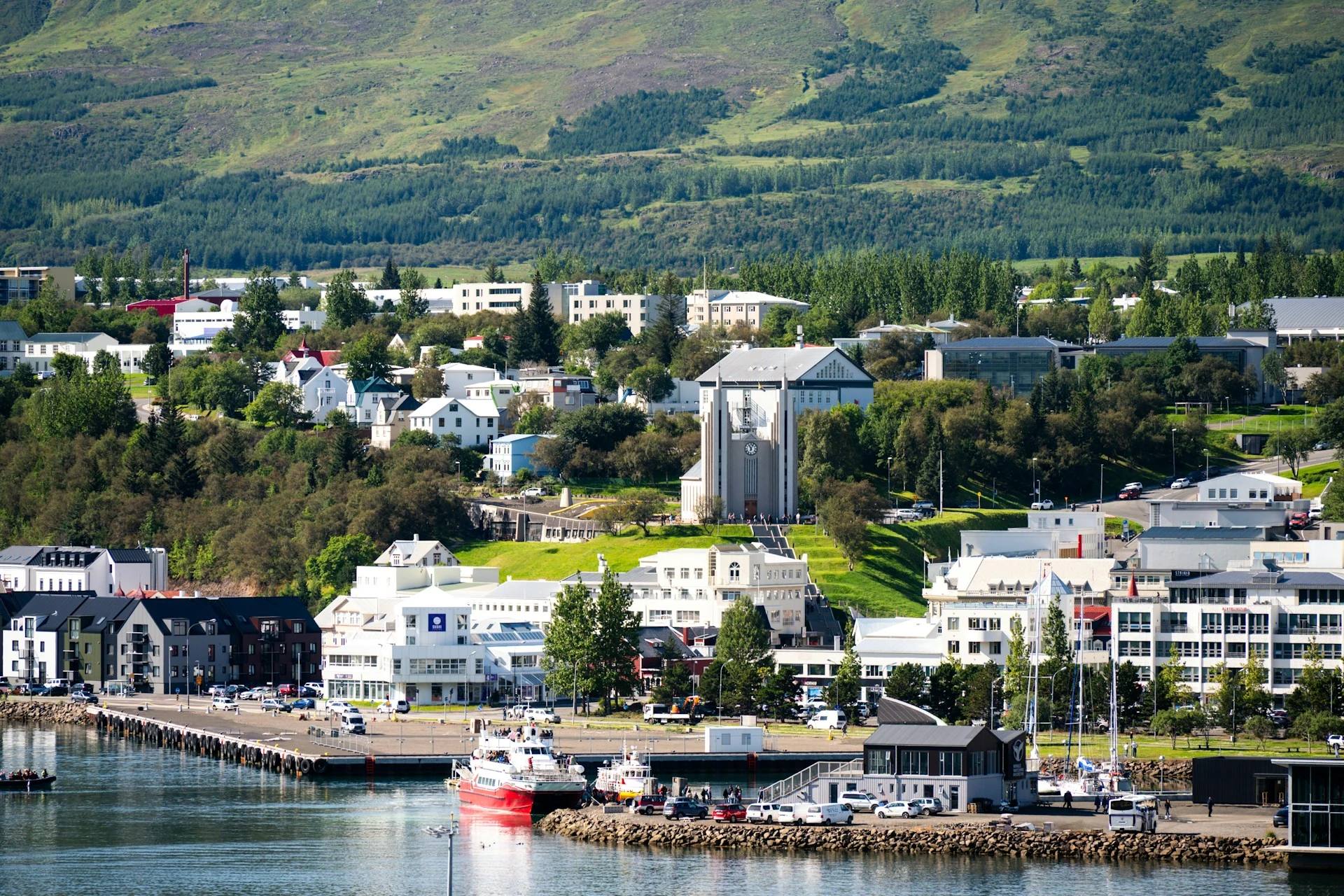
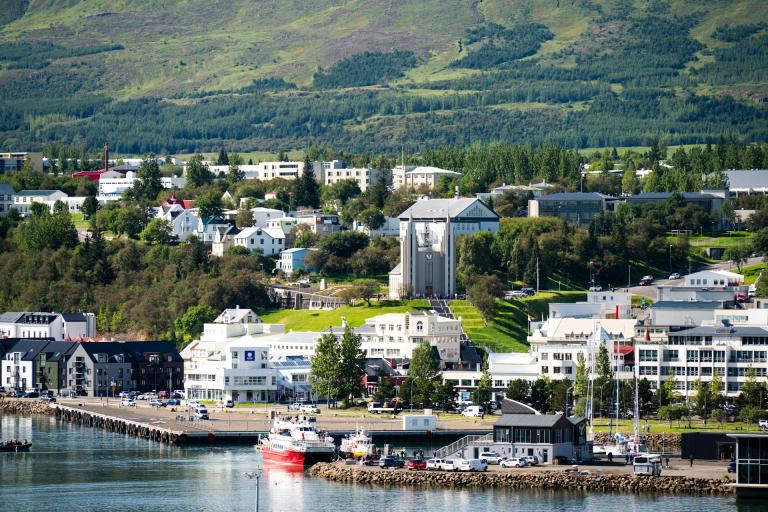
Akureyri - the capital of northern IcelandAkureyri is a major service centre in North Iceland. It has a hospital, the University of Akureyri, a domestic airport and a range of cultural amenities. Check current transport schedules and access to any specialist service you need.
Rent and cost of living
Compare current Akureyri listings with homes that meet the same needs in Reykjavík. Include heating, electricity, transport and other bills in the comparison; neither a fixed rent discount nor identical nationwide living costs can be assumed.
Job market
Healthcare, education, tourism, fishing and food processing are sectors to explore in and around Akureyri. Vacancies, seasonality and language requirements depend on the employer and role. See finding a job in Iceland for search guidance.
Who it suits
Akureyri works well for people who want a town-sized community with genuine services. Winters are colder and snowier than Reykjavík, but the town sits in a sheltered fjord. The skiing at Hlíðarfjall is some of the best in Iceland. If you are comfortable with a smaller social scene and snowier winters, Akureyri offers a quality of life that many residents prefer to the capital.
Reykjanesbær and the southwest
Reykjanesbær includes Keflavík and Njarðvík on the Reykjanes Peninsula, southwest of Reykjavík. Proximity to the international airport is relevant for people working there or travelling frequently.
Practical considerations
Check current rental listings, schools, healthcare and the actual journey to work. Commuting to Reykjavík involves Route 41; allow for traffic and weather instead of relying on one fixed drive time.
The ongoing volcanic activity on the Reykjanes Peninsula has affected the area since late 2023. The town of Grindavík (also in the southwest) was evacuated in November 2023, and the region’s population decreased by 4.4% in 2024, largely due to migration from Grindavík, according to Statistics Iceland.
Who it suits
Reykjanesbær may suit people whose work or travel centres on the airport. Before choosing a home or planning recreation on the peninsula, check current official access restrictions and volcanic-hazard information.
Selfoss and the south
Selfoss is the main town in Sveitarfélagið Árborg, beside the Ölfusá river in South Iceland. If you plan to commute to Reykjavík on Route 1, test the journey and allow for traffic and winter conditions.
Selfoss has hospital and primary-care services through Heilbrigðisstofnun Suðurlands (HSU), as well as schools and shops. It is a service centre for the surrounding area.
Compare current homes in Selfoss with your needs for work, schools and transport. A lower advertised rent is useful only if the whole household budget works.
The Westfjords
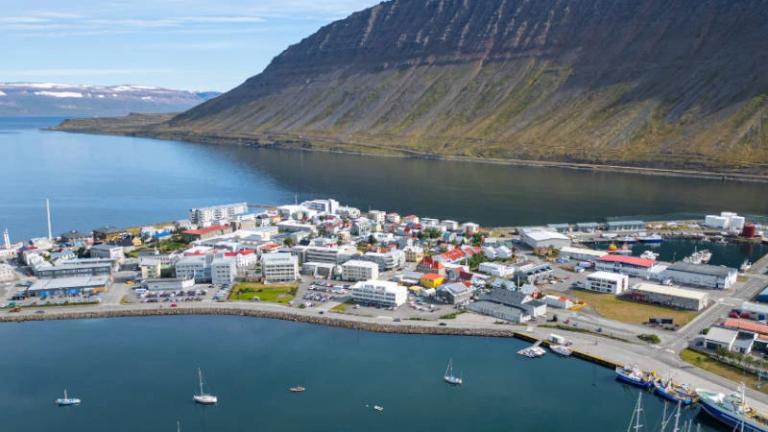
The Westfjords (Vestfirðir) have small communities separated by mountains and fjords. Ísafjörður is the region’s main town.
Ísafjörður has a hospital, schools and the University Centre of the Westfjords. The centre is an independent institution whose master’s degrees are accredited through the University of Akureyri; it is not a university branch. Flights and road journeys can be disrupted by weather.
Who it suits
The Westfjords may suit people seeking a small community and close access to nature. Check actual vacancies, housing and transport before moving, and plan for possible weather disruption.
East Iceland
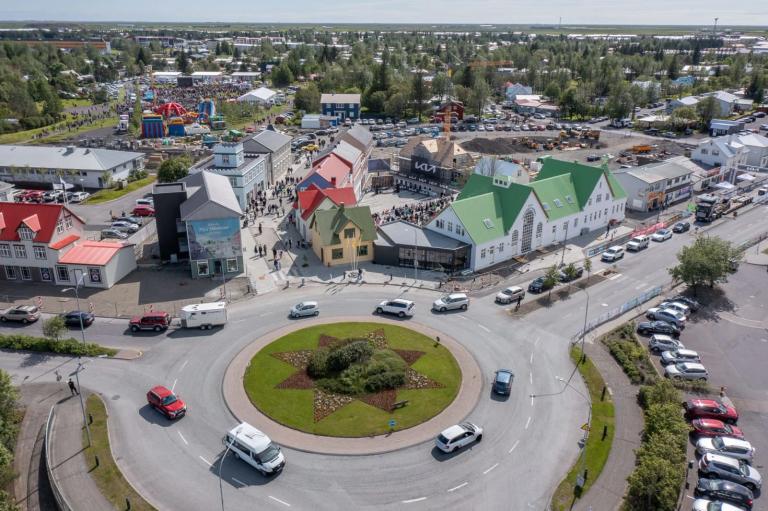
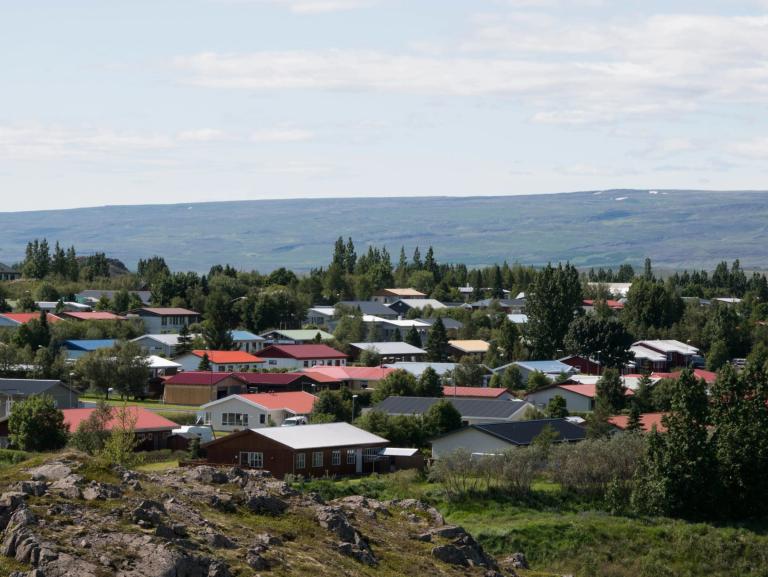
Residential houses in Egilsstaðir, in Eastern IcelandEgilsstaðir is a service centre in East Iceland with an airport, schools and a health centre. HSA’s regional hospital is in Neskaupstaður. Check distances and transport for the particular services you need.
The eastern region has work in aluminium production, fisheries, agriculture, tourism and other services. Check actual vacancies and rental listings before assuming that a move east will reduce your total costs.
The east is the furthest you can get from the Capital area. Driving to Reykjavík takes about 8-9 hours on Route 1 and domestic flights from Egilsstaðir to Reykjavík take around an hour. But this is a beautiful area and has typically some of the best weather in the summer in all of Iceland.
How to choose where to live in Iceland
The best place to live in Iceland depends on a few practical questions.
Where is your job? Start with the work you have or can realistically secure. For remote work, check the connection at the specific address and your legal right to do that work from Iceland.
Do you need services in English? Availability varies by provider and place. Check the services you rely on and the language requirements of prospective jobs. Learning Icelandic can widen your options wherever you settle.
What is your budget? Compare suitable current listings and the full cost of living in each place. Include commuting, car ownership if needed, heating and access to services. Our cost-of-living guide provides a starting framework.
Do you have children? Ask the municipality about school enrolment, preschool waiting lists, language support and fees. Check any international school directly for places and eligibility. See schools in Iceland and daycare in Iceland.
Can you handle winter? Reykjavík has milder winters (averaging 0°C in January) but less daylight variety than the north. Akureyri and the north get more snow and colder temperatures but offer better skiing and a stronger sense of seasonal change. The Westfjords and east can be cut off by weather for days at a time. For driving considerations, see winter driving in Iceland.
Once you have settled on a location, you may also want to consider whether renting or buying makes more sense for your situation. Our guide to buying property in Iceland explains the process, costs, and mortgage options.
Frequently asked questions
Where do most foreigners live in Iceland?
Most of Iceland’s foreign-born residents live in the capital region, particularly Reykjavík, Kópavogur, and Hafnarfjörður. These municipalities have the largest immigrant communities and the most services available in English. Akureyri has a growing but much smaller international community.
Is it cheaper to live outside Reykjavík?
Housing outside central Reykjavík may cost less, but the saving depends on the actual home and location. Groceries, heating and other bills are not necessarily identical across the country, and transport costs may offset a lower rent.
Can I live in Iceland without speaking Icelandic?
In the capital region, English is widely spoken and many workplaces operate partly in English. Outside the capital, Icelandic becomes much more important for daily interactions, work, and socialising. Government services are available in Icelandic by default, though island.is offers some information in English.
What is the best town in Iceland for families?
There is no single answer. The capital region offers the widest range of schools, activities, and healthcare. Akureyri is a popular choice for families who prefer a smaller town with full services. Selfoss is growing fast and increasingly family-friendly. The right choice depends on your job, budget, and lifestyle preferences.
Is Akureyri a good alternative to Reykjavík?
Akureyri offers a hospital, a university, schools and a town centre. Whether it is a good alternative depends on your job, housing, services and preference for a smaller community. Compare current options before assuming a particular saving.
How do I register my address when I move?
When you move to Iceland (or change your address within the country), you must register your legal address (lögheimili) with Registers Iceland (Þjóðskrá) through skra.is. This is required by law and affects your tax municipality, voting rights, and access to local services.