
Average salary in Iceland and take-home pay

Movingtoiceland.com EditorFounding Editor
Updated Sep 7, 2026 · Published Mar 8, 2026 · 8 min read
Śledź swoją przeprowadzkę na Islandię. Planuj, ucz się i nawiązuj kontakty
Zarejestruj się za darmo
Most people who move to Iceland settle in the capital region, but Akureyri, Selfoss, and smaller towns offer lower rent and a different pace of life. A region-by-region breakdown of costs, services, and what daily life looks like.
Taxes in Iceland are progressive, with three income brackets ranging from 31.49% to 46.29% (as of 2026). A personal tax credit makes the first portion of income tax-free, and your employer handles all withholding.
A practical guide for EU and EEA citizens relocating to Iceland, covering free movement rights, domicile registration, health insurance, work, and first steps after arrival.
That is a specific agreement rate, not a nationwide minimum for all unskilled work. Ask which agreement, job category and experience step apply before judging an offer against a number found online.
Check annual bonuses separately from monthly pay. Agreements set their own amounts and eligibility conditions, so ask the employer or union how those payments apply to your start date and working hours.
The estimate below models ordinary employee wages with the standard employee pension contribution of 4% of gross pay (as of September 2026). The Icelandic Pension Funds Association describes this as the general rule, with an employer contribution of at least 11.5% on top; exceptions apply to some pension arrangements.
Pension contributions reduce the income-tax base, subject to the published conditions. Eligible supplementary pension contributions of up to another 4% are also deductible (as of September 2026).
The following 2026 withholding brackets apply to monthly taxable wages after deductible pension contributions. These combined rates include the national-average municipal tax used in withholding, checked as of September 2026.
Monthly taxable wages | Rate applied to that slice |
|---|---|
Up to 498,122 ISK | 31.49% |
498,123–1,398,450 ISK | 37.99% |
Above 1,398,450 ISK | 46.29% |
Crossing a threshold does not move all your wages into the higher bracket. Only the portion above the threshold is taxed at the next rate.
The standard personal tax credit is 72,492 ISK per month in 2026 (as of September 2026). It reduces calculated tax; the amount available for a particular payroll depends on eligibility and credit already used elsewhere.
This example uses a gross salary of 913,000 ISK, the national-average municipal rate of 14.94%, a full monthly personal credit, a 4% employee pension contribution, no supplementary pension and no union fee. It applies Skatturinn's 2026 withholding rules, as of September 2026, with displayed amounts rounded to the nearest ISK.
Item | ISK per month |
|---|---|
Gross salary | 913,000 |
Employee pension | −36,520 |
Taxable wages after pension | 876,480 |
Income tax before credit | 300,597 |
Personal tax credit | −72,492 |
Income tax after credit | −228,105 |
Estimated take-home pay | 648,375 |
Under the same assumptions, a salary of 826,000 ISK, the 2025 median regular earnings figure, gives an estimated 596,584 ISK per month after pension and income tax. This is a calculation using 2026 rules, not a reported national median of net pay.
Union fees and supplementary pension savings reduce the amount available to spend. For example, VR's membership fee is 0.7% of total wages (as of September 2026); check the fee that applies to your employment rather than assuming all unions charge the same.
Monthly withholding is a prepayment of tax. Skatturinn explains that municipal rates can differ from the national average used in withholding, with differences settled at assessment.
Start with the costs of the home and routine you are actually considering. List rent, utilities, food, transport, childcare if relevant, existing debt payments and the amount you want to save.
Use the cost of living calculator to organise the comparison, then check current offers and bills for your chosen area. Keep one-off moving expenses and the rental deposit separate from the recurring monthly budget.
The average salary in Iceland does not tell you whether a particular household can live comfortably. Compare each offer with the same budget assumptions, and check what remains if overtime or a bonus is lower than expected.
For the wider sequence of work, housing and arrival decisions, use the moving to Iceland guide. Salary is one part of that decision, alongside the terms of the job and the costs of the move.
Mean regular earnings for full-time employees were 913,000 ISK gross per month in 2025, with a median of 826,000 ISK (as of September 2026). Statistics Iceland reports mean total earnings of 1,058,000 ISK, which includes additional payments.
No. In Statistics Iceland's definitions, regular earnings include ordinary shift-work and piecework hours as well as daytime work, while basic earnings exclude supplements.
No. Compare the responsibilities, hours and experience required by the actual job, and ask which collective agreement applies. An average across existing employees does not establish a starting rate.
Use it as a monthly illustration and check your tax-credit entitlement separately. Skatturinn's moving-year guidance limits credit for people moving to or from Iceland or working temporarily there; the calculator does not calculate an arrival-date entitlement.
Compare actual offers for similar duties and hours, then price housing and transport for each location. A regional average alone cannot tell you which offer leaves your household with more money after expenses.
Last updated: September 2026
The average salary in Iceland is a useful starting point when assessing a job offer. For full-time employees, mean regular earnings were 913,000 ISK gross per month in 2025, while the median was 826,000 ISK, according to Statistics Iceland's May 2026 release (as of September 2026).
Those are earnings before deductions, rather than money available to spend. At the mean regular salary, a worked estimate using 2026 monthly withholding rules leaves about 648,375 ISK after employee pension and income tax (as of September 2026), under the assumptions below.
Use the Iceland salary calculator to enter an offer and adjust the available settings. Compare the result with your own costs before deciding how much you can commit to rent or other monthly bills.
The mean adds earnings together and divides by the number of employees, with survey weights applied. The median marks the middle of the earnings distribution, so it helps show how a salary compares with the centre of the group.
The following figures describe full-time employees in 2025. They are preliminary results from Statistics Iceland's earnings survey, checked as of September 2026.
Measure | Gross ISK per month | What it describes |
|---|---|---|
Mean regular earnings | 913,000 | Average pay for regular working hours |
Median regular earnings | 826,000 | Middle of the regular-earnings distribution |
Mean total earnings | 1,058,000 | Average including overtime and irregular payments |
Regular earnings include pay for ordinary daytime, shift-work and piecework hours. They are broader than basic daytime wages; Statistics Iceland's definitions distinguish basic earnings, regular earnings and total earnings.
Total earnings include overtime, irregular bonuses and other irregular payments, but exclude payments in kind and employee benefits. Compare the same earnings measure when looking at two sources or two job offers.
The survey's earnings data cover employees aged 18 or over. Its employer population generally includes units with at least ten employees, while central-government data include all employees; coverage spans most, but not all, of the labour market. The average salary in Iceland is therefore a benchmark for the surveyed population, not a promised starting salary or a measure of every worker's income.
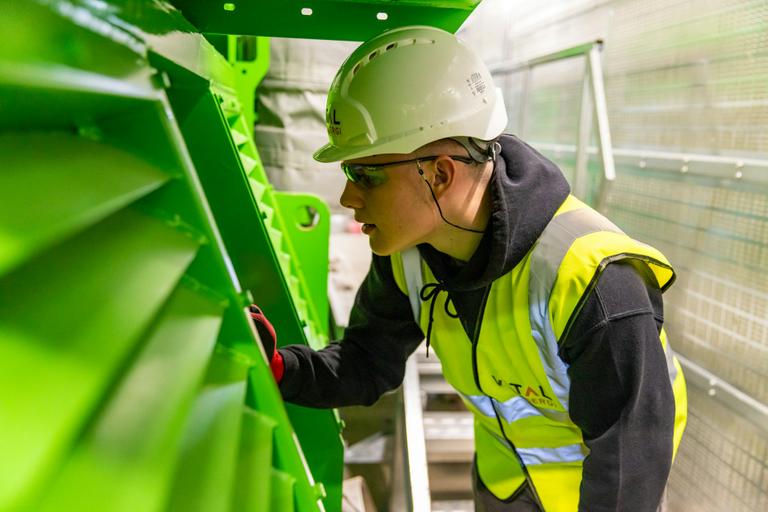
A job title is a more useful comparison than the national average alone. The 2025 earnings release gives these examples of mean total monthly earnings for full-time employees (as of September 2026).
Occupation or group | Gross ISK per month | Scope |
|---|---|---|
Managers | 1,634,000 | Broad occupational group |
Elementary occupations | 766,000 | Broad occupational group |
Library, mail and related clerks | 597,000 | Selected occupation category |
Child-care workers | 641,000 | Selected occupation category |
Hand-launderers and pressers | 647,000 | Selected occupation category |
These are observed averages including additional payments. They do not establish the minimum wage for those jobs, and the child-care category should not be used as a salary figure for qualified preschool teachers.
For a specific offer, ask the employer to separate basic pay, expected shift payments, overtime and any bonus. Check how many working hours the quoted amount covers, and compare your role and experience with the relevant salary data.
The guide to finding a job in Iceland covers the wider search. Use it alongside the worker rights guide when reviewing employment terms.

Iceland sets minimum employment terms through kjarasamningar (collective wage agreements). Official labour-market guidance says employers and employees cannot agree to wages or terms below the applicable agreement, but they can agree to better terms (as of September 2026).
The applicable role and agreement matter. For example, the VR/SA wage table effective 1 April 2026 lists 515,868 ISK per month as the starting rate for office workers (as of September 2026).