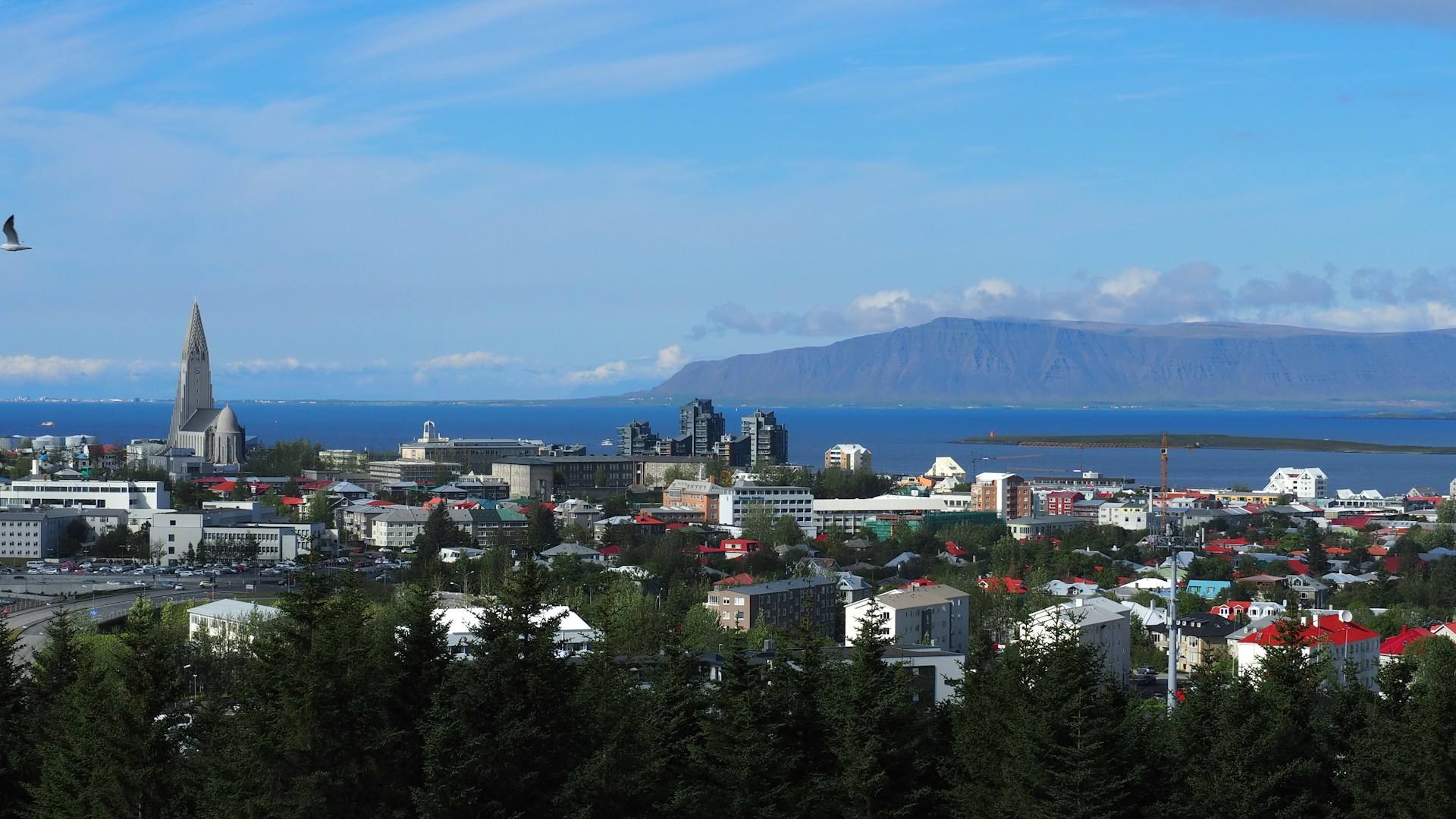
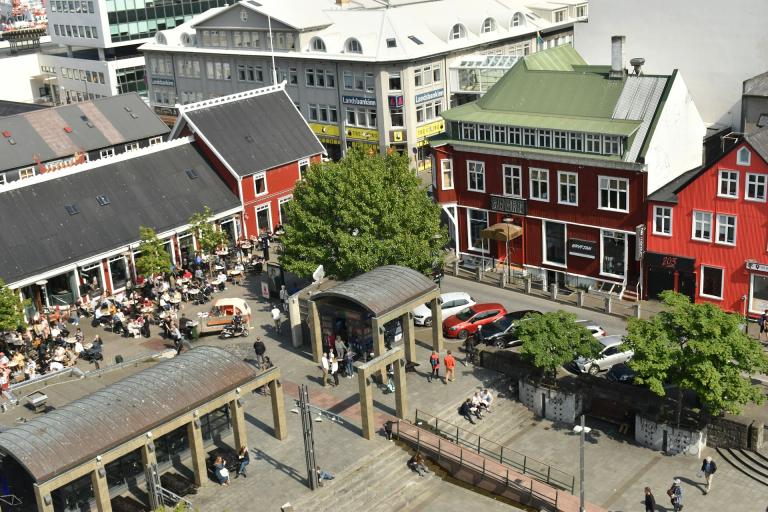
Nearly all government services, most employers, and the largest selection of housing, schools, and healthcare facilities are concentrated here. About 65% of first and second-generation immigrants live in the capital region.
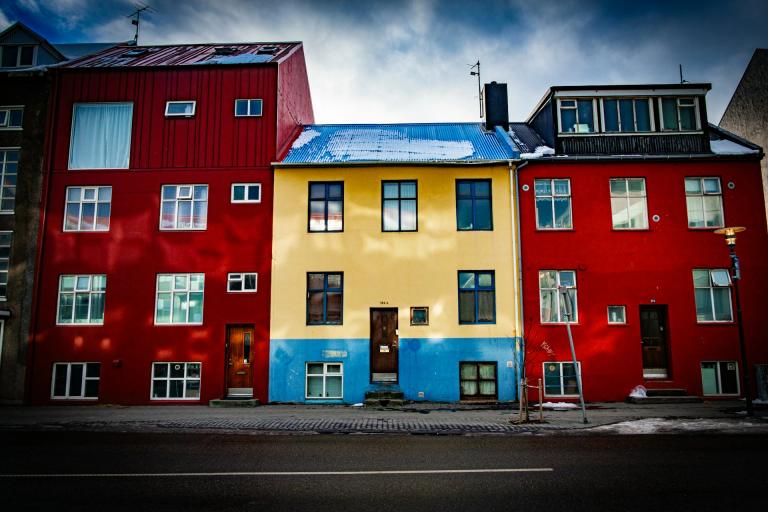
Reykjavik and the overall capital region itself offers the widest variety: jobs, cultural life, restaurants, nightlife, and the most diverse international community. Neighborhoods range from the walkable, artsy downtown (101 Reykjavik) to quieter family-friendly suburbs like Grafarvogur and towns such as Garðabær, Kópavogur or Hafnarfjörður.
Prices and character vary meaningfully between areas. Our neighborhood guide profiles each area by price, vibe, and accessibility.
Akureyri, often called Iceland's "northern capital," has around 20,000 residents. It has a university (the University of Akureyri), a regional hospital, good schools, and a growing cultural scene with festivals, restaurants, and a surprising amount going on for its size.
Winter days are shorter than in Reykjavik, but the skiing is better. It is a strong option for people who prefer a smaller-town pace but still want access to essential services.
Reykjanesbær (including Keflavik, near the international airport) has grown significantly in recent years, partly driven by demand from airport workers and people priced out of Reykjavik. Rent is lower than in the capital, and the commute to Reykjavik is about 45 minutes by car.
Smaller towns across Iceland offer lower rent and tight-knit communities, but job options outside fishing, agriculture, and tourism are limited. Living in a small town without strong Icelandic language skills can be isolating, especially during winter when communities turn inward.
Still, regional towns are worth considering. Selfoss, the largest town in South Iceland, has grown steadily and serves as a commercial hub for the surrounding area. Ísafjörður in the Westfjords attracts people drawn to dramatic scenery and a close community. Egilsstaðir, the main service hub of East Iceland, sits at a crossroads on the Ring Road and offers a domestic airport with daily flights to Reykjavík, making it less isolated than its remote location might suggest.
Several municipalities actively recruit immigrants to counter population decline, sometimes offering employment assistance or housing support.
The right choice depends on your job situation, family needs, and tolerance for isolation. If your work is remote or in a sector like healthcare or construction where regional demand is strong, smaller towns offer a lower cost of living and a quieter pace. If you need access to diverse employers, international schools, or a larger social network, the capital area is the practical choice.
Iceland has more to offer than just the capital. Akureyri, Reykjanesbær, and several smaller towns are attracting growing numbers of foreign residents, each with their own trade-offs in cost, community, and access to services. Read our region-by-region guide to where to live in Iceland →
7. Healthcare and Social Services
Iceland has a universal public healthcare system funded through taxes. Everyone with legal residence and a kennitala (national ID number) is entitled to care.
How to register. Once you have your kennitala and legal domicile, you register at a health center (heilsugæslustöð) through island.is. This assigns you to a primary care center where you can see a GP. If you don't choose one, you are automatically registered at the nearest center.
Most employees also gain access to union sickness funds (sjúkrasjóðir) through their workplace, which can help cover dental care, physiotherapy, and other services not fully covered by the public system.
Costs. Healthcare is publicly funded but not entirely free at the point of service. A standard GP visit during working hours costs around ISK 500 for insured adults (as of 2025). Lab tests, imaging, and specialist visits carry additional fees but are still subsidized.
Children under 2 receive care free of charge. Iceland operates a monthly cost ceiling (greiðsluþátttökukerfi) to protect against high expenses. Out-of-pocket costs are capped at ISK 34,950 per month for adults, with a lower cap for children, the elderly, and people with disabilities. Once you hit the cap, further care that month is free or heavily discounted, and the cap decreases with continued use.
Prescription medications are subsidized through a 12-month bracket system (greiðsluþátttökukerfi lyfja). You pay full price for your first ISK 22,800 in medication costs (ISK 11,400 for children and retirees), then progressively less as spending increases, down to 0% once you reach ISK 62,000 (ISK 41,000 for children and retirees).
Dental care is free for children under 18 but is not covered by the public system for adults. Budget separately for dental expenses, or check whether your union's sickness fund (sjúkrasjóður) offers partial reimbursement.
Emergency services. Call 112 for emergencies. The health advice hotline at 1770 offers 24/7 guidance in Icelandic and English and can direct you to the appropriate level of care.
Mental health. Services are available through the public system, though wait times for therapy can be long. This is a real consideration for immigrants adjusting to Iceland's dark winters, when the country receives only 4–5 hours of daylight in December and January. Our mental health guide covers coping strategies and available resources.
Having a baby in Iceland. Prenatal and maternity care is covered by the public system, and Iceland's parental leave policy is among the most generous in the world. Our guide to having a baby in Iceland covers healthcare, parental leave entitlements, and what to expect as a foreign parent.
For the full picture, read our healthcare overview and our health insurance guide.
8. First Steps: The Kennitala and Getting Set Up
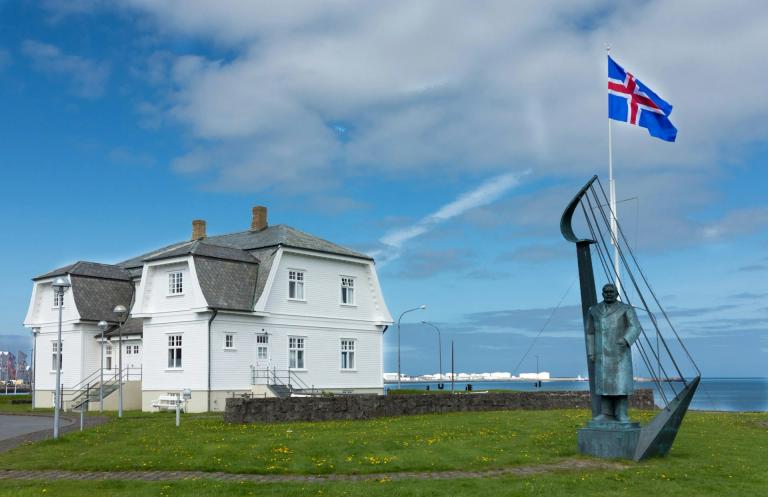
The kennitala is Iceland's national identification number. It is a 10-digit code based on your date of birth, and it is the key to nearly everything: opening a bank account, signing a lease, getting a phone plan, accessing healthcare, filing taxes. Getting your kennitala is the single most important administrative step after arriving in Iceland.
Here is the sequence for your first week:
Step 1: Register your domicile. Go to Registers Iceland (Þjóðskrá Íslands) at skra.is or the nearest service center. You will need your passport, proof of residence in Iceland (a rental contract or a letter from your host), and your residence permit (if applicable).
EEA citizens can register directly. Non-EEA citizens must have their residence permit approved first.
Step 2: Receive your kennitala. Once your domicile registration is processed, you are assigned a kennitala. This usually happens within a few days. You will receive a confirmation letter.
Step 3: Open a bank account. With your kennitala and passport, visit any of the three major banks (Landsbankinn, Íslandsbanki, or Arion Bank). All three offer English-language services.
The process takes about 30 minutes. See our bank guide for a comparison.
Step 4: Get an Icelandic phone number. You need a kennitala for a postpaid plan. Prepaid SIM cards are available at convenience stores without one. Our phone and internet guide covers the main providers and plan options.
Step 5: Register at your local heilsugæslustöð (health center) through island.is using your kennitala. If you don't choose one, you are automatically assigned to the center nearest your legal residence.
Shipping your belongings. If you are bringing furniture or personal items from abroad, plan well ahead. International shipping to Iceland is slow and expensive, especially for large items. Our international shipping guide lists the main carriers and expected costs, and our household goods guide covers what is worth bringing versus buying locally.
Our first 30 days checklist provides a detailed day-by-day walkthrough of everything you need to do after landing, and our kennitala guide covers the registration process in detail.
Keep track of every step. Your free MovingToIceland.com dashboard includes an interactive relocation checklist that walks you through each of these tasks, from kennitala to health clinic registration.
9. Learning Icelandic
Icelandic is the national language. English is widely spoken, especially in Reykjavik, and you can get by without Icelandic in daily life for a while.
But "getting by" and "building a life" are different things. Icelandic proficiency matters for long-term integration, career advancement, and social connection outside the expat bubble.
Learning resources. The University of Iceland offers a free online course called Icelandic Online (icelandiconline.com), which covers beginner through intermediate levels. The government funds in-person Icelandic courses for immigrants at various levels, often free or heavily subsidized. Programs are available through multiple providers, including Mimir, Fjölmenning, and the continuing education departments of Icelandic universities.
Private schools offer intensive options for those who want to learn faster. Realistically, expect to spend 1–2 years of consistent study before reaching conversational fluency. Icelandic grammar is notoriously complex (four cases, three genders, extensive conjugation), but the vocabulary has many Germanic roots that speakers of English, German, or Dutch will recognize.
You can also practice Icelandic through our language learning games, designed specifically for newcomers to Iceland. For a dedicated overview of courses, apps, and learning paths, see our learning Icelandic guide.
10. Culture and Social Life
Social norms. Icelandic culture values directness. People tend to say what they mean without much small talk.
This can feel blunt if you come from a culture where indirect communication is the norm, but it is not intended as rudeness. Icelanders also place high value on personal space, punctuality, and respect for nature.
Making friends. This takes time. Icelanders are friendly but have established social circles that can be hard to break into.
The most reliable path: join a club, sports team, or volunteer organization. These create natural, repeated social interactions that build relationships over months. Our guides on Icelandic culture and making friends in Iceland go deeper on both topics.
Holidays and traditions. Iceland has a distinctive calendar of traditions that shape daily life, from Þorrablót in midwinter to the summer solstice celebrations and the national day on June 17th. Understanding these rhythms helps you feel less like a spectator and more like a participant. Our holidays and traditions guide covers the full calendar.
Life beyond the basics. Iceland's climate and weather take adjustment, particularly the long, dark winters that test even committed residents. But the country rewards patience.
The food culture is distinctive and increasingly inventive. The natural scenery is unlike anywhere else on earth. Annual events like Reykjavik Culture Night bring the whole city out.
Staying active helps with the adjustment: our guide to gyms in Iceland covers fitness options across the country. For an honest look at both the rewards and the challenges, see our pros and cons of living in Iceland.
Take a look at our Events page to find an event you can attend.
11. Driving and Transportation
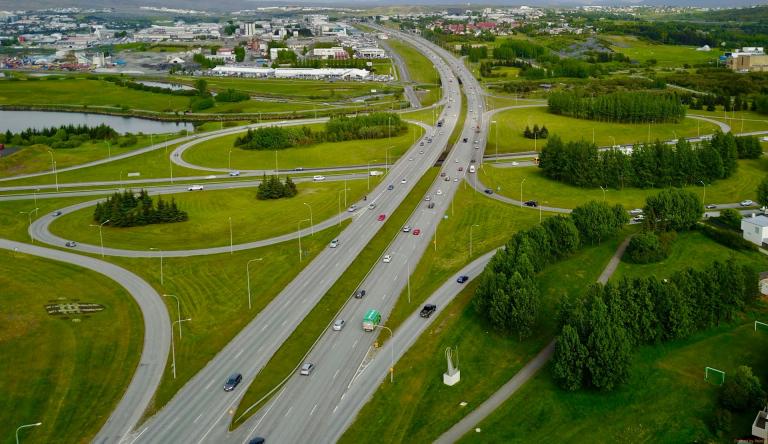
Outside Reykjavik, a car is close to essential. Public transport exists in the capital area through Strætó (straeto.is), but service is limited in frequency and coverage compared to most European cities.
Outside the capital, bus service between towns is minimal and seasonal. Our public transport guide covers bus routes, domestic flights, and how far you can realistically get without a car.
License conversion. If you hold a valid driving license from an EEA country, it is accepted in Iceland. Non-EEA licenses are valid for short stays, but if you are becoming a resident, you will likely need to convert your license.
This process involves a written test, a practical driving test, and sometimes a mandatory driving course. Requirements depend on the reciprocity agreements between Iceland and your home country. Our license conversion guide explains the process step by step.
Buying a car. Cars are expensive in Iceland due to import duties and the small market. The average used car costs significantly more than you would pay for a comparable vehicle in mainland Europe or North America. Most residents buy used.
Importing a car is possible but involves steep customs duties and registration taxes. If you know what you are looking for, our car buyer wizard matches you with available vehicles and connects you directly with dealerships across Iceland. You can also browse listings through our car marketplace.
For a thorough walkthrough of the full process, read our complete guide to buying a car in Iceland. If you are not ready to buy, our guide to renting a car in Iceland covers short and long-term rental options.
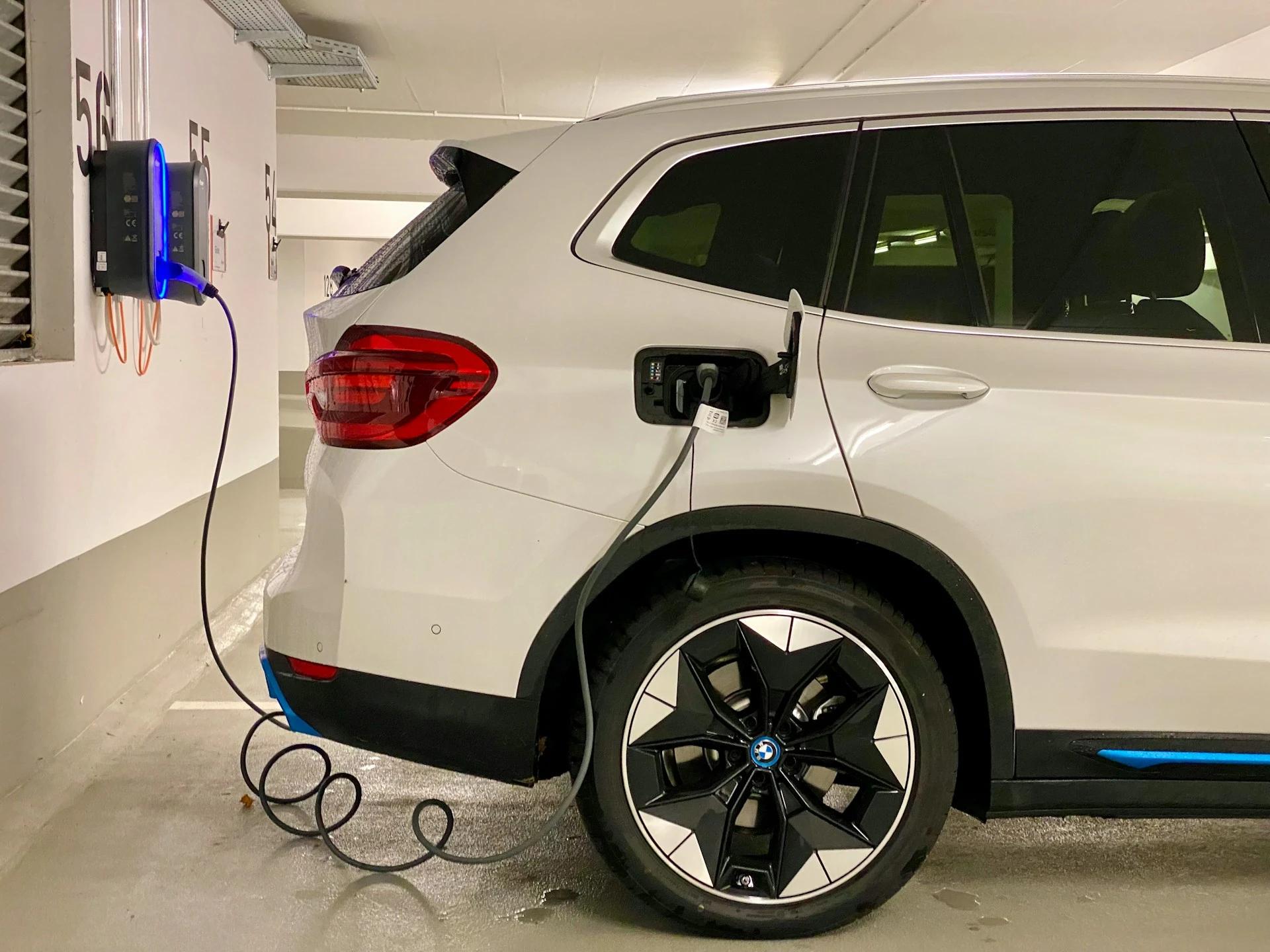
Electric vehicles. Over 40% of new cars sold in Iceland in 2025 were fully electric. Cheap renewable electricity, government grants, and registration tax exemptions make EVs the default choice for many residents. Our guide to electric cars in Iceland covers incentives, charging infrastructure, costs, and winter range.
Car insurance is mandatory. The minimum requirement is third-party liability (ábyrgðartrygging).
Most owners also carry full coverage, especially given Iceland's harsh driving conditions. Our car insurance guide compares providers and coverage types.
Winter driving. From roughly November through April, studded tires are required by law. Icelandic roads can be treacherous in winter: ice, snow, strong crosswinds, and reduced visibility are common, especially on mountain passes and highland roads.
Even experienced drivers from cold climates find Icelandic winter conditions challenging. Check road conditions at road.is before any trip outside town. Our winter driving guide covers equipment, regulations, and safety tips.
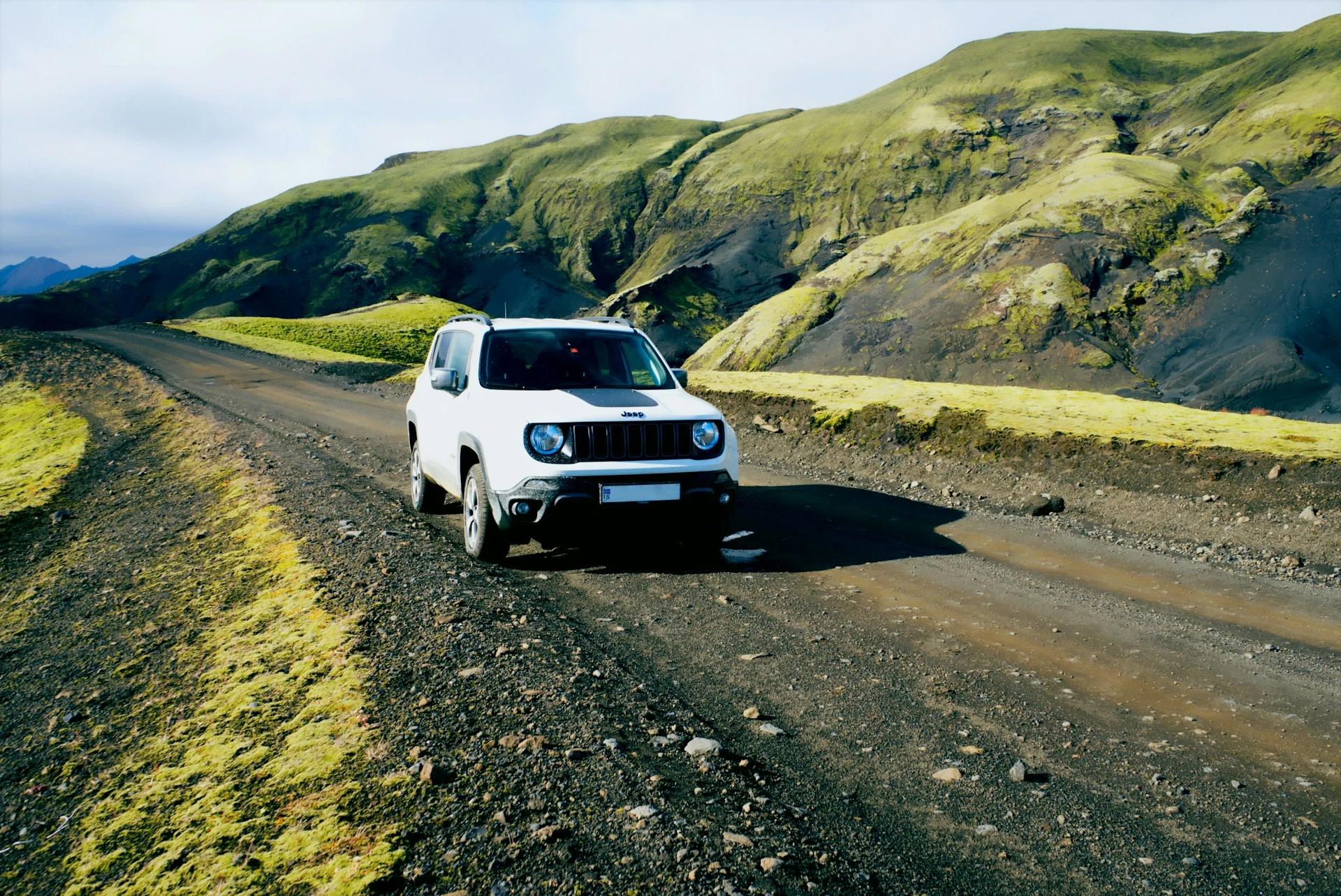
F-roads (highland roads). Iceland's interior highlands are accessible only via unpaved F-roads, which require a 4x4 vehicle and are open from roughly mid-June to September. Routes like Kjölur (F35) and Sprengisandur (F26) cross the volcanic desert between glaciers, leading to destinations like Landmannalaugar and Askja. River crossings, strict off-road driving laws, and remote conditions make preparation essential. Our F-roads guide covers routes, rules, and safety.
12. Education and Children
Iceland offers free public education from preschool through university. The system is well-funded and highly regarded.
Daycare (leikskóli). Available for children from age 1–2. It is heavily subsidized by municipalities, costing parents roughly 30,000–50,000 ISK per month (as of 2025) depending on the municipality and income level.
The catch: waitlists in Reykjavik can be long. Applying as early as possible (even before birth) is common practice. See our daycare guide for municipality-by-municipality details.
Compulsory school (grunnskóli). Ages 6 through 16. Instruction is in Icelandic, which is both a challenge and an accelerator for children's language acquisition.
Most children of immigrants adapt to Icelandic-language instruction within 1–2 years, with support programs available during the transition. Our school system guide covers enrollment, curriculum, and what to expect.
International schools. A small number of international schools in Reykjavik offer English-medium education, primarily serving the diplomatic and expat community. Tuition is substantial.
University. The University of Iceland (Háskóli Íslands) is tuition-free for all students. As of 2025, the annual registration fee is ISK 100,000 (~$700 USD). Non-EEA/EFTA applicants also pay a one-time processing fee of ISK 8,000.
Note: the Icelandic government is considering introducing tuition fees for non-EEA/EFTA students starting in 2026, so check the university's website for the latest information.
Other institutions, including Reykjavik University and Bifröst University, charge tuition but offer various programs in English. Graduate programs in business, computer science, and renewable energy attract a growing number of international students each year. Our university guide profiles the main options and program offerings.
13. Banking, Taxes, and Pensions
Iceland has three main banks: Landsbankinn, Íslandsbanki, and Arion Bank. All three offer online banking platforms and customer service in English. You need a kennitala to open an account, and the process is quick once you have one (see Section 8 above).
Each bank has a mobile app with bill payment, transfers, and account management in English. In practice, the banks are similar in features and fees.
Debit cards and digital payments. Iceland is one of the most cashless societies in the world. Most transactions, even small ones, are handled by debit card or mobile payment apps.
Your Icelandic bank will issue a Visa or Mastercard debit card. Contactless tap payments are standard. Apple Pay and Google Pay are widely accepted. Always know your card's PIN since Iceland uses chip-and-PIN exclusively, not swipe-and-sign. Cash is accepted in most places but rarely needed in daily life.
Iceland uses a progressive income tax system. Your employer withholds taxes from your salary automatically. As a resident, you file taxes the same way Icelandic citizens do.
The system has three income brackets, with combined national and municipal tax rates ranging from roughly 31% to 46%. Every individual receives a personal tax credit of ISK 72,492 per month (2026) that reduces the effective rate on lower incomes. Our tax system guide explains the brackets, deductions, and filing process.
Pension contributions are mandatory in Iceland. Both employees and employers contribute to pension funds. The employee contribution is typically 4% of gross salary, with the employer adding 11.5%.
This is automatic and comes out of your paycheck. The pension system is well-funded and covers all legal residents who work in Iceland, regardless of nationality.
Sending money internationally. The Icelandic króna is a small currency, and international transfers can carry significant fees through traditional banks. Services like Wise (formerly TransferWire) often offer better exchange rates and lower fees for sending money to or from Iceland. Our sending money guide compares options.
For a comparison of the three banks, see our banking guide. For general information about ISK and payment methods in Iceland, see our currency guide.
Frequently Asked Questions
How do I move to Iceland? The process depends on your nationality. EEA/EFTA citizens (EU countries, Norway, Liechtenstein, Switzerland) have the right to live and work in Iceland and only need to register their domicile within three months of arrival. Non-EEA citizens need a residence permit tied to a specific purpose: employment, study, or family reunification.
In all cases, the practical steps after arrival are the same: register for a kennitala, open a bank account, find housing, and sign up at a health clinic. Each step is covered in detail in the sections above.
Can Americans move to Iceland? Yes, but US citizens need a residence permit. The most common paths are through employment (your Icelandic employer sponsors a work permit), study (enroll at an Icelandic university), or family reunification (if your spouse or parent is a legal resident). Our guide for Americans moving to Iceland covers each option in detail.
How much money do you need to move to Iceland? A reasonable starting budget for a single person is 1,500,000–2,500,000 ISK ($10,000–$18,000 USD), covering a rental deposit (1–3 months' rent), first month's rent, and living expenses while you get settled. Non-EEA applicants must also show proof of financial means as part of their residence permit application.
Is it hard to move to Iceland without a job? For non-EEA citizens, yes. A work permit requires a job offer from an Icelandic employer before you arrive. EEA citizens have the legal right to move and job-search, but finding English-only work without local connections takes time. Having a job lined up before arriving is strongly recommended regardless of nationality.
Do I need to speak Icelandic to live in Iceland? Not immediately. English is well understood in Iceland and is dominant in tourism-facing industries.
But for long-term career prospects, social integration, and life outside the capital, Icelandic is important. Many employers expect at least basic Icelandic for roles that involve interacting with the public. Free and subsidized language courses are available for immigrants.
Is Iceland in the EU? No. Iceland is a member of the European Economic Area (EEA) and the European Free Trade Association (EFTA), which gives it access to the EU single market and participation in the Schengen Area. But it is not an EU member state. It uses the Icelandic króna, not the euro, and maintains independent policies on fisheries and agriculture.
How long does it take to get permanent residency or citizenship in Iceland? Most applicants become eligible for permanent residency after four years of continuous legal residence on a qualifying permit (shorter for spouses of Icelandic citizens). Applicants must demonstrate Icelandic language proficiency, financial self-sufficiency, and a clean criminal record. Citizenship requires a minimum of seven years of residence, with shorter timelines for Nordic citizens, refugees, and spouses of Icelandic nationals. Our Icelandic citizenship guide covers the full requirements and application process for both.
Is Iceland safe? Yes. Iceland consistently ranks as one of the safest countries in the world. Violent crime is rare.
The police force does not carry firearms during routine duty. For immigrants, the main safety considerations can be environmental: harsh winter driving conditions and sudden weather changes.
What is the weather like in Iceland? Milder than most people expect, thanks to the Gulf Stream. Reykjavik's average winter temperature hovers around 0°C (32°F), comparable to New York City. Summers are cool, with average highs around 12–15°C (54–59°F), though warm spells can push temperatures to 20–25°C (68–77°F). 2025 was Iceland's warmest year on record, with the east of the country reaching nearly 30°C in both May and August.
The real challenge might not be temperature but darkness. From late November to mid-January, Reykjavik gets only 4–5 hours of daylight. Conversely, summer brings near-24-hour daylight. Our climate and weather guide covers what to expect month by month.
Can I bring my pet to Iceland? Yes, but the process is strict. Iceland requires advance import permits, specific vaccinations, blood tests, and a mandatory quarantine period of approximately four weeks at the government quarantine facility in Kópavogur.
The process must begin months before your move. Iceland's isolation means it has no rabies and very few animal diseases, which is why the rules are tight.
What is a kennitala? Iceland's national identification number, a 10-digit code assigned to every registered resident. You need it for nearly everything: opening a bank account, signing a rental lease, accessing healthcare, getting a phone plan, and filing taxes. It is the first administrative step after arriving. See Section 8 above or our kennitala guide for the full process.
Start Your Move
MovingToIceland.com provides a free personalized relocation dashboard, interactive checklists, and a growing community of people going through the same process. Create your free account to get started.
Last updated: March 2026