Renting a Car in Iceland

Rental car costs, insurance options, the new kilometer road tax, driving rules, and how to choose the right vehicle for Iceland's roads in 2026.
Why renting a car matters in Iceland
Iceland’s public transport network covers the capital area through Strætó, but outside Reykjavík, bus service between towns is minimal and seasonal. If you want to reach waterfalls, hot springs, glaciers, or fishing villages on your own schedule, a rental car is the most practical option. This applies to short-term visitors, newcomers still deciding whether to buy, and residents who need a vehicle for a weekend trip or while their own car is in the shop.
This article covers vehicle types, rental costs, insurance, driving rules, and seasonal considerations for renting a car in Iceland in 2026.
Table of contents
Choosing the right vehicle
The vehicle you need depends on where you plan to drive and what time of year you are visiting.
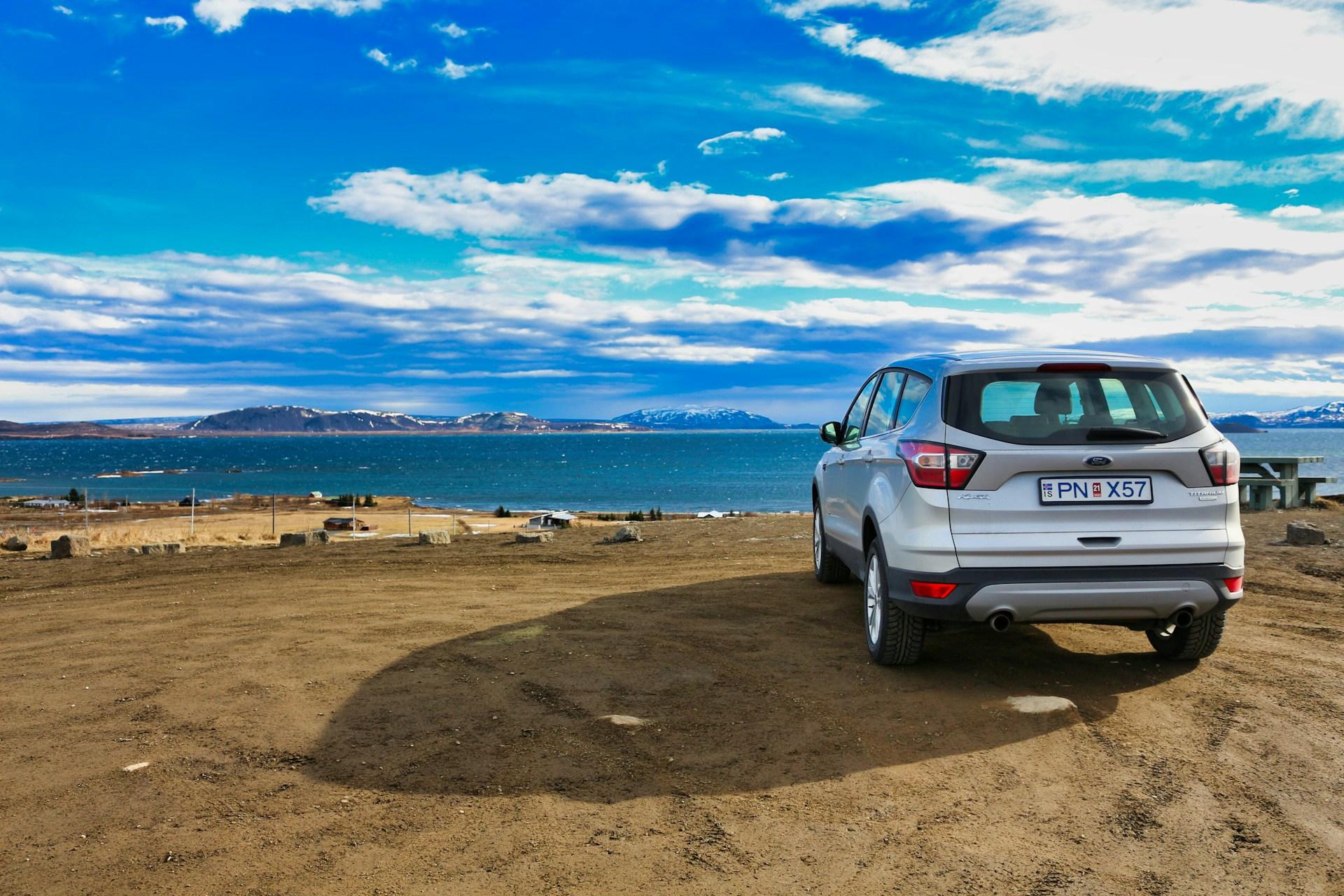
Economy and compact cars are the most affordable option and work well for the Ring Road, the Golden Circle, and day trips from Reykjavík on paved routes. They are fuel-efficient and easy to park. In winter, rental companies equip them with winter tires, but they sit lower and offer less stability in heavy snow or strong crosswinds.
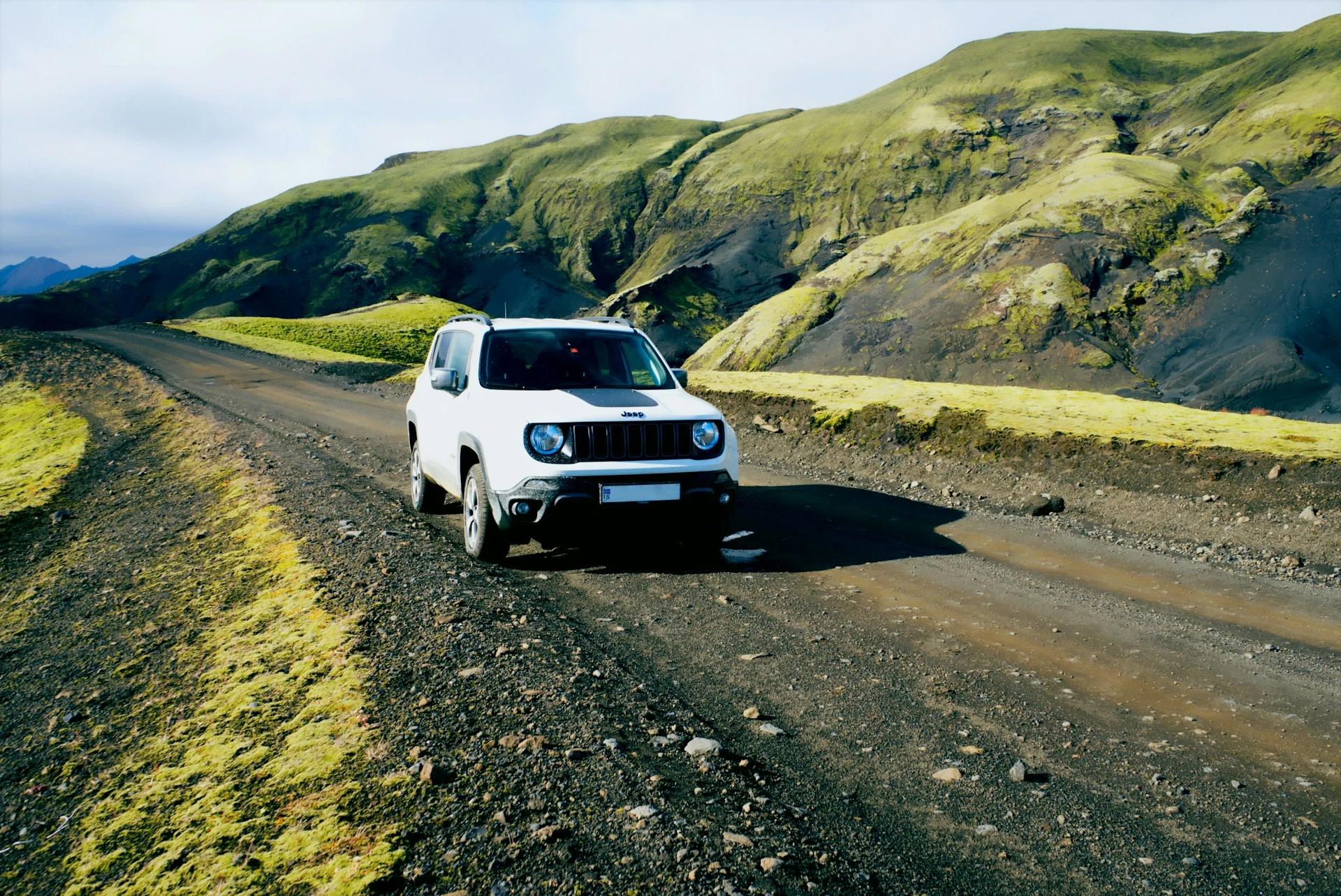
SUVs and 4x4s are necessary for anyone planning to drive F-roads (highland mountain roads) during the summer months when those routes are open. They also provide more confidence on gravel roads and in winter conditions. Expect to pay roughly double the daily rate of an economy car.
Campervans combine transport and accommodation. They suit summer travelers who want flexibility without booking hotels. Most campervans are not equipped for F-roads, and winter use requires a model with proper heating and insulation. Campsites across Iceland charge 1,500–2,500 ISK per person per night (as of 2026), which still makes this cheaper than hotel stays.
What renting a car costs in 2026
Rental prices in Iceland vary by season, vehicle type, and how far in advance you book. As a rough guide for 2026:
Vehicle type | Low season (Nov–Apr) | High season (Jun–Aug) |
|---|---|---|
Economy / compact (2WD) | 5,000–10,000 ISK/day | 10,000–18,000 ISK/day |
Mid-size SUV / 4x4 | 12,000–20,000 ISK/day | 20,000–35,000 ISK/day |
Campervan (2-person) | 15,000–22,000 ISK/day | 25,000–45,000 ISK/day |
These figures are base rates before insurance add-ons and the new kilometer road tax. Summer is peak season, and popular vehicles sell out weeks in advance. Booking early, especially for 4x4s and campervans between June and August, can save 20–30% compared to last-minute rates.
Most Icelandic rental companies offer unlimited mileage and a full-to-full fuel policy. Returning the car without a full tank typically incurs a refueling surcharge at above-market rates.
The new kilometer road tax
As of January 1, 2026, Iceland replaced its traditional fuel tax with a kilometer-based road usage charge called kílómetragjald. This applies to all vehicles, including rentals.
The government base rate is 6.95 ISK per kilometer for standard passenger vehicles under 3,500 kg (as of January 2026). Heavier vehicles pay more under a weight-based scale.
In practice, most rental companies pass this on as a flat daily surcharge rather than tracking exact kilometers. Typical daily charges range from 1,390 to 1,550 ISK per day depending on the company (as of March 2026). Some companies include it in the headline price; others list it separately. Ask before you book.
The kílómetragjald covers public road infrastructure only. Tunnel tolls (the Vaðlaheiðargöng tunnel in North Iceland costs 2,216 ISK per crossing as of 2026), parking fees, and campsite fees are separate.
Insurance options
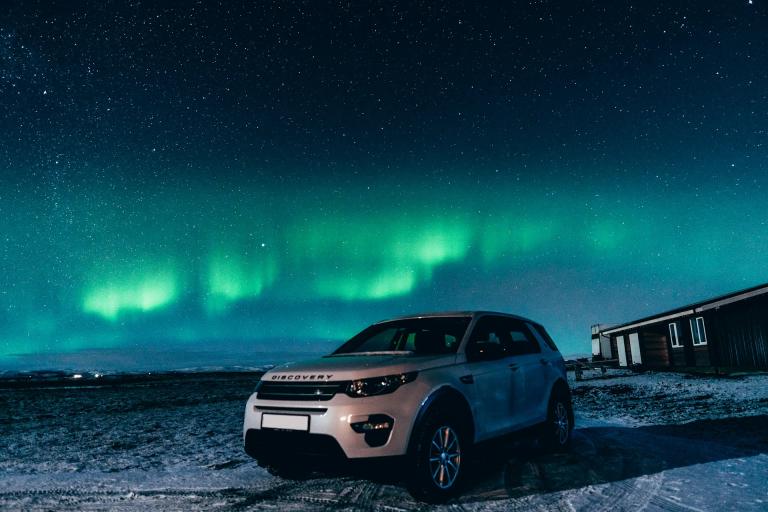 Rental insurance in Iceland deserves careful attention. The weather is unpredictable, gravel roads are common, and repair costs are high.
Collision Damage Waiver (CDW) is included in most base rental rates. It covers collision damage but comes with a deductible, typically around 350,000 ISK for standard vehicles. Super CDW (SCDW) reduces or eliminates that deductible for an additional daily fee.
Gravel Protection (GP) covers damage to the windshield, headlights, and paint caused by loose stones on unpaved roads. Iceland has thousands of kilometers of unpaved roads, so this is worth considering for any trip outside the Reykjavík area.
Sand and Ash Protection (SAAP) covers damage from volcanic ash and sandstorms, which standard policies exclude. This matters most in southern and eastern Iceland near glacial outwash plains. Damage from sand or ash events can cost 500,000–1,500,000 ISK to repair. SAAP costs vary by company and vehicle size, ranging from roughly 1,100 to 2,990 ISK/day (as of early 2026).
Theft Protection (TP) covers vehicle theft, though theft is rare in Iceland.
Third-party liability insurance is required by Icelandic law and always included in the rental.
No insurance policy covers damage caused by driving through rivers, driving off marked roads, or damage to the undercarriage from rough terrain. Read the fine print.
Rental requirements
To rent a car in Iceland, you need to meet a few basic requirements.
Age. The minimum age is 20 for economy and compact cars at most companies. For SUVs, 4x4s, and luxury vehicles, the minimum is typically 23–25. Drivers aged 20–24 may face a young driver surcharge.
License. You need a valid driving license held for at least one year. Licenses in Roman script (English, Spanish, Polish, French, etc.) are accepted directly. If your license uses a non-Roman alphabet (Arabic, Japanese, Chinese, Korean, Thai, etc.), you need an International Driving Permit (IDP) alongside your original license.
Payment. A credit card in the main driver’s name is required for the security deposit. Debit cards are not accepted at most companies.
Driving rules and speed limits
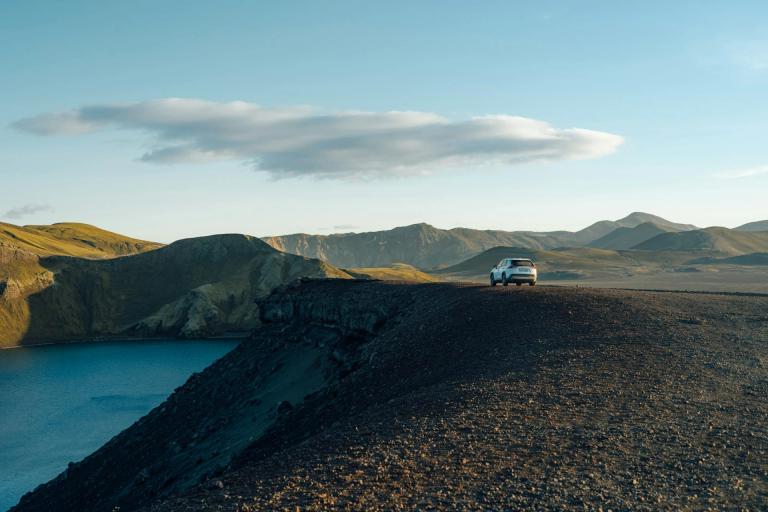 Iceland’s traffic rules are straightforward but strictly enforced. Fines are steep.
Speed limits are 30–50 km/h in towns, 80 km/h on gravel roads, and 90 km/h on paved rural roads. There are no motorways in Iceland, and 90 km/h is the national maximum. These are upper limits, not targets. Reduce speed in rain, wind, fog, or on loose gravel.
Headlights must be on at all times, day and night, year-round.
Seatbelts are mandatory for all passengers, front and back.
Off-road driving is illegal and carries heavy fines. Iceland’s fragile moss and vegetation can take decades to recover. Stay on marked roads and tracks at all times.
Alcohol limit is 0.02% BAC, effectively a near-zero tolerance policy. Enforcement is strict, and penalties are severe.
For more on driving regulations, see our winter driving guide and license conversion guide.
Seasonal driving considerations
Summer (June–August) is the easiest time to drive in Iceland. Roads are clear, daylight is near-continuous, and almost all routes including F-roads are accessible. This is also peak tourist season, so book early and expect more traffic on popular routes like the Ring Road and Golden Circle.
Shoulder seasons (May and September) offer lower prices and fewer crowds, but weather is less predictable. Some highland roads may still be closed in early June or close again in September. Check road.is for current conditions.
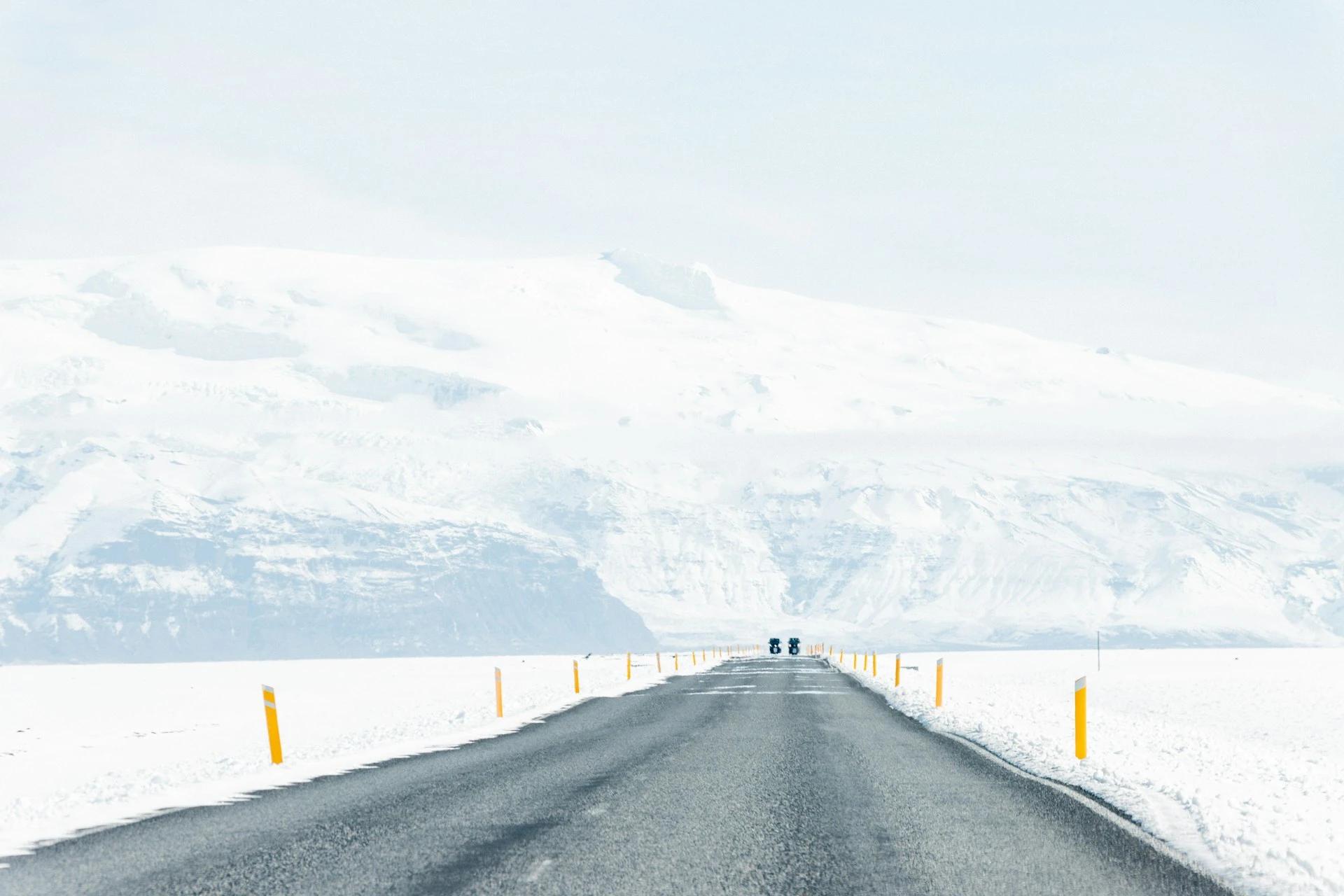
Winter (November–April) brings short daylight hours, icy roads, snow, and powerful winds. Winter tires are mandatory from November 1 through April 15. Studded tires are legal during this period but not required. All rental cars come with winter tires during these months.
Road closures are common in winter, especially on mountain passes and in the north and east. Always check road.is before setting out and monitor forecasts at vedur.is. Our winter driving guide covers equipment, safety, and what to do if conditions turn.
F-roads and highland driving
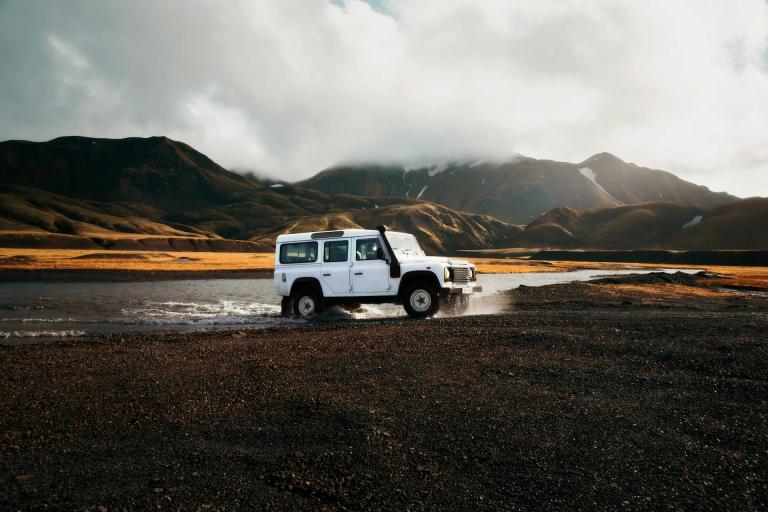 F-roads are Iceland’s highland mountain roads, marked with an “F” before the road number (F26, F35, F208). They are unpaved, often steep, and may include unbridged river crossings.
A 4x4 vehicle is required on all F-roads. Driving a 2WD vehicle on an F-road is illegal, and insurance does not cover any damage incurred. Most rental companies will void the entire insurance policy if a 2WD vehicle is taken onto an F-road.
F-roads are only open during summer, typically from mid-June through September. The exact opening and closing dates change each year based on snow melt and conditions. Check the road.is map before heading into the highlands.
For a detailed breakdown of F-road categories, river crossings, and preparation tips, read our F-roads guide.
Major rental companies
Iceland has both international chains and well-regarded local companies. Local operators tend to be cheaper and often provide more Iceland-specific advice.
At Keflavík Airport
Hertz, Avis, Budget, and Europcar/Höldur have desks inside the terminal. Local companies like Blue Car Rental, Reykjavík Cars, Lava Car Rental, and Go Car Rental operate from nearby lots with free shuttle service. Blue Car Rental’s office is within walking distance of the terminal (3–4 minutes on foot).
In Reykjavík
Most companies have a city office or offer delivery/pickup in the capital area.
When comparing, look beyond the headline rate. Check whether the price includes CDW, unlimited mileage, the kílómetragjald surcharge, and airport pickup. Read reviews on independent platforms. Blue Car Rental, Lava Car Rental, and Reykjavík Cars consistently rank among the highest-rated local options.
Long-term rentals and alternatives
If you are staying in Iceland for several weeks or months, a long-term rental may cost less per day than a standard booking. Some companies offer monthly rates or lease-to-own arrangements.
For residents and newcomers, renting is also a practical bridge while you decide whether to buy a car. The used car market in Iceland is expensive due to import duties, and renting for the first few months gives you time to learn the market and test what vehicle type suits your needs.
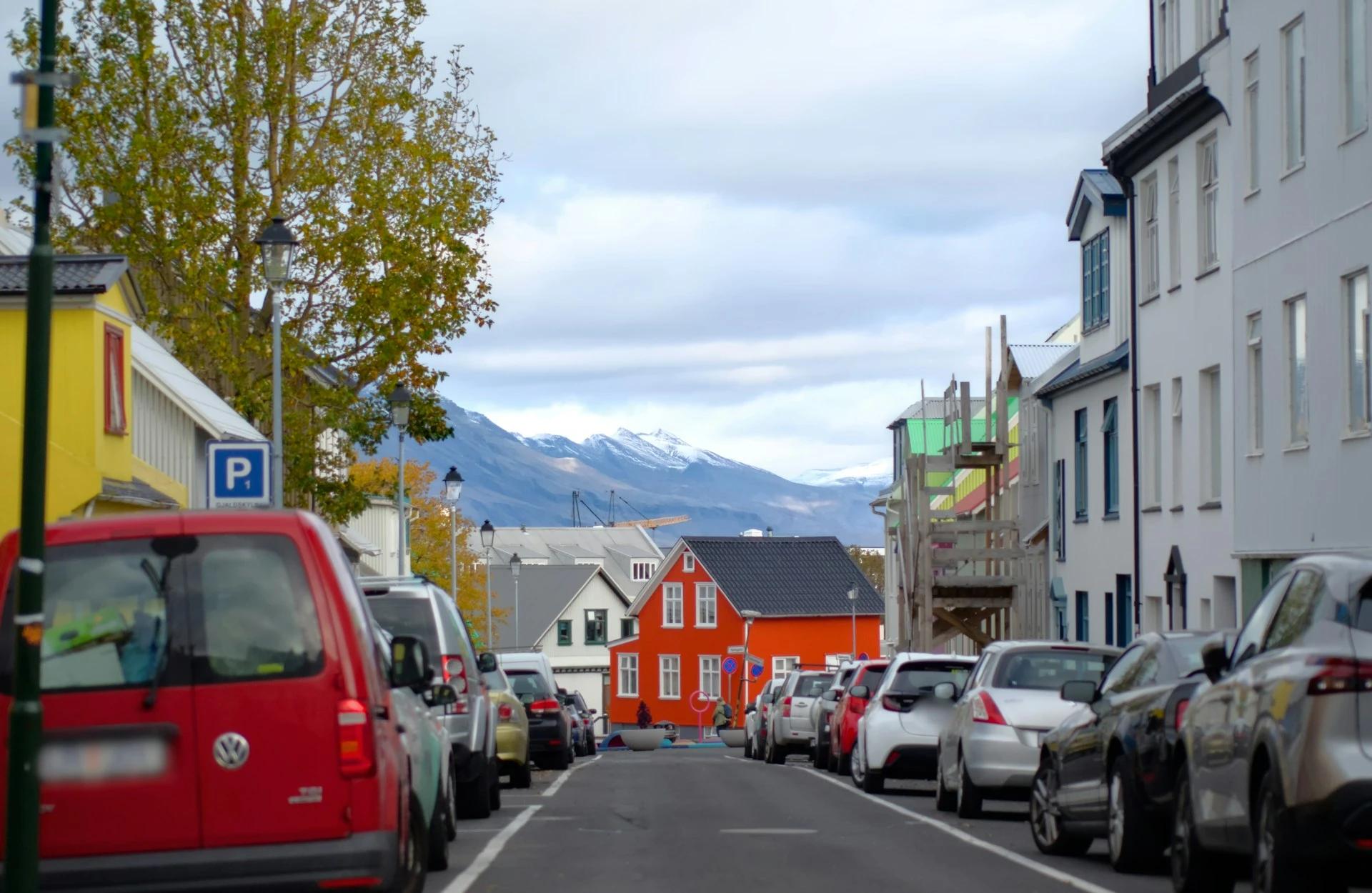
If you plan to stay primarily in the capital area, public transport covers most daily needs. Strætó operates bus routes across the greater Reykjavík area, and the city is walkable and bikeable in summer. A rental for weekend trips outside the city may be more cost-effective than owning a second car.
For those already settled, car insurance is a separate consideration covered in our dedicated guide. For a broader overview of transport and everything else involved in the move, see our main guide to moving to Iceland.
Frequently asked questions
Do I need a 4x4 to drive around Iceland?
Not for the main roads. The Ring Road (Route 1), Golden Circle, and most popular attractions are accessible with a 2WD car year-round. A 4x4 is only required for F-roads, which are highland routes open in summer only. In winter, a 4x4 provides extra confidence on icy or snow-covered roads but is not legally required on paved routes.
How much does it cost to rent a car in Iceland in 2026?
Economy cars start from around 5,000 ISK/day in winter and 10,000 ISK/day in summer. SUVs and 4x4s range from 12,000 to 35,000 ISK/day depending on season. Add insurance extras and the kílómetragjald road tax (1,390–1,550 ISK/day at most companies) to get the true daily cost.
What is the new kilometer road tax?
Iceland introduced the kílómetragjald on January 1, 2026, replacing the old fuel-based road tax. The base rate is 6.95 ISK/km for standard passenger cars. Most rental companies charge a flat daily fee of 1,390–1,550 ISK instead of tracking exact kilometers.
What insurance should I get?
CDW is usually included in the base rate. For trips outside Reykjavík, add Gravel Protection. If you are driving in the south or east near glacial areas, Sand and Ash Protection is strongly recommended. Super CDW is worth it if you want to reduce your deductible to zero.
Can I drive in Iceland with a foreign license?
Yes, if your license is in Roman script and has been held for at least one year. Licenses in non-Roman scripts require an International Driving Permit alongside the original. EEA licenses are accepted directly for residents. Non-EEA residents who become permanent may need to convert their license.
Are rental cars equipped with winter tires?
Yes. All rental cars in Iceland come with winter tires during the mandatory period (November 1 to April 15). You do not need to request them separately.
Last updated: March 2026
Helping you navigate your move and settling in the land of fire and ice.