
Updated Mar 27, 2026 · Jun 30, 2023
Currency in Iceland and How to Pay

Updated Mar 27, 2026 · Published Jun 30, 2023 · 8 min read
Track your Iceland journey, plan, learn, and connect
Sign up free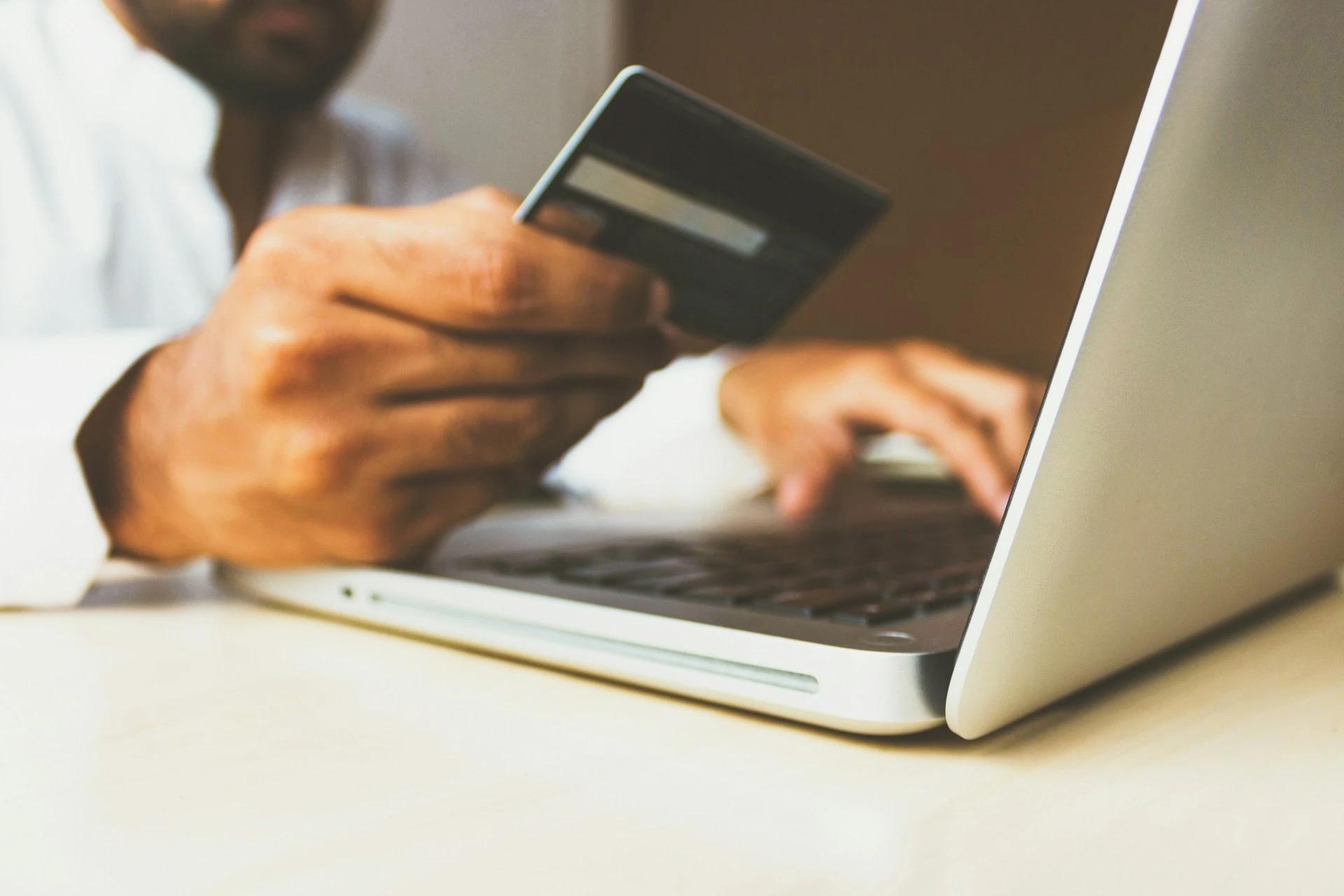
The Icelandic króna is a small currency, and international transfers carry hidden costs. This guide compares transfer services, fees, exchange rates, and tax rules for people moving money to or from Iceland.
A week-by-week checklist covering everything you need to do in your first 30 days in Iceland, including kennitala registration, banking, housing, and settling in.
Iceland is expensive, but high wages, cheap geothermal energy, and strong worker protections mean most people with full-time jobs live comfortably. Here is what you will actually spend each month in 2026, category by category.
Some links in this article are affiliate links. If you use them, we may earn a small commission at no extra cost to you. This helps us keep MovingToIceland.com free.
Iceland's currency is the króna (plural: krónur), abbreviated ISK and sometimes written with the symbol "kr." Understanding the currency in Iceland and how people actually pay for things will save you confusion in your first weeks after moving to Iceland.
This is a small, free-floating currency that is not pegged to the euro or any other currency. Exchange rates shift daily. As of March 2026, 1 USD buys roughly 124 ISK, and 1 EUR buys roughly 144 ISK. Those numbers move, so check a live converter before making any large transfers.
Table of contents
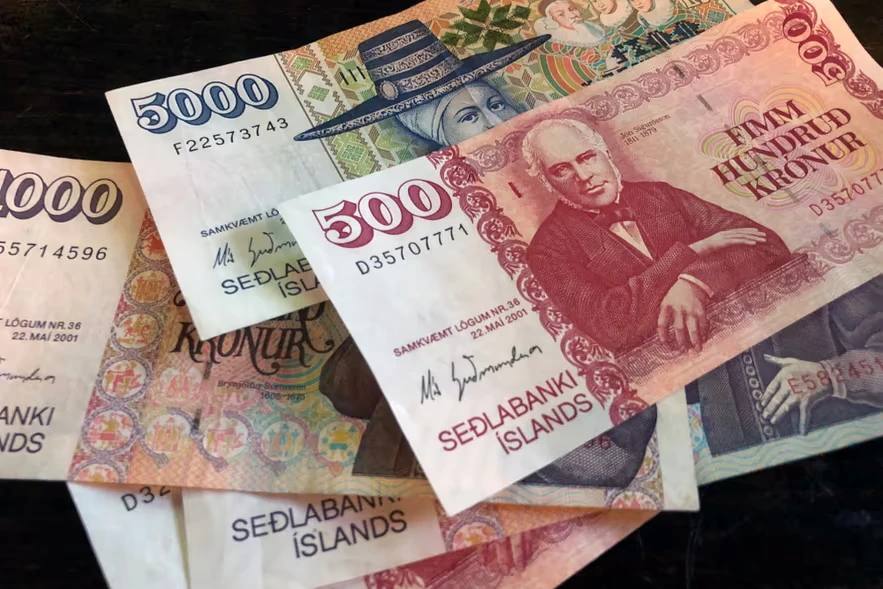
Banknotes come in five denominations: 500, 1,000, 2,000, 5,000, and 10,000 krónur. The 2,000 kr note is no longer printed by the Central Bank of Iceland but remains legal tender.
Coins are minted in 1, 5, 10, 50, and 100 kr values. Coins denominated in aurar (cents) were withdrawn from circulation in 2003 and are no longer accepted.
In practice, you will rarely handle physical cash. But it helps to recognize the denominations for the occasional market stall or rural gas station that displays prices without the "kr" suffix.
Iceland is one of the most cashless societies in the world. Roughly 97-98% of transactions happen electronically, according to the European Payments Council. Cash in circulation as a share of GDP is among the lowest globally.
Card terminals are everywhere: grocery stores, gas pumps, swimming pools, food trucks, public buses, and even some unmanned facilities like rural restrooms. Many businesses have stopped accepting cash altogether.
For someone moving to Iceland rather than visiting, the cashless culture is good news. Once you have an Icelandic bank account and debit card, you can handle virtually every daily transaction without ever touching a banknote.
Visa and Mastercard are accepted at nearly every business in Iceland. American Express has more limited acceptance, and Diners Club is rare.
Iceland uses chip-and-PIN exclusively. Swipe-and-sign is not supported. Always know your card's PIN, whether you are using a credit card or debit card.
Contactless (tap) payments are standard and widely supported. Most terminals accept NFC payments, and there is no cultural hesitation about using them for small amounts.
If you are still using a foreign card before you set up an Icelandic bank account, keep two things in mind. First, your bank may charge a foreign transaction fee of 1-3% on every purchase. Second, if a terminal asks whether to charge in ISK or your home currency, always choose ISK. Accepting the terminal's currency conversion (called dynamic currency conversion) means you pay the terminal operator's exchange rate, which is almost always worse.
Apple Pay, Google Pay, and Samsung Pay all work in Iceland and are widely accepted wherever contactless card payments are supported.
Once you have an Icelandic bank account, you will also encounter domestic payment apps. Each of the three major banks (Landsbankinn, Íslandsbanki, and Arion Bank) has a mobile banking app with bill payment, transfers, and account management available in English.
Around 60% of Icelanders use digital wallets for everyday spending. For new residents, setting up your Icelandic bank's mobile app and linking your debit card to Apple Pay or Google Pay covers almost every payment scenario.
You do not need cash for daily life in Iceland. That said, keeping a small amount of krónur on hand is not a bad idea for the rare situation where a card reader is down or you are at a rural market.
ATMs are operated by the three major banks and can be found in towns and cities across the country. They are less common in very remote areas.
Withdrawal limits vary by ATM, typically between 50,000 and 500,000 ISK per transaction. Daily limits usually range from 300,000 to 500,000 ISK.
Foreign card withdrawals incur fees on both sides. The Icelandic ATM charges a fixed fee per transaction (ranging from about 165 ISK at Íslandsbanki to 605 ISK at Arion Bank, as of 2026) plus around 1% of the withdrawal amount. Your home bank will likely add its own fee (often 3-5 USD equivalent) plus a currency conversion spread. If the ATM offers to convert to your home currency, decline it and withdraw in ISK to avoid an additional markup.
If you arrive with foreign cash, you can exchange it at the major banks or at the Arion Bank currency exchange desk at Keflavik International Airport.
Bank exchange rates are generally better than airport or hotel exchange desks. Compare rates before exchanging large amounts. The Arion Bank currency converter shows live rates.
For large transfers (moving savings to Iceland, receiving a foreign salary), traditional bank wire transfers carry significant fees and unfavorable exchange rates on a small currency like ISK. Services like Wise typically offer better rates and lower fees for international transfers. Our sending money guide compares the main options.
In general, avoid exchanging cash before you arrive. The ISK is not widely stocked at foreign exchange offices outside of Iceland, and the spread on pre-purchased krónur is steep. Bring a card that works internationally and exchange or withdraw ISK once you land.
Tipping is not expected in Iceland. Service charges are built into prices at restaurants and cafés. Workers receive fair wages through collective bargaining agreements, and there is no cultural expectation of a tip on top of the bill.
If you receive exceptional service and want to leave something extra, rounding up the bill or leaving 5-10% is generous but entirely optional. No one will think less of you for paying the exact amount.
This is a meaningful difference from the United States, Canada, and many other countries. It also means that the price you see on a menu is close to what you actually pay (Iceland's standard VAT of 11% on food and 24% on most other goods is already included in displayed prices).
Once you have your kennitala (Iceland's national ID number), opening a bank account is straightforward. All three major banks offer accounts to new residents with English-language support. The process takes about 30 minutes. Our bank guide compares the options.
Your Icelandic bank will issue a Visa or Mastercard debit card. This becomes your primary payment tool for everything from groceries to rent.
A few practical tips for managing ISK as a new resident:
Salaries in Iceland are paid by direct bank transfer, typically on the first business day of the month. Budget accordingly, since many bills (rent, utilities, insurance) are also due at the start of the month.
The króna fluctuates. If you are sending money home or receiving income in a foreign currency, timing matters. Setting up recurring transfers through a service with low fees and mid-market rates helps smooth out the volatility.
Prices in Iceland are always displayed in ISK including VAT. There are no hidden taxes added at checkout. What you see is what you pay.
For a detailed breakdown of what things actually cost, see our cost of living guide and grocery costs guide.
Does Iceland use the euro?
No. Iceland uses the Icelandic króna (ISK). Although Iceland is a member of the European Economic Area, it is not part of the eurozone. Euros are not accepted at most businesses.
Can I use my foreign credit or debit card in Iceland?
Yes. Visa and Mastercard are accepted virtually everywhere. Your bank may charge a foreign transaction fee (typically 1-3%), and you should always choose to pay in ISK when given the option. Make sure you know your card's PIN, since Iceland uses chip-and-PIN exclusively.
Do I need to carry cash in Iceland?
Almost never. Iceland is one of the most cashless countries in the world, and card payments work at nearly every business. Keeping a small amount of cash as a backup is reasonable but not necessary for daily life.
Is tipping expected in Iceland?
No. Service charges are included in prices, and workers earn fair wages. Tipping is neither expected nor customary. If you want to show appreciation for exceptional service, rounding up the bill is a generous gesture.
What is the best way to exchange currency for ISK?
Avoid exchanging cash before you arrive. Use your international debit or credit card for purchases when you land, and decline dynamic currency conversion at terminals and ATMs. For larger transfers, services like Wise typically offer better rates than traditional bank wires. Once you have an Icelandic bank account, transfer funds directly.
How much is 1 USD in Icelandic krónur?
As of March 2026, 1 USD equals roughly 124 ISK. The rate fluctuates daily. Check a live currency converter for the current rate before making any significant exchange. For context, the currency in Iceland has been relatively stable against major currencies through early 2026.
Last updated: March 2026