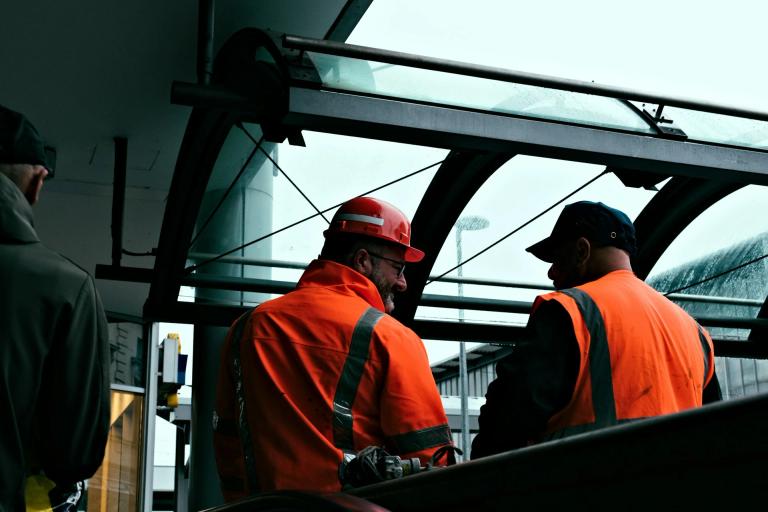
Workers with any prior construction experience, even informal, have an advantage. Those who acquire skills on the job and eventually earn a journeyman's certification see their minimum wage jump to 626,713 ISK per month.
Warehouse and logistics
Warehouse operatives, packers, and forklift drivers keep Iceland's supply chain running. Grocery chains, e-commerce fulfilment centres, and import distributors all rely on warehouse staff.
Warehouse work typically falls under the general worker wage tables, with minimums in the 492,000 to 498,000 ISK range (as of January 2026). Forklift certification, which can be earned through short courses in Iceland, increases both pay and employability.
Shift work is common in warehouses, with early-morning, evening, and weekend shifts available. The work is physical but generally indoors, which is an advantage during Iceland's harsh winters.
Most warehouse positions are concentrated in the greater Reykjavik area, particularly in the Sundagarðar and Kópavogur industrial districts.
Retail and service
Working in shops, supermarkets, gas stations, and service counters is a practical entry point into the Icelandic labour market. Positions include cashiers, shelf stockers, sales assistants, and customer service staff.
Retail work offers regular hours and direct interaction with the public, which accelerates Icelandic language learning. Many supermarket chains (Bónus, Krónan, Hagkaup, Nettó) hire staff with limited Icelandic, particularly for stocking and back-of-house roles. Customer-facing positions increasingly require at least basic Icelandic.
Wages fall under the general worker collective agreements, with the same minimums as other entry-level sectors. Some retail employers offer shift premiums for evening and weekend work.
Deliveries and driving
If you hold a valid driving licence, delivery work is a flexible entry point. Food delivery, parcel and freight delivery, and general courier services all operate in Iceland.
Delivery positions are especially common in the Reykjavik capital area. The work offers flexibility and independence, and it is a practical way to learn the geography of your new city.
Wages vary depending on the employer and whether the role is full-time or gig-based. Full-time delivery drivers under collective agreements earn the general worker minimum plus any applicable overtime and shift premiums.
Note: if your driving licence was issued outside the EEA, you will need to convert it to an Icelandic licence once you become a resident.
Security
Security guard positions are available at shopping centres, events, construction sites, and commercial buildings. The work involves monitoring premises, managing access, and responding to incidents.
Requirements typically include a clean criminal record, good physical condition, and the ability to communicate in English (and ideally some Icelandic). Security work often involves evening and night shifts, which carry higher pay rates under collective agreements.
This sector suits people who prefer structured, independent work and are comfortable with irregular hours.
Agriculture and greenhouse work
Iceland's agriculture sector employs workers on dairy farms, sheep farms, and in the country's distinctive geothermally heated greenhouses. Greenhouse work involves tending to vegetables, herbs, and flowers grown year-round using Iceland's cheap geothermal energy.
Agricultural positions are almost exclusively located in rural areas. The work is seasonal for some roles (lambing season in spring, haymaking in summer) and year-round for others (dairy farming, greenhouse cultivation).
These positions suit people drawn to rural life and outdoor work. The trade-offs are similar to fish processing: lower rent and a quieter pace, but more isolation and fewer services than the capital area.
How to find entry-level jobs
The Icelandic job market relies heavily on personal connections and word of mouth. That said, several formal channels exist for job seekers.
Job boards. Alfred.is is Iceland's largest job search platform, with hundreds of new listings each week across all sectors. Job.is is another popular board. The Directorate of Labour also maintains a list of available positions. LinkedIn is increasingly used for white-collar roles but less common for entry-level positions.
Staffing agencies. Temporary staffing agencies place workers in short-term and contract positions across hospitality, cleaning, construction, and warehousing. Registering with one or more agencies can lead to quick placement, and temporary roles often convert to permanent positions.
Direct applications. Walking into a business with a CV is still effective in Iceland, particularly for restaurants, hotels, and shops. In a country of 390,000 people, personal initiative stands out.
Facebook groups. Several active Facebook groups post job openings in English. Search for groups related to jobs in Iceland or expat communities. These are particularly useful for informal leads and word-of-mouth referrals.
Networking. In a labour market this small, knowing someone matters enormously. Attend community events, join clubs or sports teams, and talk to people. Many entry-level jobs are filled before they are ever advertised.
For a broader look at job search strategies, see the full guide to finding a job in Iceland. For sectors with the strongest hiring activity, see jobs in demand in Iceland.
Work permits and legal requirements
Your right to work in Iceland depends on your nationality.
EEA/EFTA citizens (EU countries, Norway, Liechtenstein, Switzerland) have the right to live and work in Iceland without a work permit. You must register your domicile within three months of arrival, but you can start working immediately.
Non-EEA citizens need a work permit before they can legally work. The permit is tied to a specific employer, and the employer must demonstrate that the position could not be filled by an EEA citizen. For entry-level roles, this requirement can be met when there is a documented labour shortage in the sector, which Iceland's Directorate of Labour assesses on a case-by-case basis.
The application is submitted by the employer, not the worker. Processing typically takes 4 to 12 weeks, though it can be longer during busy periods or if documentation is incomplete. See the work permit guide for the full process, or the island.is work permit page for official requirements.
Know your rights at work
Iceland has strong worker protections, and they apply equally to foreign workers regardless of nationality or visa status.
Union membership. Around 90% of Icelandic workers are covered by collective agreements. Most entry-level workers fall under the Federation of General and Special Workers (SGS), which covers food, agriculture, construction, service, tourism, industry, and public services through its 18 member unions. Joining the relevant union is not mandatory, but union membership gives you access to sickness funds, legal assistance, and professional development grants.
Standard work week. 40 hours per week, Monday through Friday. Coffee breaks (35 minutes per day) are paid working time. Lunch breaks (30 to 60 minutes) are unpaid.
Overtime. Paid at 80% above the regular hourly rate for all hours worked beyond the standard 40-hour week, including weekends.
Paid leave. A minimum of 24 vacation days per year. Sick leave rights increase with tenure.
Pension. Mandatory contributions: 4% from the employee, 11.5% from the employer. This applies from day one and is automatic.
For a full breakdown of labour protections, see your rights as a foreign worker in Iceland.
Tips for getting started
A few practical points that improve your chances of landing entry-level jobs in Iceland.
Get your kennitala (national ID number) as soon as possible. Employers need it to register you in the payroll system, and you need it to open a bank account where your wages will be deposited. See the kennitala guide.
Tailor your CV to highlight reliability, flexibility, and any relevant experience, even informal. Icelandic employers value punctuality, work ethic, and a willingness to take on varied tasks.
Be open to starting outside your preferred sector. Many immigrants begin in cleaning, hospitality, or fish processing and move into other fields once they have local experience, references, and stronger Icelandic skills.
Consider locations outside Reykjavik. Smaller towns often have lower competition for jobs, lower rent, and employers who are more willing to sponsor work permits due to persistent local labour shortages.
Start learning Icelandic early. Even basic conversational ability opens doors to roles that require customer interaction and signals long-term commitment to employers. Free courses are available for immigrants through government-funded programmes. See the learning Icelandic guide.
Frequently asked questions
Can I get a job in Iceland without speaking Icelandic?
Yes. Many entry-level jobs in Iceland do not require Icelandic, particularly in tourism, cleaning, construction, fish processing, and warehouse work. English is sufficient for many entry-level positions, especially in the Reykjavik area. However, learning Icelandic improves your long-term career prospects and access to a wider range of roles.
What is the minimum wage for entry-level work in Iceland?
Iceland has no statutory minimum wage. Wages are set by collective bargaining agreements. For a general worker aged 22 or older, monthly minimums range from 483,643 ISK to 497,831 ISK gross depending on the sector (as of January 2026). The effective minimum with premiums and bonuses is higher.
Do I need a work permit for entry-level jobs?
EEA/EFTA citizens do not need a work permit. Non-EEA citizens need a work permit sponsored by their employer. For entry-level positions, the employer must show that no suitable EEA candidate was available. The Directorate of Labour evaluates this on a case-by-case basis.
Are entry-level jobs in Iceland seasonal?
Some are. Tourism and hospitality peak from May through September, and agricultural work is seasonal. However, cleaning, construction, fish processing, warehouse work, and retail offer year-round employment.
How much can I realistically earn in an entry-level job?
Base wages range from roughly 483,000 to 498,000 ISK gross per month. With overtime, shift premiums, and bonuses, many full-time entry-level workers take home 400,000 to 500,000 ISK net per month. Workers in construction and fish processing who regularly take overtime can earn more.
What is the best way to find entry-level work in Iceland?
The best ways to find entry-level jobs in Iceland include registering on Alfred.is, contacting staffing agencies, and applying directly to businesses in person. Networking through community events and Facebook groups is also effective. In Iceland's small labour market, personal connections often lead to opportunities before jobs are formally advertised.