Icelandic Culture for Foreigners
Icelandic culture for foreigners, from how people communicate and the patronymic naming system to swimming pool etiquette, workplace norms, and building a social life in Iceland.
What to know about Icelandic culture for foreigners
Iceland is a small country with a strong identity. The culture is shaped by geographic isolation, Viking-era roots, a fierce attachment to language, and a modern society that consistently ranks among the world's most equal and safest. Understanding Icelandic culture for foreigners is not optional. It is the difference between living here and actually feeling at home.
This guide covers the Icelandic culture for foreigners in practical terms: how people communicate, the social norms that trip newcomers up, what the swimming pool really means, and how to start building a life that goes beyond paperwork and logistics.
Table of contents
How Icelanders communicate
Icelanders are direct. Conversations tend to be straightforward, with honesty valued over politeness for its own sake. If you ask someone a question, expect a clear answer rather than a softened version of the truth.
At first, this can feel blunt or reserved, especially if you come from a culture where small talk and effusive warmth are the norm. Icelanders are not cold; they simply do not perform friendliness. Once you get to know someone, the warmth is genuine and lasting.
There is no direct translation for "please" in Icelandic. That is not rudeness. It is just how the language works. Requests are made in a polite tone without a specific word to signal it. Similarly, Icelanders do not use formal titles. Everyone, including the Prime Minister, is addressed by their first name. This extends to professional settings, classrooms, and doctor's offices.
Humour plays a big role in daily interactions. The style is dry, deadpan, and often self-deprecating. Sarcasm is common but can be hard to read if you are not familiar with the delivery.
The Icelandic naming system
Iceland does not use family surnames in the way most Western countries do. Instead, it uses a patronymic (and increasingly matronymic) system. Your last name indicates whose child you are, not which family you belong to.
Here is how it works. If a father named Jón has a son, the son's last name is Jónsson ("son of Jón"). If Jón has a daughter, her last name is Jónsdóttir ("daughter of Jón"). Under the 2019 Gender Autonomy Act, individuals registered as non-binary (gender X) can use the suffix -bur (meaning "child of").
This means every member of a family may have a different last name. A mother, father, and their two children could each carry a distinct surname. When travelling abroad, this regularly confuses border officials who expect families to share a name.
Because last names are not fixed family identifiers, the Icelandic phone book lists people alphabetically by first name. Women do not change their names when they marry, since their name describes their parentage, not their partnership.
The Mannanafnanefnd (Icelandic Naming Committee) maintains a register of approved given names. New names must fit Icelandic grammar and be compatible with the language's declension system. The committee's role is to preserve the linguistic tradition while allowing some flexibility for modern naming preferences.
For foreigners moving to Iceland, understanding this system matters in daily life. You will be called by your first name in every context, from the bank to the hospital.
Gender equality in Iceland
Gender equality is one of the most defining elements of Icelandic culture for foreigners to experience firsthand. Iceland has ranked first on the World Economic Forum's Global Gender Gap Index for 16 consecutive years (as of 2025), with a parity score of 92.6%. It is the only country to have closed more than 90% of its measured gender gap.
This shapes daily life in ways foreigners notice quickly. Women hold prominent leadership positions across politics, business, and public institutions. In early 2026, women simultaneously held the roles of President, Prime Minister, Bishop of Iceland, National Police Commissioner, and State Prosecutor.
The roots of this culture run deep. In 1975, 90% of Icelandic women walked off their jobs and refused to do housework for a day, an event known as Kvennafrídagurinn ("Women's Day Off"). The action paralysed the country and is widely credited with accelerating the push for equality legislation. Five years later, Iceland elected Vigdís Finnbogadóttir as the world's first democratically elected female president. She served for 16 years.
Iceland's parental leave system reflects these values. Each parent receives six months of paid leave, of which up to six weeks can be transferred to the other parent (making 4.5 months non-transferable per parent). The total is 12 months per couple. The vast majority of fathers use their leave. In 2018, Iceland became the first country to require mandatory equal pay certification, shifting the burden of proof from employee to employer. Companies with 25 or more employees must demonstrate pay parity or face fines.
That said, Iceland is not a finished project. The gender pay gap was 10.4% in 2024 (according to Statistics Iceland), and the labour market remains segregated in certain sectors. Icelanders are the first to point this out. The culture is one of ongoing progress rather than complacent achievement.
LGBTQ+ rights are similarly advanced. Same-sex marriage has been legal since 2010, and adoption rights for same-sex couples since 2006. Jóhanna Sigurðardóttir served as Prime Minister from 2009 to 2013, making her the world's first openly gay head of government.
Swimming pool culture
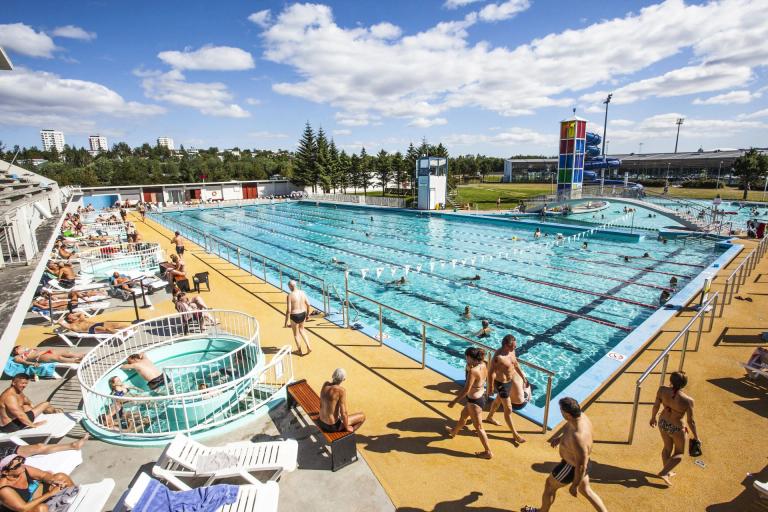 If there is one cultural institution you must understand as a foreigner in Iceland, it is the sundlaug (swimming pool). In December 2025, Icelandic swimming pool culture was added to the UNESCO Intangible Cultural Heritage list, a recognition of its central role in daily life.
There are over 120 public swimming pools across Iceland, a remarkable number for a country of roughly 400,000 people. Almost every town and village has one, heated by geothermal water and open year-round. Entrance fees are low, ranging from about 900 ISK in smaller towns to 1,430 ISK in Reykjavik (as of January 2026).
Pools are not primarily about exercise, though lap swimming is popular. They are social spaces. The heitur pottur (hot tub) is where Icelanders catch up on news, debate politics, gossip, and decompress. Groups of regulars meet at the same pool at the same time every day. Retirees gather in the mornings. Parents bring children after school. Teenagers socialise in the evening.
Swimming is mandatory in Icelandic primary schools, and baby swim classes start from around three months old. By the time most Icelanders reach adulthood, pool culture is second nature.
For foreigners, the shower rules matter. You are required to shower thoroughly without a swimsuit before entering the pool area. Changing rooms are communal and separated by gender. This can be uncomfortable if you are not used to it, but it is a non-negotiable hygiene standard that everyone follows. Some newer pools now offer private changing cubicles.
Visiting a local pool is one of the fastest ways to experience authentic Icelandic culture for foreigners. It is also one of the best ways to start building community.
Social norms and daily etiquette
A few unwritten rules are worth knowing before you settle in.
Shoes come off at the door. When you enter an Icelandic home, remove your shoes. This is not optional. If your host does not mind, they will tell you. Otherwise, assume shoes stay outside.
Tipping is not expected. Service charges are included in the price at restaurants, bars, and hotels. Tipping is neither customary nor expected, and no one will be offended if you do not leave one.
Punctuality is relaxed (for social events). Arriving 15 minutes late to a casual gathering is normal. For work meetings and appointments, punctuality matters more. Parties are a different story entirely, where showing up well after the stated start time is standard.
Bringing a gift when invited to someone's home. Flowers, chocolate, or a bottle of wine are all appropriate. This is a small gesture that Icelanders appreciate.
The question you will hear most often. If you are a foreigner living in Iceland, expect to be asked, "How do you like Iceland?" frequently. This is usually asked with genuine curiosity. A positive (or at least tactful) answer goes a long way.
Personal space and modesty. Icelanders value personal space in public settings but are surprisingly open in the right context (see: communal showers). Bragging or self-promotion is poorly received. Modesty, even about real accomplishments, is a valued trait.
Nearly cashless. Iceland is one of the most cashless societies in the world. Card payments are accepted almost everywhere, including small vendors and rural businesses. Carrying cash is rarely necessary.
Workplace culture
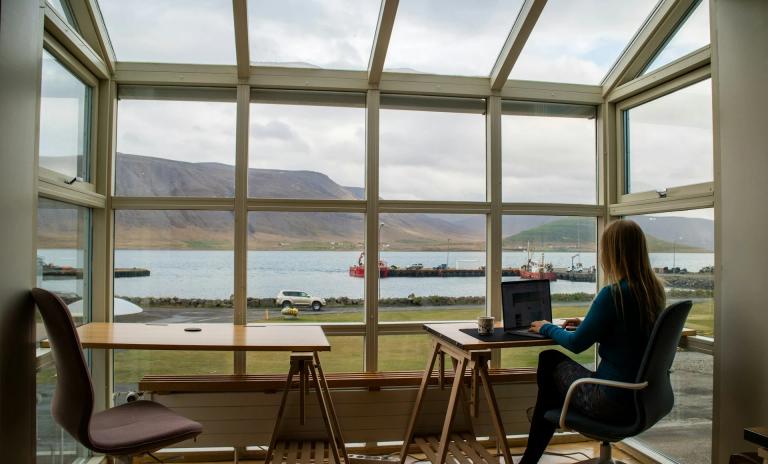 Icelandic workplaces are flat and informal. Hierarchies exist, but they are understated. You call your boss by their first name, and the gap between management and staff feels smaller than in many other countries.
Work-life balance is taken seriously. Standard working hours are 40 hours per week, and leaving the office on time is normal, not a sign of low commitment. Many workplaces offer flexible hours, and it is common for employees to leave early on Fridays. Extended overtime is not culturally celebrated.
Union membership is nearly universal. Around 90% of Icelandic workers are covered by collective bargaining agreements, which set minimum wages, holiday entitlements, and workplace standards. For a deeper look at your rights as a worker, see our guide to worker rights in Iceland.
The Icelandic work ethic is strong, but it is oriented toward productivity rather than visibility. Working smart is more respected than working long. Many Icelanders hold multiple jobs or side projects, particularly given the high cost of living.
Family and relationships
Family is central to Icelandic life. Extended families tend to stay connected, and grandparents, aunts, and uncles often play an active role in raising children.
Marriage, however, is optional. About two-thirds of children in Iceland are born to unmarried parents. This carries no social stigma whatsoever. Cohabitation is common and legally recognised, and the decision to marry (or not) is treated as personal rather than moral.
Children are raised with a strong emphasis on independence and self-sufficiency. Icelandic teenagers are expected to contribute to housework, and it is normal for children over 10 to go to the local swimming pool without adult supervision. The culture encourages autonomy from a young age.
Iceland is also famously safe for families. Crime rates are among the lowest in the world, and it is common to see prams left outside shops and cafés with sleeping babies inside, even in Reykjavik.
For more on raising children in Iceland, see our guides to daycare and the Icelandic school system.
Literature and the arts
 Iceland publishes more books per capita than almost any other country. The literary tradition runs deep, rooted in the medieval Íslendingasögur (Sagas of Icelanders) and the poetic Edda, which were written in Old Norse during the 12th and 13th centuries. Modern Icelandic is close enough to Old Norse that Icelanders can still read many of these texts.
Reading is a national pastime. The Christmas tradition of Jólabókaflóðið ("the Christmas book flood") sees a surge of new book releases every autumn, and Icelanders exchange books on Christmas Eve before spending the night reading. The country has a remarkable number of bookshops, libraries, and literary festivals for its size.
Music is another cultural strength. Artists like Björk, Sigur Rós, Of Monsters and Men, and Laufey have all achieved international recognition. Reykjavik's live music scene is active year-round, with venues and festivals packed into the capital area. Reykjavik Culture Night every August is the largest one-day festival, drawing over 100,000 people.
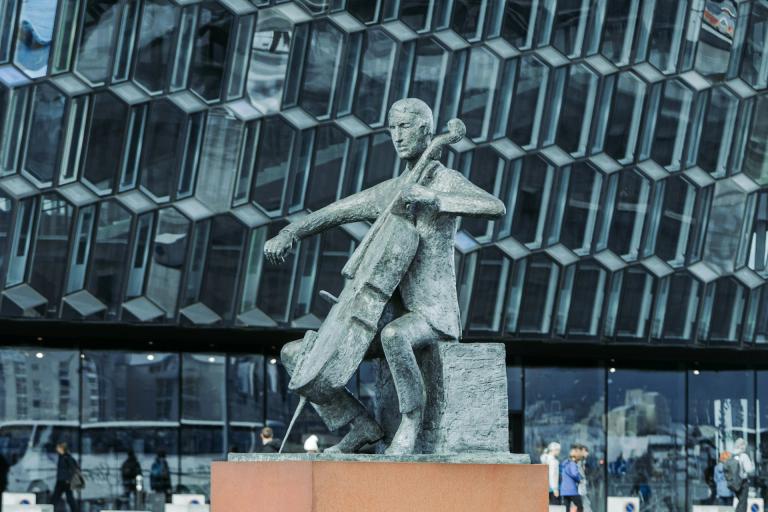
Visual arts, design, and craft traditions (silversmithing, wool knitting, wood carving) also run strong. Reykjavik hosts several galleries, the National Museum of Iceland, and the Harpa Concert Hall, a landmark building in its own right.
Food culture
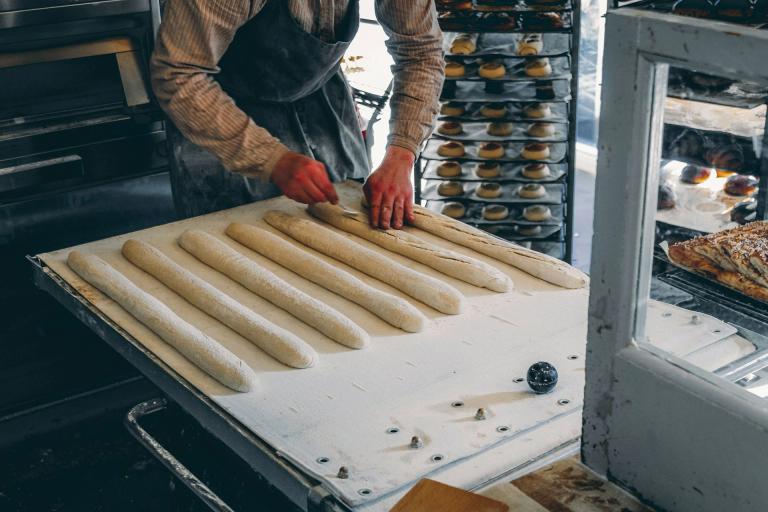 Traditional Icelandic cuisine was shaped by isolation, cold, and the need to preserve food through harsh winters. Staples include lamb, seafood (especially cod and haddock), and dairy products like skyr (a thick cultured dairy product similar to yogurt).
Þorramatur (food of the þorri season) is the traditional midwinter feast, typically served in January and February. It includes dishes like hákarl (fermented shark), hangikjöt (smoked lamb), dried fish, pickled ram's testicles, and blood pudding. Most of these are acquired tastes, and Icelanders themselves vary widely in how much they enjoy them. You are not expected to love them, but showing curiosity rather than disgust is appreciated.
Modern Icelandic food culture has evolved considerably. Reykjavik has a growing restaurant scene focused on local ingredients: seafood, lamb, wild herbs, and dairy. The hot dog (pylsa) from the famous Bæjarins Beztu stand is a cultural institution of its own.
Dining out is expensive by international standards. A main course at a mid-range restaurant in Reykjavik typically costs 3,500 to 8,000 ISK (as of March 2026). For many Icelanders, restaurant meals are reserved for special occasions. Home cooking and meal prep are the norm.
Grocery shopping habits, prices, and where to save money are covered in detail in our cost of living guide.
Religion in Iceland
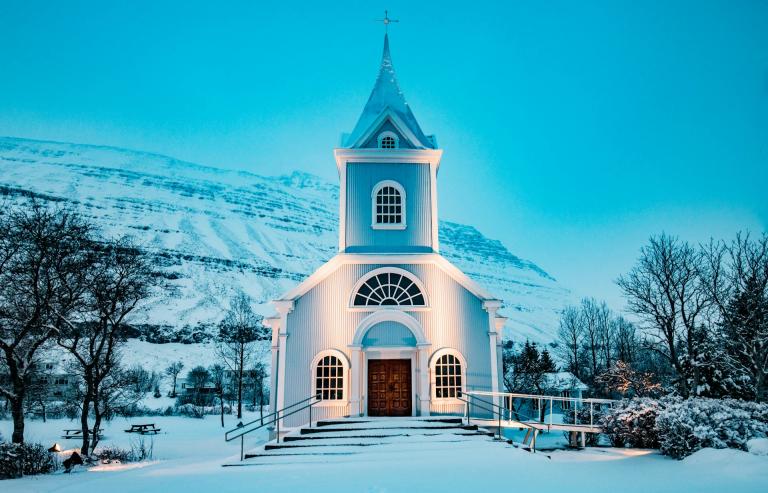 The majority of Icelanders are registered members of the Þjóðkirkjan (Evangelical Lutheran Church of Iceland), though that share has been declining steadily. As of late 2025, membership stood at around 55% of the population, an all-time low. Registration is partly cultural and partly historical; it does not necessarily indicate active religious practice.
About 5% of the population belongs to other Christian denominations. Another small but notable group practices Ásatrú, the modern revival of the traditional Norse pagan religion. The Ásatrúarfélagið (Ásatrú Fellowship) is a recognised religious organisation and is building a purpose-built temple on Öskjuhlíð hill in Reykjavik, though the project remains under construction after repeated delays.
In practice, Iceland is one of the most secular societies in Europe. Religion does not play a significant role in daily social life, politics, or workplace interactions. You are unlikely to be asked about your faith, and expressing no religious affiliation carries zero social consequence.
Respect for nature
One aspect of Icelandic culture that foreigners notice immediately is the deep, practical relationship with the natural environment. The landscape is geologically young, fragile, and often slow to recover from damage. Moss that covers lava fields grows as little as one centimetre per year and can take decades to recover from footprints.
The "leave no trace" principle is culturally enforced, not just legally mandated. Off-road driving is illegal and carries heavy fines. Picking up litter, staying on marked paths, and respecting barriers around geothermal areas are expected without exception.
This respect extends to animals. The Icelandic horse (never call it a pony) has strict import protections: once a horse leaves Iceland, it can never return. Feeding horses without the owner's permission is discouraged, as most are on specific diets.
Sheep roam freely in the highlands during summer and are rounded up in the annual réttir (autumn sheep roundup), a tradition that doubles as a major social event in rural Iceland.
For newcomers, the simplest guideline is this: leave every place exactly as you found it.
Holidays and traditions
Icelandic traditions become most visible during the country's unique calendar of holidays. A few highlights:
Þorrablót is the midwinter feast held during the old Norse month of Þorri (mid-January to mid-February). It involves traditional food, drinking, singing, and storytelling.
Bolludagur (Bun Day), Sprengidagur (Bursting Day), and Öskudagur (Ash Day) are three consecutive days in late February or early March that involve cream-filled pastries, salted meat and pea soup, and children collecting candy (respectively).
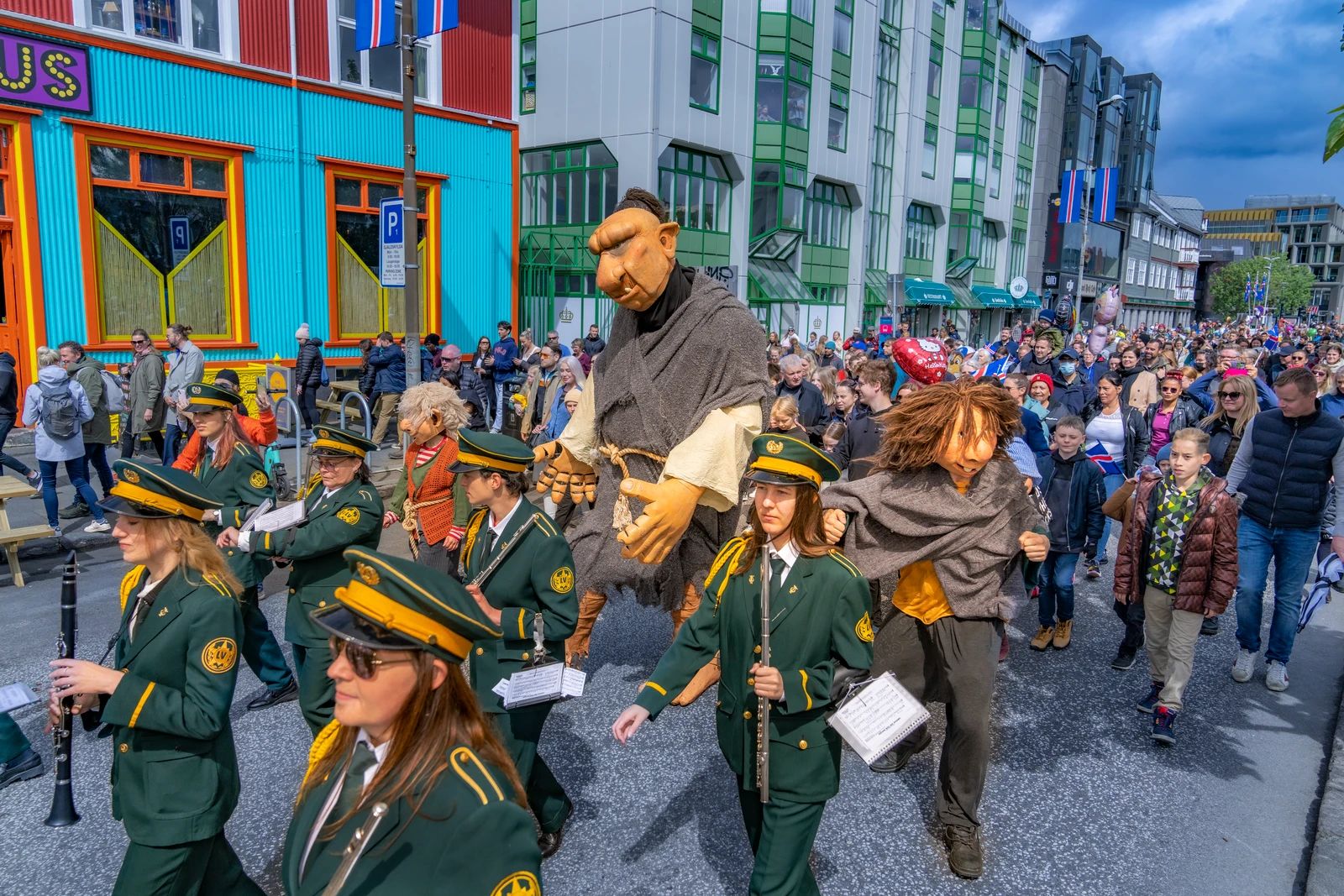
June 17th is Iceland's National Day (Þjóðhátíðardagurinn), celebrating independence from Denmark in 1944. Parades, live music, and outdoor events take place across the country.
Sumardagurinn fyrsti (First Day of Summer) falls on a Thursday between April 19th and 25th and marks the beginning of the Icelandic summer season according to the old Norse calendar.
Sjómannadagurinn (Seamen's Day) in early June honours Iceland's maritime history. Coastal towns host events, competitions, and family activities.
Christmas is the biggest celebration of the year and begins with preparations in early December. The Icelandic Yule Lads (Jólasveinar), 13 troll-like figures, visit children one by one in the 13 nights before Christmas, leaving gifts in shoes placed on windowsills.
Our Icelandic holidays and traditions guide covers the full calendar in detail.
Making friends as a foreigner
This is one of the most common challenges foreigners face in Iceland. Icelanders are friendly but forming close friendships takes time. Most Icelanders have tight-knit social circles that formed in childhood, and breaking into these groups requires patience and repeated contact.
The most reliable paths in: join a sports club, volunteer organisation, choir, or hobby group. Shared activities build connections faster than socialising at bars. The swimming pool is another natural meeting place, especially if you become a regular.
Learning Icelandic, even at a basic level, signals genuine commitment and opens social doors that remain closed in English. Many Icelanders will default to English with foreigners, but the effort is noticed and appreciated.
Facebook groups for foreigners in Iceland are active and useful for practical questions. The MovingToIceland.com community and our events page can also help you connect with other newcomers and find local meetups.
For a deeper look at why this is hard and what actually works, see our guide to making friends in Iceland.
Learning the language
Icelandic is a fascinating but difficult language. It has four grammatical cases, three genders, and a vocabulary that has changed remarkably little since the medieval period. The Íslensk málnefnd (Icelandic Language Committee) actively creates new Icelandic words for modern concepts rather than borrowing from English, which keeps the language distinct but also means the vocabulary is constantly evolving.
Most Icelanders under 50 speak fluent English, and you can get by without Icelandic in Reykjavik. Outside the capital area, English proficiency is less consistent.
That said, learning Icelandic is one of the most impactful things you can do for your integration. Many social interactions, workplace conversations, and community events default to Icelandic, and being excluded from those creates a real barrier over time. Icelanders also tend to respect newcomers who make a genuine effort with the language, even when the result is imperfect.
Government-funded Icelandic courses are available through the Directorate of Education. Several private schools and online platforms offer courses at all levels.
Our guide to learning Icelandic covers the best resources, courses, and realistic expectations. You can also practice with our language learning games.
For a complete overview of relocating to Iceland, see our full relocation guide.
Frequently asked questions
Do I need to speak Icelandic to live in Iceland?
You can manage in Reykjavik with English alone, especially in the early months. For long-term integration, workplace participation, and social life beyond the expat bubble, learning Icelandic matters significantly. Free and subsidised courses are available through the government.
Is tipping expected in Iceland?
No. Service charges are included in prices. Tipping is not customary at restaurants, hotels, or for taxi rides. No one will be offended if you leave a tip, but it is genuinely not expected.
How do Icelandic last names work?
Iceland uses a patronymic system. Your last name is formed from your father's (or mother's) first name plus the suffix -son, -dóttir, or (for those registered as non-binary) -bur. Everyone in a family may have a different last name. Women do not change their names when they marry.
Is Iceland really as gender-equal as the rankings suggest?
Iceland leads the world on the Global Gender Gap Index and has strong structural supports (parental leave, pay equity laws, female representation in leadership). A gender pay gap of around 10% still exists, and the labour market remains somewhat gender-segregated. The culture is one of active effort rather than mission accomplished.
What should I know before visiting an Icelandic swimming pool?
Shower thoroughly without a swimsuit before entering the pool area. Changing rooms are communal. Remove your shoes. Follow posted hygiene rules. After that, relax, soak in the hot tub, and enjoy the social atmosphere. Entry fees are low and all amenities (hot tubs, sauna, steam room) are typically included.
What is the best way to meet Icelanders?
Join a club, sports team, or volunteer organisation. Become a regular at your local swimming pool. Take an Icelandic language course. Shared activities build connections much faster than going to bars or relying on apps.
Last updated: March 2026