Your First 30 Days in Iceland Checklist
A week-by-week checklist covering everything you need to do in your first 30 days in Iceland, including kennitala registration, banking, housing, and settling in.
What to do in your first 30 days in Iceland
The first 30 days in Iceland set the foundation for everything that follows. Miss a step early on and you may spend weeks catching up. Get them right and daily life starts working almost immediately.
This checklist is organised by week and roughly in the order things need to happen. Some steps depend on others (you cannot open a bank account without a kennitala, for example), so the sequence matters.
If you have not already done so, read the complete relocation guide for the full picture before arriving.
Before you land
A few things should be done before your flight.
If you are an EEA/EFTA citizen, submit your domicile registration application (form A-271) online through Registers Iceland before arriving. You will still need to appear in person to complete the process, but submitting early saves time.
Non-EEA citizens should have their residence permit approved before departure. Your kennitala (Iceland's national ID number) is issued as part of the residence permit process through the Directorate of Immigration.
Book temporary accommodation for at least two to four weeks. Finding a permanent apartment takes time, and most landlords want to meet you in person. An Airbnb or guesthouse gives you a stable base while you handle the admin.
Download some local apps before arriving, for example: Klappið (for Strætó buses), Veður (weather forecasts from the Icelandic Met Office), Parka (for paying parking anywhere in the capital area), and Barhopp (real-time happy hour deals in Reykjavík).
Week 1: The essentials
 This is the most admin-heavy week. Nearly every step that follows depends on getting your kennitala.
Register your domicile and get your kennitala
For EEA/EFTA citizens: visit Registers Iceland (Þjóðskrá Íslands) in person with your passport, proof of address in Iceland (a rental contract, Airbnb booking confirmation, or letter from your host), and the reference number from your A-271 application. The kennitala is typically issued within a few days.
For non-EEA citizens: visit the Directorate of Immigration (Útlendingastofnun) at Dalvegur 18, Kópavogur, as soon as possible after arrival. Bring your passport. You will be photographed and, depending on your nationality, may need a medical examination at the Centre for Communicable Diseases. Your residence permit is processed by the Directorate of Immigration; your kennitala is issued separately by Registers Iceland (Þjóðskrá) when you register your domicile.
As of January 2026, if your photo was taken at the Directorate of Immigration and you do not already hold a valid residence permit card, your new card will be sent to the Hagkaup store in Skeifan, Reykjavík (open 24/7) for collection. If your photo was taken at a District Commissioner's office, you collect it there instead. You will receive an email when the card is ready and have seven days to pick it up before it is returned to Dalvegur 18.
You will need your exact Icelandic address, including the apartment number in four-digit format (for example, 0301 for third floor, apartment one). Get this from your landlord or host in advance.
For a detailed walkthrough of the registration process, see our kennitala guide.
Open a bank account
With your kennitala and passport, visit any of Iceland's three main banks: Landsbankinn, Íslandsbanki, or Arion Bank. The process takes about 30 minutes.
You will receive a debit card on the spot or within a few days. Iceland is nearly cashless. Even small purchases (a coffee, a bus fare) are paid by card or phone.
Your employer needs your bank account number to pay your salary, so do this as early in the week as possible. See our banking guide for a comparison of the three banks.
Get an Icelandic phone number
You need a kennitala for a postpaid phone plan. The main providers are Síminn, Nova, and Sýn (formerly Vodafone). If your kennitala is not yet active, prepaid SIM cards are available without one at convenience stores (10-11), gas stations, and Keflavík Airport.
An Icelandic phone number is needed for many services, including the SIM-based version of electronic ID (see Week 2), so get this sorted quickly. Our phone and internet guide compares providers and plans.
Register at a health clinic
 Once you have your kennitala and legal domicile, register at a heilsugæslustöð (health clinic) through island.is. This assigns you to a primary care centre where you can see a GP.
If you do not choose a clinic, you are automatically assigned to the nearest one. Registration is free. For more on how the system works, read our healthcare guide.
Start work (if employed)
Give your employer your kennitala and bank account details. They will register you with the tax authority and the relevant pension fund. Your employer also determines which labour union you belong to. Union membership is near-universal in Iceland (around 90% of workers), and your dues are deducted automatically from your salary.
Ask your employer which union you are enrolled in. This matters later because unions offer benefits including subsidised Icelandic language courses, dental reimbursements, and grants for professional development.
Week 2: Getting set up
With the essentials in place, Week 2 is about making daily life functional.
Set up electronic ID
Rafræn skilríki (electronic ID) is Iceland's digital authentication system. You need it for online banking, tax filing, government services on island.is, and signing documents electronically. It is not optional for anyone living here long-term.
There are two options. The SIM-based electronic ID links to your Icelandic phone number. You activate it at your bank or mobile provider branch. The Auðkenni app works on any smartphone and does not require an Icelandic number, but setting it up as a foreign national requires visiting a registration centre in person (Auðkenni at Katrínartún 4, Reykjavík, or a phone provider store). Self-registration through the app is only available to holders of Icelandic passports.
To activate either one, visit your bank branch or phone provider with your passport or residence permit card. Residence permit cards issued by the Directorate of Immigration are now accepted as valid ID for electronic ID activation. The staff will verify your identity and help you set a PIN. The process takes about 15 minutes. Once active, you can log into island.is, access your digital mailbox (where government agencies send official correspondence), and use online banking fully.
Sort out transport
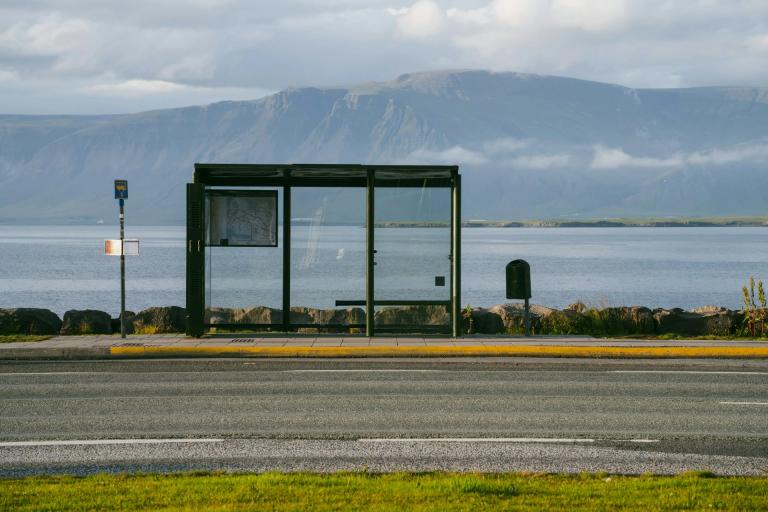 If you are living in the greater Reykjavík area, the Strætó bus system covers most of the capital region. A single fare is 690 ISK and a 30-day pass costs 11,600 ISK (as of January 2026). Download the Klappið app to buy tickets and plan routes. Cash is no longer accepted on buses in the capital area.
If you plan to drive, see our guide to converting your driving licence. Holders of an EEA, UK, or Japanese licence can exchange it for an Icelandic licence without retesting, once they have been a permanent resident for at least six months. Non-EEA licence holders can drive on their home licence for up to six months after establishing residence, after which they must apply for an Icelandic licence. That process requires both a written and practical driving test.but the process requires both a written and practical driving test.
Many residents find that a car is practical, especially outside central Reykjavík or if you have children. Our guide to buying a car in Iceland covers the process and costs.
Learn the different grocery stores
The main supermarket chains are Bónus, Krónan and Prís (budget options), Nettó (mid-range), and Hagkaup (full-range).
Alcohol is not sold in regular supermarkets. It is only available at Vínbúðin, the state-run liquor stores, which have limited hours and are closed on Sundays. The legal drinking age is 20. Since 2022, Icelandic breweries can sell directly to consumers, and a number of private online alcohol retailers have emerged, though the state monopoly remains the primary retail channel. Many locals stock up at the duty-free store at Keflavík Airport on arrival, where prices are significantly lower.
Grocery costs in Iceland run 30–50% higher than in Western Europe or North America. Cooking at home makes a significant difference to your monthly budget. See our grocery costs guide and our cost of living breakdown for current prices.
Confirm your mail setup
Government agencies and banks will send you physical letters during your first weeks. Make sure your mailbox is labelled with your name. If your temporary accommodation does not have a reliable mailbox, ask your landlord or host about the best way to receive post.
Your digital mailbox on island.is will handle most government correspondence going forward, but some documents still arrive by physical mail during your first weeks.
Week 3: Building your life
The urgent admin is behind you. Week 3 is about integration and longer-term setup.
Start learning Icelandic
You do not need fluent Icelandic to get by in Iceland, but even basic phrases make a real difference in daily interactions and job prospects.
Several options are available. Icelandic Online is a free self-study course run by the University of Iceland, and a good place to start immediately. Mímir offers in-person evening courses at multiple levels in Reykjavík. The Multicultural and Information Centre (Fjölmenningarsetur) also offers free courses for immigrants, and the Directorate of Labour funds free courses for people receiving unemployment or social benefits.
Check with your labour union. Many unions reimburse the cost of Icelandic language courses as part of their education benefits.
For the full picture on courses and resources, see our guide to learning Icelandic.
Find permanent housing (if still in temporary accommodation)
If you arrived without a long-term lease, Week 3 is when your apartment search should be in full swing. Most rental listings appear on Facebook groups (search for "Leiga" or "Rental Iceland"), Leiga.is, Myigloo.is and property listing sites like mbl.is/fasteignir.
Expect to pay 250,000–350,000 ISK per month for a one or two bedroom apartment in Reykjavík (as of 2025). Deposits are typically one to three months' rent upfront.
Read our rental guide before signing anything. Tenant rights in Iceland are governed by the Rent Act (húsaleigulög) and are relatively strong, but scams do exist. Never transfer money without seeing the apartment and meeting the landlord.
Register your address if you move
If you move from temporary to permanent accommodation, update your legal domicile at skra.is within seven days. This is a legal requirement. Your registered address determines your municipal tax allocation, voting rights, and which services you are assigned to.
Activate your island.is digital mailbox
If you have not already, make sure your digital mailbox on island.is is active. As of 2025, all Icelandic public institutions send official correspondence through this digital mailbox. You will need your electronic ID to access it.
Week 4: Settling in
By now the administrative scaffolding is in place. The final stretch of your first 30 days in Iceland is about the things that make it feel less like a destination and more like home.
Explore your neighbourhood
Walk or bus around your area. Find the nearest swimming pool (sundlaug). Geothermal pools are central to Icelandic social life, and most neighbourhoods have one. A swim card at your local pool is one of the cheapest forms of recreation in Iceland. The hot tubs are where neighbours actually talk to each other.
Find your closest Bónus, Krónan or Prís, your nearest pharmacy (apótek), and the Strætó stop you will use most often. Small familiarity compounds quickly.
Connect with the expat community
Iceland's immigrant community is active and welcoming. Search Facebook for expat groups based on your nationality or language. Most nationalities have at least one dedicated group, and there are several general English-language groups for foreigners in Iceland.
Fjölmenningarsetur (the Multicultural and Information Centre) runs events, workshops, and support services for immigrants. They can help with everything from language courses to legal questions.
If you are looking for structured social connections, sports clubs, hobby groups, and volunteer organisations are the fastest way in. Icelanders are friendly but can be slow to form new friendships. Shared activities break the ice faster than small talk.
Take a look at our events section to see a list of upcoming events in Iceland.
Review your finances
After a few weeks of living expenses, compare your actual spending to the estimates in our cost of living budget calculator. Adjust your budget if needed.
Confirm that your salary, tax withholding, and pension contributions are appearing correctly on your pay slip. Every Icelandic worker receives a personal tax credit of 72,492 ISK per month (as of 2026) that reduces your effective tax rate. If this is not reflected, raise it with your employer.
If you are sending money internationally, compare your bank's exchange rates with services like Wise. Icelandic banks charge significant fees on international transfers.
Understand the Strætó bus system
If you ride Strætó buses regularly, be aware of the Kapp fare capping: you never pay for more than three rides per day or nine per week on an adult ticket. This applies whether you pay by contactless bank card, the Klappið app, or a Klapp card. The only rule is to use the same payment method every time. If you commute daily, a monthly or annual period pass (available through the app or a Klapp card) may work out cheaper still. Cash is no longer accepted on city buses.
Your first 30 days in Iceland: the quick-reference checklist
Before arrival: submit A-271 (EEA) or confirm residence permit (non-EEA), book temporary housing, download Klappið, Veður, Parka, and Barhopp apps.
Week 1: register domicile and get kennitala, open bank account, get Icelandic phone number, register at health clinic, provide employer with kennitala and bank details.
Week 2: set up electronic ID, sort transport (bus pass or car), learn grocery stores, confirm mail delivery.
Week 3: start Icelandic lessons, search for permanent housing, update address if you move, activate island.is digital mailbox.
Week 4: explore neighbourhood and local pool, connect with expat community, review budget against actual costs, optimise bus fare capping.
Frequently asked questions
How long does it take to get a kennitala after arriving in Iceland?
For EEA/EFTA citizens, the kennitala is usually issued within a few days of registering in person at Registers Iceland. For non-EEA citizens, it is issued alongside the residence permit, which can take up to 10 days after registering at the Directorate of Immigration.
Can I open a bank account without a kennitala?
Not a standard account. All three major banks require a kennitala. In some cases, non-EEA residents can request a system ID number (utangarðskennitala) to open a basic account, but this is not standard and does not give access to full banking services.
What is the first thing I should do after landing in Iceland?
Get to your temporary accommodation and, the next business day, visit Registers Iceland (if EEA/EFTA) or the Directorate of Immigration (if non-EEA) to start your kennitala registration. Everything else in your first 30 days in Iceland depends on this step.
Do I need a car in Reykjavík?
Not necessarily. The Strætó bus system covers the greater Reykjavík area and is affordable, with a 30-day pass costing 11,600 ISK (as of January 2026). A car becomes more practical if you live outside central Reykjavík, have children, or want to explore the countryside regularly.
Are Icelandic language courses free?
Some are. The Directorate of Labour funds free courses for people receiving unemployment or social benefits. Many labour unions reimburse course fees for their members. The University of Iceland's Icelandic Online is free for everyone. Private language schools like Mímir and MúltíKúltí charge fees, typically 50,000–60,000 ISK per course level (as of 2025).
How much money should I have saved before moving to Iceland?
A reasonable starting budget for a single person is 1,500,000–2,500,000 ISK (roughly $10,000–$18,000 USD). This covers a rental deposit (one to three months' rent), first month's rent, and living expenses while you get settled. Having your first salary arrive before your savings run out makes the transition much smoother.
Last updated: March 2026