For the full process and documentation requirements, see our family reunification guide.
Digital nomad visa
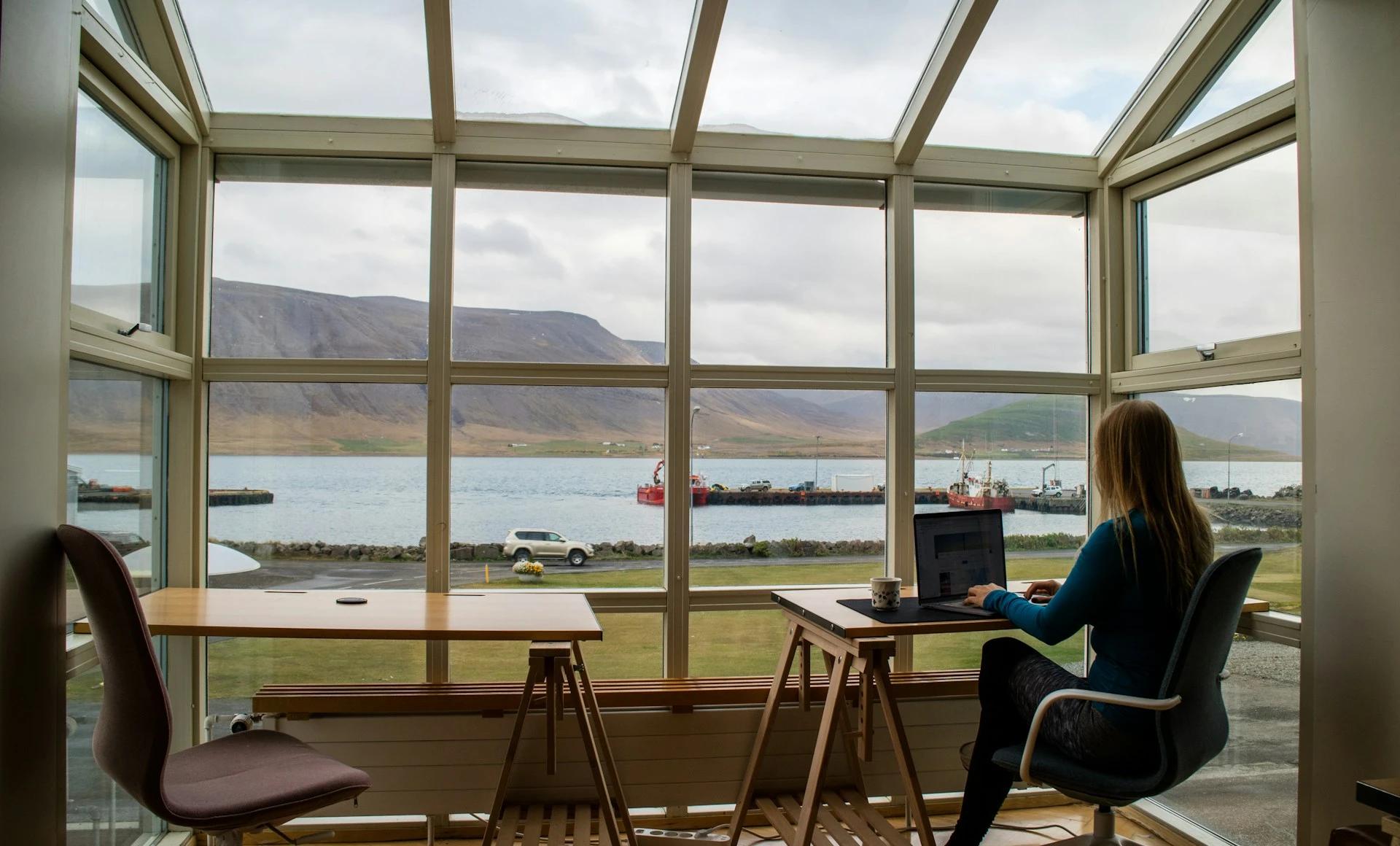
Iceland offers a long-term visa for remote workers employed by or self-employed for companies outside Iceland. This is sometimes called the "digital nomad visa," though its official name is the long-term visa for remote work.
The visa is valid for up to 180 days, is non-renewable (you must wait 12 months before reapplying), and does not lead to permanent residency. Because the 180-day cap falls below the 183-day tax residency threshold, holders do not pay Icelandic income tax.
Applicants must show proof of ongoing remote income of at least 1,000,000 ISK per month (1,300,000 ISK per month if bringing a spouse), valid health insurance with coverage of at least 2,000,000 ISK, a clean criminal record certificate, and proof of housing in Iceland.
The application fee is 12,200 ISK (as of March 2026).
This visa is designed for people who want to live in Iceland temporarily while continuing to work for an employer or clients abroad. It is not a path to residency. If you want to stay in Iceland long-term, you will need to pursue a different permit category.
For full eligibility rules and application instructions, see our digital nomad visa guide.
Icelandic citizenship and permanent residency
Residence permits are temporary and must be renewed. Two longer-term statuses exist: permanent residency and citizenship.
Permanent residency requires four years of continuous legal residence in Iceland on a qualifying permit. Applicants must demonstrate Icelandic language proficiency, financial self-sufficiency, and a clean criminal record. The application fee is 60,000 ISK (30,000 ISK for children, as of March 2026). Shorter qualifying periods apply in some cases, such as for spouses of Icelandic citizens.
Icelandic citizenship requires a minimum of seven years of legal residence, though shorter timelines apply for Nordic citizens (four years), refugees and stateless persons (five years), and spouses of Icelandic citizens (three to five years depending on circumstances). Applicants must pass an Icelandic language test and meet financial self-sufficiency requirements. The application fee is 60,000 ISK (30,000 ISK for children). As of March 2026, the next Icelandic language test dates for citizenship applicants have not been confirmed.
Citizenship applications have the longest processing times. As of March 2026, the Directorate is processing citizenship applications from August 2024, a backlog of approximately 18 months.
For the full requirements, application steps, and dual citizenship rules, see our Icelandic citizenship guide.
Other immigration paths
Beyond the main categories above, Iceland offers several additional immigration routes.
Au pair placements. Non-EEA citizens aged 18 to 25 can apply for an au pair residence permit to live with an Icelandic host family. The permit is valid for up to 12 months. The application fee is 120,000 ISK (as of March 2026). See our au pair guide for details.
Working Holiday / Youth Mobility. Iceland has Working Holiday agreements with several countries (including Japan, South Korea, and Canada). These permits allow young adults to live and work in Iceland for up to 12 months. The application fee is 40,000 ISK (free for Japanese citizens, as of March 2026).
Asylum and international protection. Individuals who believe they face persecution or danger in their home country can apply for international protection in Iceland. The Directorate of Immigration processes all asylum applications. Recent amendments to the Foreign Nationals Act, effective March 6, 2026, introduced changes to humanitarian protection rules, including the abolition of the 18-month processing rule and new provisions on revocation of protection in cases of serious criminal offenses. See our asylum and refugee guide for more.
Self-employment. Non-EEA nationals can apply for a residence permit based on self-employment. This requires demonstrating a viable business plan and sufficient financial resources. EEA citizens can start a business without any additional permit. Our guide to starting a business in Iceland covers registration, costs, and tax obligations.
Application fees at a glance
All fees are set by the Directorate of Immigration and are current as of March 2026. Fees are non-refundable after submission.
Source: Directorate of Immigration fee schedule
Processing times
One of the most common frustrations with Iceland's visa and immigration process is how long it takes. Processing times vary significantly by permit type. The Directorate of Immigration publishes current processing status on its website. As of March 5, 2026:
Student permit applications submitted with complete documentation before the deadline (May 1 or October 1) are processed before the semester starts.
In general, first residence permit applications can take up to 8 to 10 months. Renewals are typically processed within three months. Incomplete applications, missing documents, or requests for exemptions add further delays.
Source: Directorate of Immigration waiting times, updated March 5, 2026.
The Directorate of Immigration
The Útlendingastofnun (Directorate of Immigration) handles all non-EEA residence permit applications, visa applications, citizenship applications, and international protection claims.
The office is at Dalvegur 18, 201 Kópavogur (see map). Office hours are Monday through Friday, 9:00 to 14:00. The service center is open Monday through Thursday from 9:00 to 14:00, and Friday from 9:00 to 12:00.
Most applications can now be submitted digitally through island.is. Paper applications can be delivered to the drop box at Dalvegur 18 or mailed to the same address. Outside the capital area, applications can be submitted at District Commissioner offices.
Residence permit cards are collected at Hagkaup stores (available 24 hours a day, 7 days a week) after booking a photo appointment through the Directorate.
Understanding Iceland's visa and immigration system is the first step. For general guidance on housing, jobs, healthcare, and settling in, see our complete relocation guide.
Frequently asked questions
Do I need a visa to visit Iceland?
Citizens of EEA/EFTA countries do not need a visa. Citizens of many other countries (including the US, Canada, Australia, Japan, and South Korea) can visit Iceland visa-free for up to 90 days within any 180-day period under Schengen rules. Citizens of countries that do require a Schengen visa must apply through the relevant Icelandic embassy or consulate. The visa application fee is 13,000 ISK (6,500 ISK for children aged 6 to 12, as of March 2026).
Can I work in Iceland on a tourist visa?
No. Working in Iceland without a valid work permit or residence permit that authorizes employment is illegal. EEA/EFTA citizens have the right to work without a permit but must register their domicile if staying longer than three months.
How long does it take to get a residence permit?
It depends on the permit type. Work-based permits currently have a wait of about three months. Family reunification permits take approximately 8 to 10 months. Citizenship applications are taking roughly 18 months. Renewals are generally processed within three months. Check the Directorate's waiting time page for the latest status.
Can I switch from one permit type to another?
In most cases, you need to submit a new application for the different permit type. For example, if you entered on a student permit and found employment, your employer would need to apply for a work-based permit on your behalf. Consult the Directorate of Immigration for your specific situation.
What happens if my permit application is denied?
You can appeal the decision. The appeal process and timelines depend on the permit type and the reason for denial. The Directorate provides information on appeal rights with each decision.
Do I need to speak Icelandic to get a residence permit?
Not for temporary residence permits. Icelandic language proficiency is required for permanent residency and citizenship applications. Free and subsidized Icelandic language courses are available for immigrants. See our learning Icelandic guide for course options.
Last updated: March 2026